

Working Principle and Application of Insulation Voltage Tester

Working Principle of Insulation Voltage Tester
The core function of an insulation voltage tester is to apply a voltage higher than the normal operating voltage to the tested product, to determine whether leakage or breakdown occurs, thereby evaluating whether the insulation is qualified. The process can be divided into five key stages: voltage ramp-up, testing, detection, judgment, and discharge.
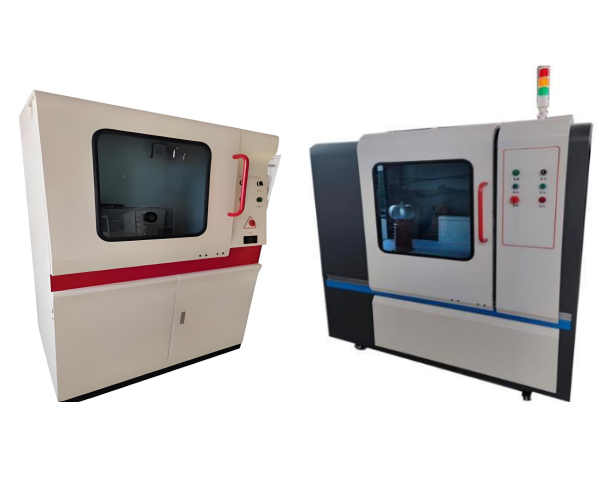
1. Basic Principle: Utilizing the “Dielectric Strength” of Insulating Materials
All insulating materials (plastics, enameled wires, bakelite, ceramics, etc.) exhibit very low conductivity under low voltage. However, when the voltage increases to a certain level, the internal structure breaks down, resulting in electrical breakdown or a significant increase in leakage current, indicating insulation failure.
The tester applies a specified high voltage to simulate extreme conditions and verify insulation reliability.
2. Main Circuit Workflow
Low Voltage Input and Step-Up Control
The instrument is powered by AC 220V, which is rectified, filtered, and stabilized. It is then converted via a high-frequency inverter/regulator and a high-voltage transformer into a test voltage ranging from 0–5kV / 10kV / 15kV or higher.
The voltage is precisely controlled via the panel, with a stable ramp-up to avoid sudden impact on the test sample.
High Voltage Applied to the Test Sample
The high-voltage output is connected to the live part of the test object, while the other end is connected to the enclosure/ground, forming a test circuit:
Live → High voltage output → Insulation of specimen → Ground → Internal sampling circuit
Qualified insulation: current is extremely small, close to zero
Unqualified insulation: current increases significantly or breaks down directly
3. Leakage Current Detection and Judgment Principle
A high-precision sampling resistor is connected in series inside the instrument to monitor small currents in real time:
Normal insulation: leakage current is very small (μA / mA level), below threshold → Pass
Poor insulation / moisture / damage: leakage current exceeds limit → Fail
Breakdown: current rises sharply → instrument identifies breakdown, triggers alarm, and cuts off high voltage
Key Logic: Voltage is the means; current is the judgment basis.
4. Difference Between AC and DC Modes
AC Withstand Voltage Test
Outputs power-frequency high voltage. Suitable for testing overall insulation strength, surface leakage, and contamination. Commonly used for household appliances, motors, and cables.
DC Withstand Voltage Test
Outputs stable DC high voltage with low ripple. Can measure insulation resistance simultaneously. Suitable for capacitive loads, cables, and large-capacity equipment, reducing charging current interference.
5. Safety Protection and Automatic Discharge
To prevent electrical hazards, the instrument includes:
Overcurrent protection: automatically shuts down when current exceeds limit
Fast discharge circuit: automatically discharges the test object and HV circuit after testing
Interlock and emergency stop: disables HV output when cover is opened or in case of misuse
Main Application Scenarios
The insulation voltage tester is widely used to evaluate insulation strength, dielectric strength, and leakage current of electrical products to ensure safety under high voltage conditions.
1. Household Appliances
Washing machines, refrigerators, air conditioners, microwave ovens, rice cookers, water heaters, hair dryers, electric irons, etc.
Used to verify insulation between enclosure and live parts to prevent electric shock.
2. Power Tools and Small Equipment
Electric drills, grinders, cutting machines, vacuum cleaners, mixers, garden tools
Handheld operation and harsh environments require strict insulation testing.
3. Wires, Cables, and Harness Industry
Power cables, control cables, data cables, motor leads, wiring harnesses
Used to detect insulation defects, pinholes, and moisture issues to prevent short circuits and fire hazards.
4. Motors, Transformers, and Coils
Motors, fan motors, pumps, transformers, inductors, ballasts, solenoid valves
Test insulation between windings and core/enclosure to prevent breakdown and leakage.
5. Low-Voltage Electrical Components
Circuit breakers, contactors, relays, sockets, switches, terminals, capacitors
Ensure insulation reliability under rated and overvoltage conditions.
6. Electronic Power Supplies and Industrial Equipment
Switching power supplies, adapters, UPS, inverters, industrial control boards, medical power supplies
Test insulation between input/output and enclosure to meet safety standards.
7. Lighting Industry
LED lamps, ballasts, tubes, spotlights, industrial lights, stage lighting
Prevent electric leakage and fire risks due to long-term operation and poor heat dissipation.
8. Testing and Certification Laboratories
Quality inspection institutes, third-party labs, certification bodies
Conduct type tests and certification according to GB, IEC, EN standards.
9. Automotive Electronics and New Energy
On-board electronics, charging piles, wiring harnesses, battery components
Ensure insulation performance under vibration and temperature variations.
10. Maintenance and Remanufacturing
Motor repair, electrical overhaul, equipment maintenance, second-hand equipment testing
Verify insulation performance after repair before reuse to eliminate safety risks.
2026-04-22 15:34
- Related News
How to Choose a Suitable Drying Rate Tester?
What Is a Fabric ICI Pilling and Snagging Box?
How to Choose an ICI Mace Snag Tester?
What a Fiber Oil Extractor Actually Does?
Snap Button Pull Tester: Garment Accessory Tensile Strength Testing Guide
Guide to Block-on-Ring Friction Wear Equipment
How to Choose Universal Multifunction Tribology Test Machine
How to Choose an Air-Cooled Xenon Lamp Aging Chamber
What Does an Ozone Aging Chamber Test? Standards and Operating Methods
Fabric Cool Feeling Tester: Working Principle, Standards and Selection Guide