

Guide to Vacuum Leak Detection Technology for Packaging

1. Introduction
Vacuum leak detectors are specialised precision instruments used in the food, pharmaceutical, personal care and electronics industries to test the integrity of packaging seals. They are primarily designed for various types of sealed packaging, including vacuum bags, aluminium foil pouches, bottles and cans, tubes, and laminated films, enabling the rapid identification of leakage issues such as micro-pores, cracks and poor sealing. The equipment utilises methods such as pressure differential changes or bubble detection in water to perform non-destructive or visual testing. It is suitable for both laboratory spot checks and in-line testing on production lines. As a key piece of equipment for corporate quality control and for meeting industry standards and market access requirements, it effectively prevents substandard products from entering the market, thereby safeguarding product quality and brand reputation.
2. Understanding Vacuum Leak Testing for Packaging
Vacuum leak testing for packaging is a specialised method that involves artificially creating a pressure differential between the interior and exterior of the packaging to determine whether there are any gas leakage pathways. Common methods include vacuum decay, pressure decay, bubble detection in water, and tracer gas analysis, and are suitable for a wide range of packaging formats, including flexible, rigid and irregularly shaped packaging. The testing process does not require the destruction of the product structure, allows for the precise localisation of leak points, and provides intuitive and reliable results. With standardised operating procedures and repeatable verification, it has become the recognised mainstream method for assessing seal integrity in fields such as food preservation, pharmaceutical sterility and electronic moisture protection.
3. The Importance of Vacuum Leak Testing in Packaging
3.1 Product Quality Assurance
Once vacuum packaging leaks, it directly leads to gas exchange between the interior and exterior, causing food to oxidise and spoil, medicines to become damp and lose efficacy, and electronic products to be damaged by moisture, thereby significantly shortening the product’s shelf life. Vacuum leak testing enables the timely removal of poorly sealed items, ensuring the packaging maintains the intended negative pressure, preserves the product’s original flavour, performance and form, stabilises the quality of products leaving the factory, and prevents a decline in brand reputation caused by quality fluctuations.
3.2 Consumer Safety
For products directly related to health, such as food, medicines and medical devices, seal failure can lead to microbial intrusion, bacterial growth and even contamination and spoilage, posing a serious threat to consumer safety. Rigorous leak testing complies with industry standards such as GMP and HACCP, effectively reducing safety risks, avoiding quality incidents and regulatory penalties, and fulfilling corporate safety responsibilities.
3.3 Cost Reduction
Market recalls, handling customer complaints, and rework or repairs all result in significant financial losses. Conducting leak testing at the production stage can substantially reduce the circulation of defective products, saving on raw materials, labour, warehousing and logistics costs. At the same time, it prevents compensation claims and brand crises caused by quality issues, controlling losses at source and enhancing production efficiency and overall economic benefits.
4. What is a Packaging Vacuum Leak Tester?
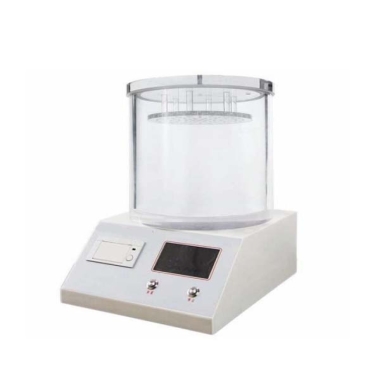
A packaging vacuum leak tester is a specialised testing device that integrates a vacuum generation system, a precision sensor system, an intelligent control system and a test chamber. The equipment can automatically perform processes such as vacuum extraction, pressure maintenance, pressure release and data evaluation; certain models support data storage, report export and non-conformance alarms. The equipment is compact and easy to operate, capable of meeting both high-precision testing requirements in laboratories and rapid batch screening in production workshops, and is widely used for packaging seal integrity quality control across multiple industries.
5. What is the working principle of a packaging vacuum leak tester?
Mainstream devices operate on the principle of vacuum decay: after placing the sample in a sealed test chamber, the instrument rapidly extracts the air from the chamber to create a stable vacuum environment; once the pressure-holding stage begins, high-precision sensors monitor pressure changes within the chamber in real time; if the packaging has a leak, internal gas will slowly escape, causing the chamber pressure to rise; the system determines the leak rate based on the rate of pressure change and automatically assesses whether the sample passes or fails. The water bubble method involves immersing the packaging in water under vacuum conditions; bubbles will continuously form at the leak points, enabling intuitive, visual leak detection.
6. Advantages of Vacuum Leak Detectors
6.1 Accuracy and Sensitivity
Equipped with high-precision pressure sensors, the equipment can detect microscopic leaks at the micrometre level. Its sensitivity far exceeds that of traditional methods such as visual inspection or manual squeezing, thereby preventing latent quality risks caused by minute leaks. The test results are highly consistent and data is traceable, meeting the stringent testing requirements of high-standard industries.
6.2 Efficiency and Speed
A single test takes only a few seconds to several tens of seconds. The device supports continuous batch testing and automated operation modes, significantly enhancing testing efficiency. Compared to manual spot checks, the device enables more frequent and extensive testing, reducing waiting times, adapting to the pace of high-speed production lines, and improving overall capacity utilisation.
6.3 Non-Destructive Testing
Utilising non-invasive detection methods such as vacuum decay, the testing process does not puncture, compress or contaminate the product. Passed samples can proceed normally to the next process or be shipped directly, significantly reducing material waste. This is particularly suitable for
Translated with DeepL.com (free version)
6.4 Versatility
The equipment is compatible with a wide range of packaging formats, including plastic bags, aluminium foil pouches, plastic bottles, glass bottles, tubes, cardboard boxes and medical device packaging. Parameters such as vacuum level and pressure hold time are adjustable, making it suitable for packaging of different materials, sizes and processes. This multi-purpose machine is suitable for a wide range of industries and offers outstanding value for money.
7. How to Choose a Vacuum Leak Tester?
7.1 Container Size
When purchasing, select the appropriate test chamber size based on the product’s maximum external dimensions to ensure the sample can be easily placed inside and fully sealed. If the space is too small, testing will be impossible; if it is too large, the vacuum pumping time will be prolonged, affecting efficiency. Some brands offer customised chambers to meet the testing requirements of irregularly shaped and oversized products.
7.2 Vacuum Level
Vacuum requirements vary significantly between products. Food and pharmaceutical items typically require a high-vacuum environment, whilst fragile or gas-filled packaging requires moderate negative pressure. Equipment with an adjustable vacuum range and high control precision should be selected to avoid packaging deformation or rupture caused by excessively high vacuum levels, or failure to detect actual leaks due to excessively low levels.
7.3 Ease of Use
Prioritise intelligent models with a simple interface, one-touch operation and automatic detection to reduce staff training costs. Additionally, consider equipment stability, ease of maintenance, and data logging and export functions to facilitate production management and quality traceability. This ensures suitability for long-term continuous use and enhances on-site practicality.
8. Where can I purchase a packaging vacuum leak tester?
Packaging vacuum leak testers can be purchased through official channels of specialist instrument manufacturers, authorised brand distributors, e-commerce platforms for industrial testing equipment, and laboratory instrument integrators. You may also compare and select models at trade fairs or packaging technology seminars. When purchasing, prioritise brands that offer after-sales installation, training, calibration and maintenance services to ensure long-term, stable operation of the equipment and to avoid the risk of testing errors and malfunctions caused by low-cost, inferior products.
9. What are the advantages of QINSUN’s vacuum leak detectors?
9.1 One-button automatic operation
The entire unit features intelligent programme design. Once the sample is placed inside, simply press a button to start; the system automatically completes the entire process—vacuuming, pressure holding, testing, evaluation and pressure release—without the need for frequent manual intervention. Operation is straightforward, reducing human error and enhancing testing consistency, making it suitable for general operators to master quickly.
9.2 Panasonic Vacuum Controller
Equipped with a genuine Panasonic vacuum controller, it offers high control precision, rapid response times, and stable, reliable operation. Vacuum fluctuations are minimal, ensuring highly consistent results across repeated tests. This enhances the overall accuracy and service life of the equipment, meeting the demands of high-precision testing scenarios.
9.3 Unique Grooved Sealing Ring
Features a patented grooved sealing ring design, providing a more uniform sealing contact surface and superior airtightness. This minimises the risk of edge leakage, extends service life, and resists ageing and deformation, maintaining excellent sealing performance even after prolonged use, thereby reducing the cost of frequent component replacement.
9.4 Maintenance-Free Vacuum Pump
Equipped with a high-performance, maintenance-free vacuum pump, the system operates stably, quietly and without pollution. It requires no regular oiling or maintenance, significantly reducing daily maintenance workload and operating costs. It is suitable for long-term continuous operation in both laboratories and production workshops, enhancing the overall ease of use of the equipment.
9.5 Two Different Gas Supply Options
The equipment supports a dual-gas-source configuration, allowing flexible switching to adapt to different operating conditions. This enhances adaptability, meeting the requirements for stable laboratory use whilst also accommodating on-site gas supply conditions in production workshops. Installation and deployment are convenient, expanding the range of applicable scenarios.
10. Conclusion
The packaging vacuum leak detector is a core testing instrument in modern industrial production, ensuring the reliability of packaging seals, stabilising product quality and safeguarding consumer safety. It offers significant advantages such as high precision, high efficiency, non-destructive testing and multi-functionality. When selecting a model, enterprises should take into account packaging dimensions, vacuum requirements and ease of operation. QINSUN vacuum leak detectors, with their automated operation, high-quality core components, stable structural design and user-friendly configuration, provide efficient and reliable leak detection solutions for industries such as food and pharmaceuticals. They can effectively enhance quality control standards, reduce overall costs and strengthen a company’s market competitiveness.
Translated with DeepL.com (free version)
2026-04-14 16:39
- Related News
How to Choose a Suitable Drying Rate Tester?
What Is a Fabric ICI Pilling and Snagging Box?
How to Choose an ICI Mace Snag Tester?
What a Fiber Oil Extractor Actually Does?
Snap Button Pull Tester: Garment Accessory Tensile Strength Testing Guide
Guide to Block-on-Ring Friction Wear Equipment
How to Choose Universal Multifunction Tribology Test Machine
How to Choose an Air-Cooled Xenon Lamp Aging Chamber
What Does an Ozone Aging Chamber Test? Standards and Operating Methods
Fabric Cool Feeling Tester: Working Principle, Standards and Selection Guide