

Guide to IP Ratings: IP33, IP44, IP54, IP55, IP65, IP66, IP67, IP68, IP69, IPX3, IPX5, IPX7

1 Origin of the IP Code
The IP (Ingress Protection) rating system was defined by the International Electrotechnical Commission (IEC) under standard IEC 60529. It was created to establish a unified global classification for the protective capabilities of electrical enclosures. Before its introduction, different countries used inconsistent definitions and test methods for dust and water protection, hindering international product trade and safety certification. The IP code uses standardized digits to clearly define protection against solid foreign objects and water ingress, and has since become a universal safety marking for electronics, lighting, machinery, automotive, military, and outdoor equipment.
2 Why IP Ratings Are Important
IP ratings directly determine whether electrical equipment can operate safely and reliably in its intended environment. In humid, dusty, outdoor, or industrial washdown settings, insufficient protection can lead to short circuits, electric leakage, corrosion, component failure, equipment breakdown, or even safety hazards. Clear IP ratings help users select appropriate products and help manufacturers comply with design, production, export certification, industry standards, and customer safety requirements. Effective IP protection also extends service life, reduces maintenance costs, and improves overall product competitiveness.
3 What Is the IP Code?
The IP code consists of the letters IP, followed by two digits, and optional additional or supplementary letters. It classifies the degree of protection provided by an enclosure against accidental contact with hazardous parts, ingress of solid foreign objects, and ingress of water.
The first digit represents protection against solid objects / dust; the second digit represents protection against water. Higher numbers indicate greater protection. If a category is not tested, the letter X is used instead, such as IPX7 or IP5X. The IP code does not cover protection against explosion, corrosion, mold, or other conditions; it only addresses ingress of solids and liquids.
3.1 Interpretation of the First Digit in the IP Code
3.1.1 The first digit indicates protection against contact with hazardous parts
The first digit defines protection against accidental human contact with live or moving components. Level 0 offers no protection; level 1 protects against back-of-hand contact; level 2 protects against finger contact; levels 3 and above prevent access using tools, wires, or probes. Higher levels reduce the risk of electric shock or mechanical injury, especially important in industrial and public areas.
3.1.2 The first digit indicates protection against ingress of solid foreign objects
Digits 0 to 6 represent increasing dust protection: 0 = no protection; 1 = protection against objects >50 mm; 2 = >12.5 mm; 3 = >2.5 mm; 4 = >1.0 mm; 5 = dust-protected (limited dust ingress permitted, but not enough to impair safety); 6 = dust-tight (no dust ingress), suitable for harsh industrial environments.
3.1.3 Test instruments related to the first digit
Common test tools include standard test balls, test fingers, test probes, wires, talcum powder, and standardized dust test chambers. Different grades use specific-diameter probes: IP3X uses a 2.5 mm probe, IP4X uses a 1.0 mm probe, while IP5X and IP6X use dust chambers with circulating dust to verify enclosure performance.
3.2 Interpretation of the Second Digit in the IP Code
3.2.1 The second digit indicates protection against ingress of water
Digits 0 to 9 represent increasing water resistance: 0 = no protection; 1–2 = protection against dripping water; 3 = protection against splashing water (IPX3); 4 = protection against splashed water from any direction; 5 = protection against water jets (IPX5); 6 = protection against powerful water jets; 7 = protection against temporary immersion (IPX7); 8 = protection against continuous immersion (IPX8); 69K (IP69) = protection against high-temperature, high-pressure washing. IPX7 allows short-term submersion; IPX8 allows continuous operation under specified water depth.
3.2.2 Test instruments related to the second digit
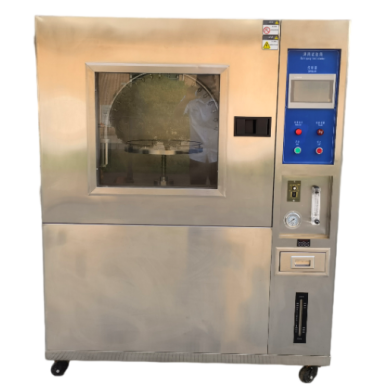
Key testing equipment includes oscillating tube rain test devices, nozzle jet test apparatus, high-pressure spray systems, immersion tanks, pressure water test systems, and high-temperature high-pressure washdown test machines for IP69K. IPX3/IPX4 use oscillating tubes; IPX5/IPX6 use standard nozzles; IPX7/IPX8 use controlled-depth water tanks; IP69/IP69K use high-temperature high-pressure spray systems to simulate harsh washdown conditions.
3.3 Interpretation of “Additional Letters” in the IP Code
Additional letters supplement protection against human contact, typically marked as A, B, C, D.
A: protection by back of hand
B: protection by finger
C: protection by tool
D: protection by wire
They appear after the main digits (e.g., IP65D) to clarify safety details when the primary digits are insufficient.
3.4 Interpretation of “Supplementary Letters” in the IP Code
Supplementary letters indicate special conditions or test modes, such as:
H: high-voltage equipment
M: equipment operating during water testing
S: equipment stationary during water testing
W: weather-protected
They do not change the core dust and water rating but provide context about test conditions and actual application behavior.
4 Understanding a Complete IP Code
A full IP code follows the format:
IP + Dust-protection digit + Water-protection digit + Additional letter + Supplementary letter
For example:
IP65 = dust-tight + protection against low-pressure water jets
IPX7 = dust protection not tested + protection against temporary immersion
IP69K = dust-tight + resistance to high-temperature high-pressure washing
When interpreting, prioritize dust protection first, then water protection. Additional and supplementary letters provide context only.
4.1 What Are the Relevant Test Instruments?
IP testing requires specialized equipment: dust test chambers, drip test devices, oscillating tube rain testers, jet test devices, high-pressure spray testers, immersion test tanks, hydrostatic pressure test systems, and IP69K high-temperature high-pressure washdown machines. Many integrated systems support multiple waterproof grades from IPX3 to IPX6 in one unit, ideal for laboratories and certification bodies.
4.2 How to Choose Suitable Test Instruments?
Selection depends on target IP rating, product dimensions, applicable standards, and testing frequency. Outdoor lighting typically requires IPX3–IPX6 rain test equipment; underwater products need IPX7/IPX8 immersion tanks; food and medical devices often require IP69K washdown testers. Also consider chamber size, adjustable pressure range, automation level, and compliance with IEC 60529. Multi-functional integrated testers are recommended for versatility.
5 Summary of Common IP Ratings
IP33: Protection against objects >2.5 mm + protection against splashing water – suitable for general indoor equipment
IP44: Protection against objects >1.0 mm + protection against splashed water – common in lighting and small appliances
IP54: Dust-protected + protection against splashed water – for general industrial and non-high-pressure outdoor use
IP55: Dust-protected + protection against low-pressure water jets – for outdoor enclosures and motors
IP65: Dust-tight + protection against low-pressure water jets – mainstream rating for outdoor equipment
IP66: Dust-tight + protection against powerful water jets – for marine, vehicle-mounted, and coastal equipment
IP67: Dust-tight + protection against temporary immersion – for smartphones, sensors, and portable electronics
IP68: Dust-tight + protection against continuous immersion under specified depth – for underwater devices
IP69 / IP69K: Dust-tight + protection against high-temperature high-pressure washing – for food, medical, and heavy machinery
IPX3 / IPX5 / IPX7: Water protection only; dust rating not tested – often used for small consumer electronics
2026-04-14 16:53
- Related News
How to Choose a Suitable Drying Rate Tester?
What Is a Fabric ICI Pilling and Snagging Box?
How to Choose an ICI Mace Snag Tester?
What a Fiber Oil Extractor Actually Does?
Snap Button Pull Tester: Garment Accessory Tensile Strength Testing Guide
Guide to Block-on-Ring Friction Wear Equipment
How to Choose Universal Multifunction Tribology Test Machine
How to Choose an Air-Cooled Xenon Lamp Aging Chamber
What Does an Ozone Aging Chamber Test? Standards and Operating Methods
Fabric Cool Feeling Tester: Working Principle, Standards and Selection Guide