

Thermal and Evaporative Resistance Tester Technical Guide

This guide is compiled in accordance with GB/T 11048-2018, ISO 11092 and ASTM F1868 authoritative standards. Featuring professionalism, accuracy and practicality, it serves as a one-stop technical reference for textile testing laboratories, material R&D teams, quality inspectors and equipment procurement personnel.
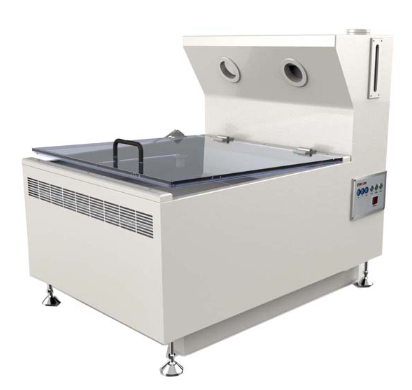
1. Functions of Thermal and Evaporative Resistance Tester
The thermal and evaporative resistance tester is a precision testing instrument designed to measure the thermal resistance and evaporative resistance of flat materials under steady-state conditions. Its core functions are listed as follows:
Accurately test key indicators including thermal resistance Rct (m²·K/W), evaporative resistance Ret (m²·Pa/W), Clo value, water vapor permeability index im and total heat loss;
Simulate real heat and moisture exchange of human skin under heat generation and perspiration states. It is applicable to textiles, films, coated fabrics, foams, leathers, multi-layer composites, thermal wadding, outdoor functional fabrics and other samples;
Support dry-state thermal resistance test and wet-state evaporative resistance test simultaneously or separately, with automatic steady-state judgment, automatic calculation and standard report generation;
The environmental chamber can precisely control temperature, humidity and wind speed to meet the steady-state environmental requirements specified in relevant standards;
Equipped with laboratory-level functions such as data storage, historical record query, one-click standard switching, edge effect compensation and calibration verification.
This instrument is the core equipment for evaluating physiological comfort, testing thermal insulation performance, verifying water vapor permeability and conducting product quality control.
2. Working Principle of Thermal and Evaporative Resistance Tester
The instrument adopts the standard guarded sweating hot plate method, which is globally recognized and simulates heat and moisture transfer between human skin and the surrounding environment equivalently.
2.1 Principle of Thermal Resistance Test (Dry State)
The test plate is heated at a constant temperature with the sample covered on its surface. The guard ring maintains the same temperature as the test plate to eliminate edge heat loss errors. Thermal resistance is calculated based on Fourier’s heat conduction law by measuring thermal power and temperature difference:
Rct = (Ts - Ta) / q − Rc0
Where:
Ts = test plate surface temperature; Ta = ambient temperature; q = heat flux density; Rc0 = instrument constant.
2.2 Principle of Evaporative Resistance Test (Wet State)
The test plate is a microporous sweating plate. Constant-pressure water supply forms a continuous water film to simulate human perspiration. Evaporative resistance is calculated by measuring evaporative heat flux and water vapor pressure difference to quantify the material’s resistance to water vapor transmission:
Ret = (Ps - Pa) / qe − Re0
Where:
Ps = water vapor pressure on plate surface; Pa = ambient water vapor pressure; qe = evaporative heat flux density; Re0 = instrument constant.
2.3 Core Control Logic
The system maintains triple steady states including test plate temperature, ambient temperature & humidity and wind speed. Valid data will be output once the fluctuation of heat flow or vapor flow falls below the threshold specified by standards.
3. Is the Thermal and Evaporative Resistance Test Time-Consuming?
The total test duration depends on sample type, thickness, loftiness and steady-state stabilization speed, all complying with standard requirements:
Thin fabrics (woven & knitted plain fabrics): 30–60 minutes per sample
Medium-thickness materials (composite fabrics, thin thermal batting): 60–90 minutes per sample
Thick fluffy materials (down, spray-bonded cotton, heavy thermal wadding): 90–120 minutes per sample
Blank plate calibration & instrument verification: 15–30 minutes
The instrument supports automatic steady-state judgment, which terminates the test automatically once standard fluctuation limits are reached without manual monitoring. The overall test cycle meets the efficiency requirements of batch laboratory testing.
4. Applicable Standards of Thermal and Evaporative Resistance Tester
Mainstream models are fully compatible with three core domestic and international standards, supporting one-click switching:
GB/T 11048-2018 Textiles — Physiological comfort — Measurement of thermal and water-vapour resistance under steady-state conditions (Sweating hot plate method)
ISO 11092 Textiles — Physiological effects — Measurement of thermal and water-vapour resistance under steady-state conditions
ASTM F1868 Standard Test Method for Thermal and Evaporative Resistance of Clothing Materials Using a Sweating Hot Plate
Some models also support supplementary industry and special standards, including ASTM D1518, FZ/T 01029 and GB/T 33393 (thermal and evaporative resistance test of whole footwear).
Built-in standard calculation formulas, environmental parameters and stability judgment criteria ensure globally recognized, traceable and compliant test results.
5. Standard Test Procedures for Thermal and Evaporative Resistance
5.1 Sample Conditioning
Condition samples under the standard environment of (23±2) ℃ and (50±5) %RH for at least 24 hours to eliminate internal stress and moisture content interference.
5.2 Instrument Preparation
Power on and preheat the instrument, perform blank plate calibration to obtain instrument constants Rc0 and Re0;
Set standard working conditions: temperature 20 ℃, relative humidity 65%RH, wind speed 1.0 m/s;
Wait until the environmental chamber and test plate reach complete steady states.
5.2 Sample Mounting
Cover the entire test plate and guard ring fully with the sample; keep the sample flat without wrinkles, stretching or damage;
Use standard limiting frames for thick samples to avoid compression; stack multi-layer samples in their actual service orientation.
5.4 Test and Data Export
Start the test, and the system will monitor steady-state indicators in real time;
Automatically calculate indicators including Rct, Ret, Clo value and im after reaching stable status;
Export reports in PDF or Excel format, containing raw data, real-time curves, standard information and sample records.
6. Influencing Factors of Thermal Resistance and Evaporative Resistance
6.1 Factors Affecting Thermal Resistance
Material structure: thickness, loftiness, fiber density, porosity and layer count;
Ambient conditions: ambient temperature, temperature difference, wind speed and radiative heat exchange;
Sample status: moisture content, compression ratio and surface flatness;
Instrument conditions: edge effect, temperature uniformity of hot plate and guard ring temperature control accuracy.
6.2 Factors Affecting Evaporative Resistance
Water vapor permeability of materials: pore size of coated films, hydrophilicity and connectivity of internal pores;
Ambient humidity: water vapor pressure difference acts as the driving force of vapor transmission;
Wind speed: affects surface convective heat exchange and vapor diffusion efficiency;
Sweating plate status: water supply stability, micropore patency and uniformity of surface water film.
All above factors must be controlled under standardized steady-state environments; otherwise test results lack comparability.
7. Key Precautions for Thermal & Evaporative Resistance Test of Textiles
Samples must be fully conditioned and balanced; unconditioned samples may cause data deviation over 10%;
The sample shall fully cover the test plate and guard ring without edge exposure, wrinkles or stretching;
Edge thermal insulation and algorithm compensation are mandatory for thick samples; standard frames are required for samples thicker than 5 mm;
Keep the sweating plate clean and unclogged to avoid scaling and mildew; clean it thoroughly after each test batch;
Maintain stable wind speed inside the chamber; direct air blowing, vibration or frequent door opening will break steady state;
Do not open the chamber door during testing; re-timing is required once steady state is disrupted;
Calibrate sensors and standard reference plates regularly to guarantee metrological validity;
Stack multi-layer samples in their actual service orientation; front/back sides and stacking sequence affect final results;
Use deionized water for water supply to prevent limescale damage to microporous plates;
Test standard reference samples with each batch to verify instrument performance.
8. Selection Guide for Thermal and Evaporative Resistance Tester
8.1 Standard Compliance
Prioritize instruments with native support for GB/T 11048-2018, ISO 11092 and ASTM F1868. Avoid modified equipment with external manual calculation formulas.
8.2 Core Precision Specifications
Thermal resistance: measuring range 0.002–2.000 m²·K/W, indication error ≤±2%FS, repeatability ≤1%
Evaporative resistance: measuring range 2–500 m²·Pa/W, indication error ≤±2.5%FS, repeatability ≤1.5%
Temperature control accuracy: ±0.1 ℃; humidity control accuracy: ±1%RH; wind speed accuracy: ±0.02 m/s
8.3 Sweating Plate and Water Supply System
Select instruments equipped with stainless steel PTFE microporous sweating plates, closed constant-pressure water supply, low-water alarm, double anti-leakage structure, easy disassembly and anti-mildew design.
8.4 Structural Form and Space Requirement
Integrated type: small footprint, ideal for small and medium-sized enterprises;
Split type: independent high-precision environmental chamber, suitable for third-party testing laboratories with CNAS accreditation.
8.5 Software and Automation Functions
Mandatory functions include automatic steady-state judgment, automatic index calculation, customizable report templates, full data traceability, user permission management and audit trails (required for CNAS laboratory accreditation).
8.6 Calibration and After-Sales Service
The manufacturer shall supply standard reference plates and factory calibration certificates, and support official metrological calibration services. The complete machine shall enjoy a minimum 12-month warranty, with core sensors and control modules covered by a 24-month warranty. Free on-site installation, operation training and rapid maintenance service are required.
8.7 Sample Adaptability
The instrument shall support a maximum sample thickness of no less than 50 mm, compatible with thick, fluffy and multi-layer samples, and equipped with built-in edge effect compensation algorithm.
Thermal and evaporative resistance tester is critical equipment for evaluating textile comfort and functional material performance. Its test results directly support product performance judgment and market access inspection. All equipment selection, operation and maintenance shall strictly follow relevant standards to ensure accurate, stable and traceable test data.
2026-07-06 16:56
- Related News
How to Choose a Suitable Drying Rate Tester?
What Is a Fabric ICI Pilling and Snagging Box?
How to Choose an ICI Mace Snag Tester?
What a Fiber Oil Extractor Actually Does?
Snap Button Pull Tester: Garment Accessory Tensile Strength Testing Guide
Guide to Block-on-Ring Friction Wear Equipment
How to Choose Universal Multifunction Tribology Test Machine
How to Choose an Air-Cooled Xenon Lamp Aging Chamber
What Does an Ozone Aging Chamber Test? Standards and Operating Methods
Fabric Cool Feeling Tester: Working Principle, Standards and Selection Guide