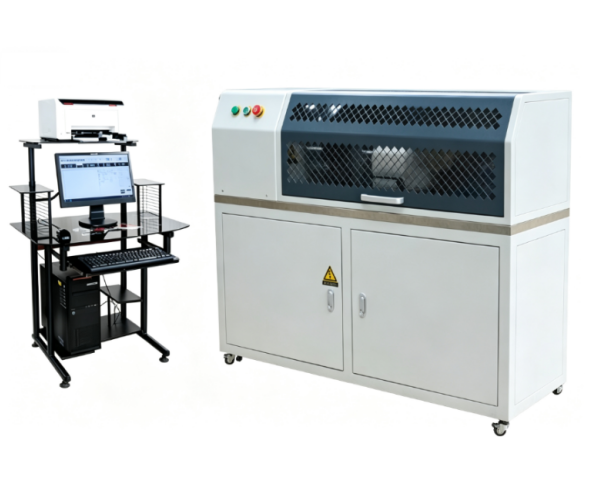
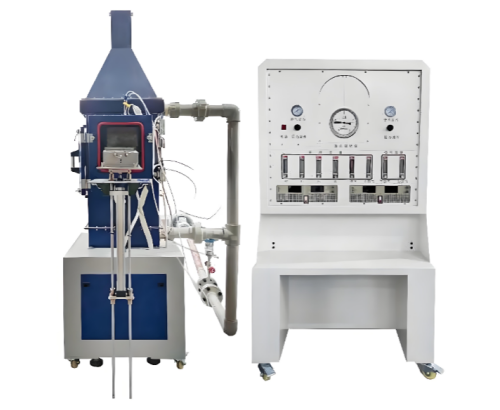
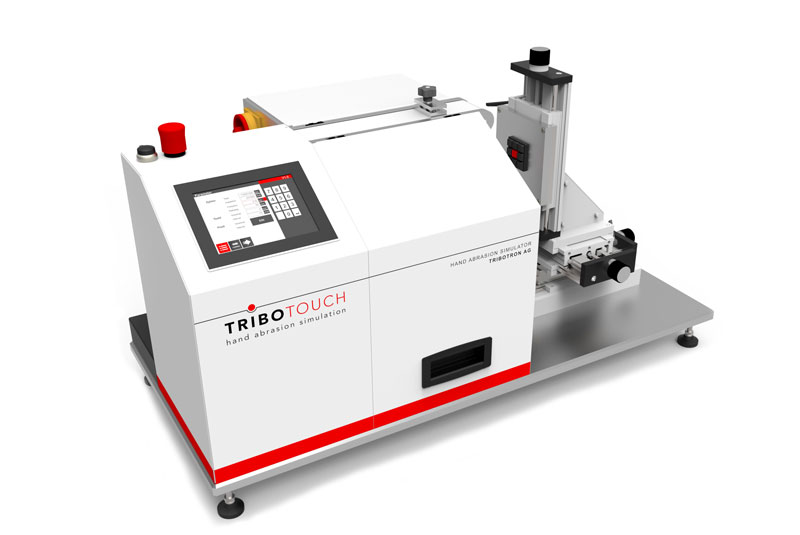
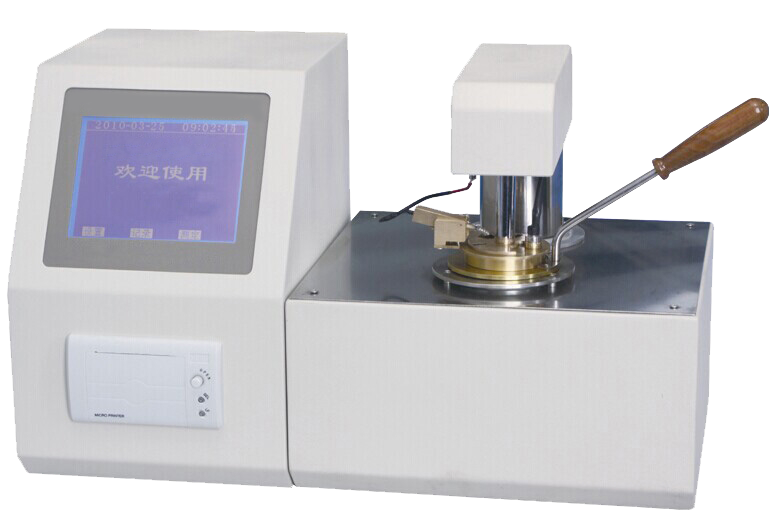
Automotive Wire Abrasion Resistance Tester
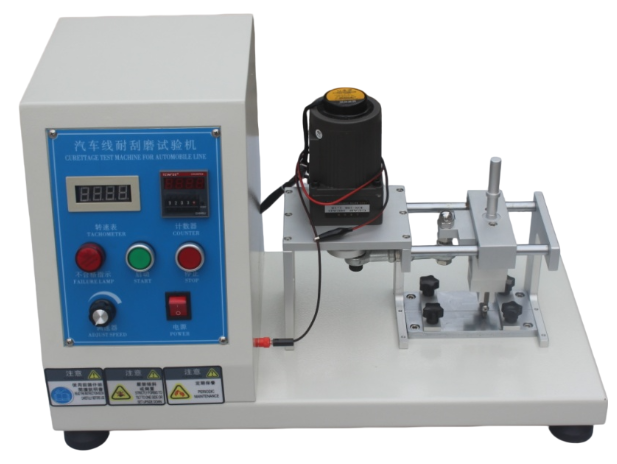


The Automotive Wire Abrasion Resistance Tester is designed to evaluate the abrasion resistance and mechanical durability of automotive wire insulation. During testing, an abrasion needle or blade reciprocates along the axial direction of the wire under a specified load. When the abrasion element penetrates the insulation and contacts the conductor, the tester automatically stops, allowing the abrasion resistance of the insulation to be evaluated.
Application
(1) Automotive Low-Voltage Wires
Testing insulation durability of automotive primary cables and electrical wiring.
(2) Automotive Wiring Harnesses
Evaluating insulation resistance to mechanical wear caused by installation, routing, and vehicle operation.
(3) Electrical Cable Insulation
Testing insulation materials used in wires and cables where repeated mechanical contact may occur.
(4) Automotive Wire Material Development
Comparing insulation materials, constructions, and formulations for improved abrasion resistance.
(5) Production and Quality Control
Supporting incoming material inspection, process verification, and finished-wire quality assessment.
Typical test samples include automotive wires and cables with insulation materials exposed to repeated contact or friction during service.
Standards
(1) ISO 6722 — Road vehicles — 60 V and 600 V single-core cables
(2) QC/T 730 — Road vehicles — Low-voltage electrical cables
(3) JB/T 8139 — Automotive electrical wires and cables
(4) JASO D611 — Automobile low-voltage wires
(5) DIN 72551 — Road vehicles — Electrical cables and wires
(6) VW 60306 — Automotive cable requirements
The applicable abrasion needle/blade, load, speed, and test procedure should be selected according to the specific standard and cable type being evaluated.
Parameters
| Parameter | Specification |
|---|---|
| Abrasion Needle | QC/T 730 type |
| Abrasion Needle Diameter | 0.45 mm |
| Abrasion Needle Material | Complies with GB/T 4358 requirements |
| Abrasion Blade | For ISO 6722, JB/T 8139, JASO D611, DIN 72551, VW 60306 methods |
| Abrasion Blade Diameter | 0.125 mm |
| Abrasion Head Stroke | 20 mm |
| Abrasion Length | 15.5 mm |
| Abrasion Speed | 5–60 cycles/min, adjustable |
| Cycle Definition | One forward and backward movement = 1 cycle |
| Abrasion Weights | 300 g, 400 g, 500 g, 600 g, 700 g, 800 g, 900 g, 1100 g |
| Automatic Stop | Stops automatically when the abrasion element contacts the conductor |
Features
(1) Supports both abrasion needle and blade configurations for different test methods.
(2) Adjustable abrasion speed from 5 to 60 cycles/min.
(3) Multiple standard weights allow different test loads to be applied.
(4) Controlled reciprocating movement provides repeatable abrasion conditions.
(5) Automatic electrical stop detects contact between the abrasion element and conductor.
(6) Dedicated abrasion tools support automotive wire standards including ISO 6722 and QC/T 730.
(7) Suitable for laboratory R&D and routine quality-control testing.
Accessories
(1) QC/T 730 abrasion needle
(2) 0.125 mm abrasion blade
(3) 300 g abrasion weight
(4) 400 g abrasion weight
(5) 500 g abrasion weight
(6) 600 g abrasion weight
(7) 700 g abrasion weight
(8) 800 g abrasion weight
(9) 900 g abrasion weight
(10) 1100 g abrasion weight
FAQ
(1) What does the automotive wire abrasion test determine?
The test evaluates how well wire insulation withstands repeated mechanical abrasion before the conductor is exposed. The automatic stop function detects electrical contact between the abrasion element and conductor, providing a defined endpoint for assessing insulation wear resistance.
(2) Which abrasion tool should be selected for automotive wire testing?
The tool depends on the applicable test method. The supplied configuration includes a 0.45 mm abrasion needle for QC/T 730 and a 0.125 mm abrasion blade for methods referenced by ISO 6722, JB/T 8139, JASO D611, DIN 72551, and VW 60306.
(3) How should the abrasion load be selected?
The load should not be selected simply according to wire size. It should be determined by the applicable standard and test procedure. This tester provides weights from 300 g to 1100 g, allowing the required loading condition to be configured.
(4) Why does the tester stop automatically when the conductor is contacted?
Automatic stopping provides a clear and repeatable test endpoint. Once the abrasion element penetrates the insulation and contacts the conductor, the electrical detection circuit stops the test, preventing unnecessary additional abrasion after insulation failure.
(5) Can QINSUN help select the correct configuration for my wire standard?
Yes. QINSUN engineers can review your wire construction, conductor size, insulation material, applicable standard, abrasion tool, and required load before recommending a configuration. QINSUN also calibrates and functionally tests equipment before shipment. For specific applications, contact a QINSUN engineer for further guidance.
Leave Message Get Price