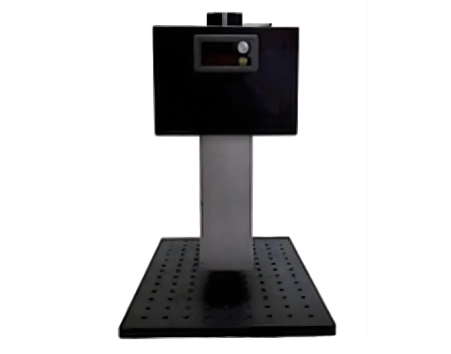
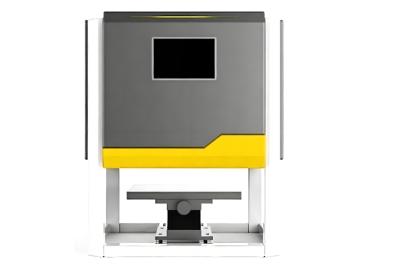
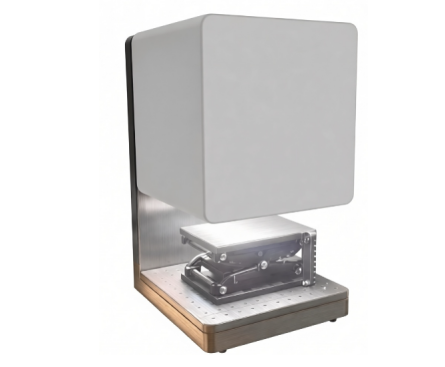
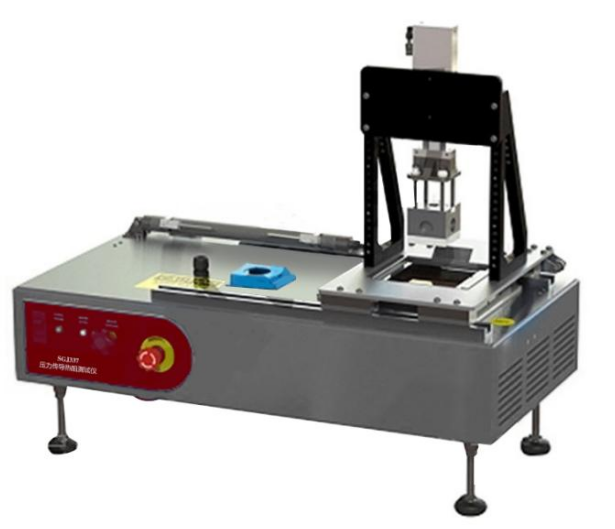
Battery Weight Impact Testing Machine
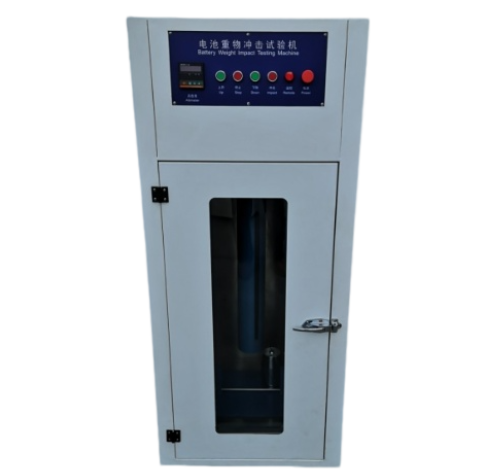


The Battery Weight Impact Testing Machine is designed to evaluate the safety performance of lithium batteries and other battery products under external impact conditions. It simulates accidental heavy object impact by dropping a specified weight onto the battery sample to assess resistance against explosion, fire, or damage.
(1) The test battery sample shall be placed on the test platform, with a steel rod of 15.8 mm (5/8 inch) diameter positioned in a cross shape at the center of the sample.
(2) A weight of 9.1 kg or 10 kg is dropped from a specified height (61 cm or 100 cm) onto the intersection point of the sample and the steel rod.
Compliant Standards
IEC 62133, UN 38.3, SJ/T 11169—1998, SJ/T 11170—1998, UL 1642:2008, UL 2054:2008, QC/T 743-2006, QC/T 742-2006, QC/T 744-2006, GB/T 18287-2000, GB 8897.4-2002, idt IEC 60086-4:2000, etc.
Specifications
Parameter | Specification |
Drop Weight | 9.1 kg ± 0.46 kg (20 ± 1 lb) or 10 kg |
Impact Height | 610 mm or 1000 mm (adjustable) |
Impact Method | Free vertical fall without tilt or swing |
Cross Bar | 15.8 mm (5/8 inch) steel rod |
Inner Chamber Material | SUS#304 stainless steel |
Outer Chamber Material | Painted galvanized cold-rolled steel |
Sealing | Silicone foam sealing strip |
Exhaust Port | 120 mm, rear side |
Door | Single door, double-layer, observation window (tempered glass with explosion-proof film) |
Impact Surfaces | Stainless steel (upper & lower) |
Power Supply | 1∮ AC 220V, 5A |
Weight | Approx. 145 kg |
Structure
Component | Description |
Impact Surfaces | Stainless steel plates (upper & lower) |
Inner Chamber | SUS#304 stainless steel |
Outer Chamber | Painted cold-rolled steel |
Insulation | Glass wool |
Impact Type | Free-fall |
Door | Single door with viewing window |
Protection | Limit switches & safety pin |
Operating Conditions
Item | Condition |
Voltage | 220V ±10%, 50Hz |
Ambient Temperature | 0 ~ 35°C |
Performance Temperature | 5 ~ 35°C |
Standard Configuration
Item | Quantity |
Main Machine | 1 |
Standard Drop Weights | 2 |
Safety Pins | 2 |
Limit Rod | 1 |
SJ/T 11170-1998 Safety Standard for Household and Commercial Batteries
Requirements:
(1) The battery sample shall be placed on a flat surface. A 15.8 mm (5/8 inch) diameter rod is placed crosswise at the center. A 9.1 ± 0.16 kg (20 ± 1 lb) weight is dropped from a height of 610 ± 25 mm (24 ± 1 inch) onto the sample.
(2) Cylindrical or prismatic batteries shall have their longitudinal axis parallel to the plane and perpendicular to the cross rod. The curved surface (15.8 mm diameter) shall bear the impact. Prismatic batteries shall also be rotated 90° to allow both wide and narrow sides to be impacted. Each sample is subjected to only one impact, and each test uses a different sample.
(3) For coin or button cells, the sample surface shall be parallel to the plane, and the 15.8 mm curved rod shall be placed horizontally at the center of the battery.
Result Requirement
The sample shall not explode or catch fire.
FAQ
(1) What does the battery weight impact test determine?
The test evaluates how a battery responds when subjected to a defined mechanical impact. For the specified test method, the sample is required to withstand the impact without exploding or catching fire. It is a safety evaluation rather than a general durability test.
(2) Why is a 15.8 mm steel rod used during the impact test?
The 15.8 mm diameter rod creates a concentrated impact area on the battery rather than distributing the load across its entire surface. Its position and orientation are important because the applicable standard specifies how different battery shapes should be positioned during testing.
(3) How should I select the impact height and drop weight?
The selection should be based on the applicable standard, battery type, and test specification rather than simply choosing the highest impact condition. For example, SJ/T 11170-1998 specifies a 9.1 kg ± 0.16 kg weight and 610 ± 25 mm drop height for its stated impact procedure.
(4) Can cylindrical and prismatic batteries use the same impact arrangement?
Not necessarily. Cylindrical and prismatic cells have different positioning requirements. Prismatic batteries may require impacts on both their wide and narrow sides, while cylindrical cells are positioned with their longitudinal axis and curved surface according to the applicable procedure.
(5) Can QINSUN help select the correct battery impact tester configuration?
Yes. QINSUN engineers can review your battery type, dimensions, applicable standard, impact weight, height, and laboratory requirements before recommending a configuration. QINSUN also performs factory calibration and functional testing before delivery. For customized requirements, contact a QINSUN engineer for further application guidance.
Leave Message Get Price