

Comprehensive Analysis of Textile Drying Time Tester

Textile drying time tester is core functional testing equipment for textile laboratories. It quantifies the drying duration and evaporation rate of quick-dry fabrics, sportswear and moisture-wicking textiles, serving as essential instruments for factory submission testing, third-party inspection institutions and fabric R&D. Supported by current national standards, AATCC standards and ISO standards, combined with frontline testing practical experience, this article elaborates systematically on instrument working principles, applicable testing standards, standardized operation procedures and professional selection guidelines. All data, parameters and standard clauses cited herein originate from official instrument manuals and standard documents, catering to the actual reference demands of industry inspectors, purchasing engineers and laboratory supervisors.
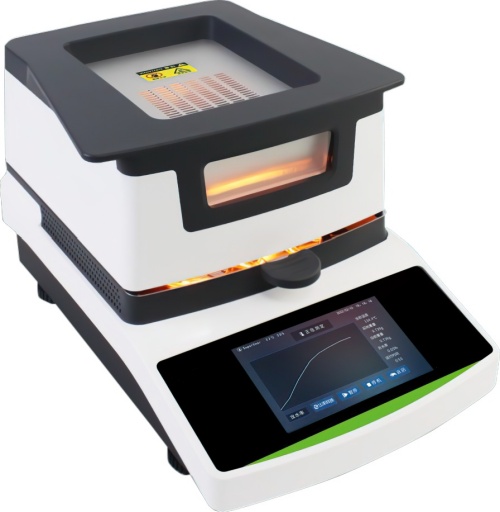
1. Definition & Application Scenarios of Textile Drying Time Tester
Also known as fabric drying rate tester, the core function of a textile drying time tester is to simulate perspiration and evaporation on human skin under standardized environments with controllable constant temperature, stable wind speed and quantitative water addition. It accurately records the time required for fabrics to dry completely after wetting, calculates drying rate and quantifies the quick-dry performance of fabrics.
Main Applicable Industries
Sports & outdoor fabric manufacturers: R&D and factory quality inspection of quick-dry T-shirts, yoga wear, windbreakers and cycling fabrics;
Home textile, underwear and sock manufacturers: performance control of skin-contact moisture-absorbing fabrics;
Third-party textile testing laboratories and quality inspection institutes: issuing CNAS-accredited test reports;
Textile material laboratories of universities and fabric auxiliary R&D institutions: comparative tests on the efficacy of moisture-wicking finishing agents.
2. Working Principle of Textile Drying Time Tester
The mainstream models on the market adopt the 37°C constant-temperature hot plate infrared sensing method (the principle specified by AATCC 201), which is also the testing logic equivalently adopted by Chinese national standards. The whole process realizes closed-loop automatic monitoring to eliminate subjective manual errors.
Simulate human skin base environment: The instrument is equipped with a built-in constant-temperature heating plate that stably maintains 37°C±0.1°C to simulate human body surface temperature.
Quantitative standardized wetting: A high-precision automatic water dripping system drops 0.2mL deionized water onto the center of the specimen with a liquid delivery accuracy of ±0.001mL to unify the wetting degree of specimens.
Constant airflow to accelerate evaporation: A horizontal laminar flow fan delivers uniform wind speed of 1.5m/s±0.1m/s to simulate normal air flow on human skin surface.
Infrared temperature judgment of drying endpoint: Continuous heat loss occurs with water evaporation, leading to gradual temperature drop on fabric surface. Once water fully evaporates, fabric temperature rebounds rapidly to the reference temperature of the hot plate. The infrared sensor captures the temperature inflection point, automatically confirms drying completion, synchronously records total drying time and generates real-time temperature-time curves.
Automatic data calculation: Supporting analysis software automatically calculates fabric drying rate (mL/h) based on drying duration and water dosage, and fully stores curve data of the entire testing process.
Supplement: A small number of gravimetric drying testers adopt weight loss monitoring principle. A high-precision 0.001g weighing sensor continuously tracks weight changes of specimens. The drying endpoint is confirmed when the weight remains stable without continuous attenuation, which is widely applied to batch comparative tests with multiple stations.
3. Authoritative Testing Standards Complied by Textile Drying Time Tester
(I) Chinese National & Industrial Standards (Mandatory Basis for Domestic Test Reports)
GB/T 21655.1-2023 Textiles — Evaluation of moisture absorption and quick-dry performance — Part 1: Single-item combined test method: Core domestic standard for judging quick-dry fabrics, with hot plate drying time as the key indicator.
GB/T 38016-2019 Textiles — Test method for drying rate: Special national standard for testing fabric drying duration and rate.
FZ/T 01176-2024 Fabric drying rate tester (hot plate method): Specification for instrument manufacturing and testing operations in textile industry.
GB/T 6529 Textiles — Standard atmosphere for conditioning and testing: Unified environmental standard for specimen pre-treatment.
(II) Globally Accepted International Standards
AATCC 201 (Hot Plate Method): The most widely used drying test standard for sportswear fabrics worldwide, pre-adapted for all QINSUN models.
AATCC 200 (Air Saturation Method): Applicable to drying rate tests of highly water-saturated fabrics.
AATCC 199: Standard for drying time testing via gravimetric method.
ISO 17617: General international testing method for moisture evaporation performance of textiles.
ASTM D2824, JIS L 1096: Testing basis for textile exports to Europe, America and Japan.
4. Standardized Operation Procedures of Textile Drying Time Tester
Step 1: Specimen Pre-treatment
Condition specimens for more than 4 hours under the standard atmosphere specified in GB/T 6529 (21℃±2℃, relative humidity 65%±2%). Cut standard specimens of 150mm×150mm; prepare at least 3 parallel specimens from the left, middle and right areas of the same fabric batch to eliminate errors caused by uneven weaving.
Step 2: Instrument Warm-up and Parameter Calibration
Connect the 220V power supply and start the main unit and supporting analysis software.
Set standard parameters: hot plate temperature 37℃, wind speed 1.5m/s, water dripping volume 0.2mL, specimen pre-conditioning warm-up time 300s.
Conduct regular monthly calibration on infrared temperature sensors, anemometers and automatic water metering systems, and retain calibration records to meet CNAS audit requirements.
Step 3: Specimen Loading and Fixation
Attach the skin-facing side of the specimen to the heating plate, fix specimen edges with magnetic pressure strips to ensure the fabric lies flat without wrinkles, then close the sealed test chamber to avoid airflow leakage affecting test accuracy.
Step 4: Automatic Test Initiation
Tap "Start Test" on the touchscreen. The equipment automatically completes water dripping wetting, constant temperature preservation and uniform air blowing. The infrared sensor collects fabric temperature in real time while the software synchronously generates drying curves, requiring no manual intervention throughout the test.
Step 5: Data Export & Parallel Testing
After testing, the system automatically outputs drying time and drying rate of a single group. Upon completing tests of 3 parallel specimens, the software automatically calculates average value and standard deviation. Test reports support Excel/PDF export, local storage and ERP system docking.
Step 6: Daily Cleaning & Maintenance of Instrument
Wipe residual water stains on the heating plate and remove limescale from water dripping nozzles after testing. Cut off power and cover the instrument with dustproof covers during long-term shutdown to prevent sensor components from being corroded by moisture and guarantee long-term stable precision of equipment.
5. Selection Guide for Textile Drying Time Tester
Laboratories and factories shall not only consider price when purchasing instruments, but make comprehensive judgments combining testing qualification, standard compatibility and long-term operating costs. Five core selection dimensions are listed below:
1. Prioritize matching testing standards and distinguish testing principles of different models
Domestic quality inspection & domestic sales fabrics: Select hot plate infrared models compliant with GB/T 21655.1 and FZ/T 01176.
Foreign trade & sportswear export: Must support AATCC 201; prefer factory-original standard-adapted models to avoid unrecognized test reports by overseas clients.
Batch comparative tests of multiple specimens: Choose 10-station independent gravimetric drying testers to test multiple sample groups simultaneously and improve laboratory efficiency.
2. Precision of core sensors determines data credibility (EEAT professional evaluation indicator)
Temperature sensor precision: ≤±0.1℃, resolution 0.01℃;
Water dripping metering precision: 0.2mL±0.001mL, with customizable water volume adjustment;
Wind speed control error: ≤±0.05m/s, uniform laminar flow without dead air zones;
Weighing precision of gravimetric models: 0.001g, supporting external calibration with automatic weights.
3. Intelligence & data management capability (adaptable to modern laboratories)
Mandatory functions: 7-inch or larger color touch screen, bilingual Chinese & English system, WiFi wireless data transmission, automatic test curve generation, customizable report templates, long-term database storage, export of CNAS-certified reports. Prioritize models that can dock with enterprise paperless ERP systems.
4. Material & durability (reduce after-sales maintenance costs)
Heating plates, test chambers and water dripping pipelines shall be made of SUS304 stainless steel or hard anodized aluminum alloy with waterproof and anti-corrosion properties. Fans and infrared probes adopt imported core components to reduce long-term failure frequency.
5. Manufacturer after-sales & metering services (core purchasing guarantee)
Whether third-party metering calibration certificates are provided;
Nationwide on-site installation, commissioning and operation training services;
Warranty period and in-stock supply of spare parts;
Complete R&D and production qualifications for textile testing instruments.
6. Reliable Manufacturers of Textile Drying Time Tester
Manufacturers in the textile testing instrument market fall into three categories: imported brands, established domestic textile instrument factories and specialized segmented instrument suppliers. Considering standard compatibility, precision, after-sales service and cost performance comprehensively, QINSUN stands out as a top supplier of laboratory and foreign trade fabric testing instruments. It focuses on R&D of functional textile testing instruments, with drying time testers as its flagship product line, covering a full range of mainstream domestic and international testing standards.
7. Complete Machine Introduction of QINSUN Drying Rate Tester
(1) Full Standard Compatibility for Both Domestic & Export Production
The complete machine is originally designed to synchronously comply with AATCC 201, GB/T 38016 and GB/T 21655.1. Sportswear export enterprises do not need to purchase multiple separate instruments, as one unit fulfills dual testing demands for domestic sales and overseas exports.
(2) High-precision Core Sensing System
Infrared temperature measurement range: 15~50℃, precision ±0.1℃;
Automatic water dripping system with micro-control of 0.001mL, adjustable water volume from 0.1mL to 1mL;
Stepless adjustable laminar fan wind speed 0.5~3m/s, stable error ±0.05m/s;
Independent high-precision 0.001g weighing modules for multi-station models, with no mutual interference between stations.
(3) Integrated Intelligent Software Adapted to Paperless Laboratories
7-inch high-definition touch operation screen with multi-language switching (Chinese, English, Traditional Chinese);
Visual real-time dynamic drying curves, automatic drying endpoint judgment to eliminate manual timing errors;
One-click export of test reports in Excel and PDF formats, supporting enterprise customization of test items, sample numbers and client information;
WiFi wireless data transmission, permanent local data storage, compatible with factory ERP systems to realize paperless quality inspection management.
(4) Durable Industrial-grade Structure to Cut Maintenance Costs
The whole machine shell is made of hard anodized aluminum alloy, and the heating plate adopts SUS304 stainless steel for waterproof and anti-corrosion performance. Fans and infrared sensors are equipped with imported components.
(5) Two Flagship Models Covering All Application Scenarios
AATCC 201 Hot Plate Infrared Model: Single-station design, suitable for small and medium fabric factories and R&D laboratories. Compact size (520×400×260mm), easy operation and high cost performance.
10-Station Gravimetric Drying Tester: Enables independent simultaneous testing of 10 sample groups, boosting batch testing efficiency by 10 times, ideal for large quality inspection institutes and large fabric groups conducting mass comparative tests.
(6) Complete Supporting Services to Satisfy CNAS Laboratory Audits
Each unit is delivered with original factory calibration report, instrument operation manual and standard matching instructions. QINSUN provides on-site installation, standardized SOP training for operators and annual metering calibration guidance.
Conclusion
Textile drying time tester is core testing equipment for quantifying quick-dry fabric performance. Before purchasing, buyers shall clarify export standards of products, daily sample testing volume and laboratory qualification requirements, and prioritize professional instrument brands with full standard coverage, high-precision sensors and comprehensive after-sales support. If you need a drying time tester compatible with both AATCC and Chinese national standards and equipped with intelligent data management, QINSUN Instruments offers mature complete machine solutions and a nationwide sound after-sales system, providing free parameter scheme design, sample test demonstrations and on-site technical docking services.
2026-07-07 11:49
- Related News
How to Choose a Suitable Drying Rate Tester?
What Is a Fabric ICI Pilling and Snagging Box?
How to Choose an ICI Mace Snag Tester?
What a Fiber Oil Extractor Actually Does?
Snap Button Pull Tester: Garment Accessory Tensile Strength Testing Guide
Guide to Block-on-Ring Friction Wear Equipment
How to Choose Universal Multifunction Tribology Test Machine
How to Choose an Air-Cooled Xenon Lamp Aging Chamber
What Does an Ozone Aging Chamber Test? Standards and Operating Methods
Fabric Cool Feeling Tester: Working Principle, Standards and Selection Guide