

What a Fiber Oil Extractor Actually Does?

In fiber processing, the presence of oil or finishing agents is not incidental but deliberately introduced. These substances play a functional role during spinning and handling, yet their residual level must be controlled within a relatively narrow window. This makes oil content testing less of a routine measurement and more of a process control tool.
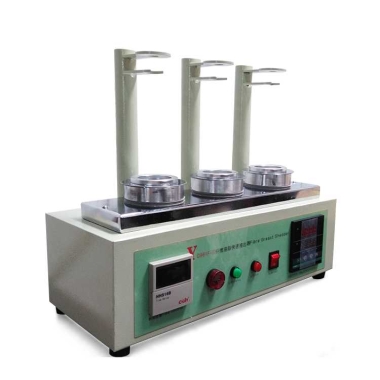
From a practical standpoint, the challenge is not just extracting oil from fibers, but doing so in a way that reflects real process conditions while delivering results quickly enough to inform production decisions.
Why Oil Content Is a Critical Variable in Textile Processing
Oils applied to fibers—whether natural wool grease or synthetic spin finishes—serve multiple purposes. They reduce inter-fiber friction, suppress static electricity, and improve cohesion during drafting and spinning.
However, these benefits only exist within a controlled range.
If oil content is too high, it may interfere with downstream operations such as dyeing, leading to uneven coloration or poor chemical uptake. In extreme cases, excessive oil can contaminate machinery or reduce product consistency.
If oil content is too low, fibers may become difficult to process. Increased friction leads to higher breakage rates, unstable drafting behavior, and more frequent machine stoppages.
Because of this, oil content becomes a measurable indicator of process stability rather than just a material property.
What a Fiber Oil Extractor Actually Does
A Fiber Oil Extractor, often referred to as a rapid grease extraction apparatus, is designed to quantify the amount of oil present in a fiber sample through solvent-based extraction.
Unlike large-scale laboratory systems such as Soxhlet extractors, this type of instrument is optimized for speed and simplicity. It is typically used close to the production line, where turnaround time matters more than absolute extraction completeness.
The method is particularly suited for loose materials such as wool tops, slivers, or opened synthetic fibers. Yarn can also be tested, although preparation becomes more important to ensure uniform solvent penetration.
Fabric, on the other hand, presents a structural barrier. Without prior disintegration, solvent flow becomes uneven, leading to incomplete extraction. This is why the method is generally not recommended for intact fabric samples.
The Extraction Mechanism: More Than Just “Washing Out Oil”
At a glance, the process appears simple: pass a solvent through the sample and collect what comes out. In reality, several physical processes occur simultaneously.
The solvent does not merely rinse the fiber surface. It penetrates the fiber assembly, dissolves oil films, and transports them downward through capillary pathways formed by the packed fibers.
This process is known as percolation. Its effectiveness depends on how uniformly the solvent can move through the sample. If the packing is too tight, flow is restricted. If too loose, solvent may bypass portions of the sample, reducing extraction efficiency.
Once the solvent carrying dissolved oil exits the sample, it drips onto a heated tray. Here, evaporation becomes the dominant process. The solvent must evaporate at a rate that matches its arrival. If evaporation is too slow, liquid accumulates, potentially causing overflow or loss of oil. If too fast, the solvent may flash off violently, leading to splashing and inconsistent residue distribution.
The residue left behind after evaporation represents the extracted oil, which is then quantified by weighing.
Why Temperature Control Is More Critical Than It Appears
Temperature is often treated as a simple setting, but in this method it plays a dual role.
First, it governs the evaporation rate of the solvent. Each solvent—petroleum ether, diethyl ether, dichloromethane—has its own volatility profile. The operator must adjust the hot plate so that evaporation is continuous but not aggressive.
Second, temperature indirectly affects measurement accuracy. If evaporation is incomplete, residual solvent may remain in the collected oil, leading to overestimation. If evaporation is too rapid, mechanical disturbances may cause partial loss of the sample.
In practice, operators do not rely solely on temperature readings. Instead, they observe the behavior of droplets on the tray. A stable condition is reached when incoming solution evaporates almost immediately without visible pooling.
This observational element is one of the reasons why operator experience still matters in what might otherwise seem like a straightforward test.
Sample Preparation: A Source of Hidden Variability
One of the most underestimated factors in oil content testing is how the sample is prepared and packed.
Loose wool or sliver allows relatively uniform solvent flow, making results more reproducible. Yarn, however, introduces complexity. If tightly wound, solvent penetration becomes uneven. If loosely arranged, the sample may not represent actual material density.
The use of a plunger and applied weight in the apparatus is not merely mechanical—it standardizes packing density. This ensures that solvent flow conditions are comparable between tests.
Even with this control, variability can still arise if samples differ significantly in structure or compaction behavior.
Where This Method Fits in Real Production Environments
The strength of this extraction method lies in its balance between speed and reliability.
In wool processing, it is commonly used to monitor grease content in tops and slivers before further processing. In synthetic fiber production, it helps verify the amount of spin finish applied during manufacturing.
Because the method delivers results relatively quickly, it enables operators to make adjustments within the same production cycle rather than after the fact.
This distinguishes it from more exhaustive laboratory methods, which may provide higher extraction completeness but are less practical for real-time control.
Advantages and Practical Limitations
From an engineering perspective, the design is straightforward. The apparatus consists of a support structure, extraction tube, plunger system, and a heated collection tray. This simplicity translates into ease of use and relatively low maintenance requirements.
The method is also flexible in terms of solvent choice, allowing adaptation to different types of oils and finishes.
However, its limitations should not be overlooked.
The accuracy depends on proper operation, particularly temperature control and sample preparation. The use of volatile organic solvents introduces safety and environmental considerations. Additionally, the method is not universally applicable across all textile forms without modification.
These constraints do not diminish its value, but they define the context in which it performs best.
When This Type of Testing Method Makes Sense
This approach is most suitable when oil content needs to be assessed quickly and repeatedly, especially in environments where process adjustments depend on timely data.
It is less appropriate when dealing with complex structures such as finished fabrics, or when regulatory requirements demand highly standardized and fully traceable analytical methods.
In practice, many facilities use this method alongside more formal laboratory techniques, combining speed with verification when needed.
2026-07-20 16:59
- Related News
How to Choose a Suitable Drying Rate Tester?
What Is a Fabric ICI Pilling and Snagging Box?
How to Choose an ICI Mace Snag Tester?
What a Fiber Oil Extractor Actually Does?
Snap Button Pull Tester: Garment Accessory Tensile Strength Testing Guide
Guide to Block-on-Ring Friction Wear Equipment
How to Choose Universal Multifunction Tribology Test Machine
How to Choose an Air-Cooled Xenon Lamp Aging Chamber
What Does an Ozone Aging Chamber Test? Standards and Operating Methods
Fabric Cool Feeling Tester: Working Principle, Standards and Selection Guide