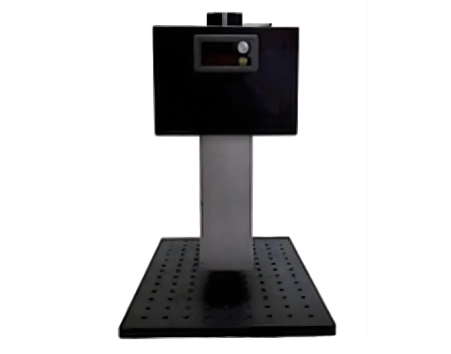
Next Generation Impactor(NGI)
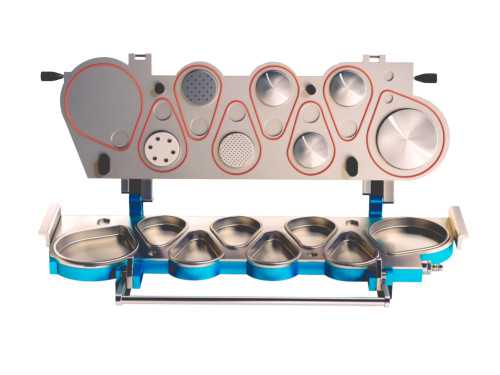


The next generation impactor TM, or NGI TM, is a high performance cascade impactor for classifying aerosol particle into size fractions for testing meter-dose and dry-power inhaler and other inhaled drug delivery devices such as nebulizers and nasal sprays. MSP developed the NGI in conjunction with a consortium of 15 pharmaceutical companies, resulting in superior aerodynamic performance, low inter-stage losses, and user-friendly features, The NGI is recognized internationally both in the USP and the EP. It features removable collection cups, O-ring-free connections, and a micro-orifice collector that can be used in place of a final filter for most formulation. These features make the NGI an easy-to-use, efficient workstation, enabling 10 to 20 inhaler determinations per day with one impactor, resulting in less capital equipment and a cleaner, more efficient laboratory.
Designed specifically for the pharmaceutical industry for testing metered-dose inhalers (MDI), dry-power inhalers (DPI), nebulizer and nasal sprays.
Provides high-accuracy data and unappalled productivity.
Features
1. Seven impaction stages plus a final micro-orifice collector that can be used in place of a final filter for most formulations.
2. Known stage cut size from 15L/min to 100L/min with no change of parts needed for entre range.
3. Also calibrated at 15L/min specifically for nebulizers.
4. Seven stages with at least five with D50 values between 0.54 and 6.12 μm at all design flow rates.
5. Removable set of collection cups, hinged removable lid, and O-ring free inlet connections.
6. Electrically conductive and corrosion resistant.
7. 316 stainless steel USP induction port.
8. One pre-separator for entire range of 30L/min to 100L/min W/O changing parts.
Technical Parameters
| Items | Parameters |
| Flow rate | 15-100L/min |
| Stage cut point(1-7 stages) | Look up the USP 601 Section, Table 6 for more information |
| D50 @30L/min | 11.4, 6.4, 4.0, 2.3, 1.4, 0.80, 0.54 µm |
| D50 @ 60 L/min | 8.1, 4.4, 2.8, 1.7, 0.94, 0.55, 0.34 µm |
| D50 @100 L/min | 6.1, 3.4, 2.2, 1.3, 0.72, 0.40, 0.24 µm |
| Weight | 9kg |
| Dimension | 600 x 330 x 130 mm (L x W x H) |
FAQ
(1)What is a Next Generation Impactor (NGI) used for?
A Next Generation Impactor (NGI) is a laboratory instrument used to measure the aerodynamic particle size distribution of aerosols produced by inhalation drug delivery systems. It is commonly used for evaluating dry powder inhalers (DPIs), metered dose inhalers (MDIs), and nebulizer products. By separating aerosol particles according to their aerodynamic size, an NGI Impactor helps pharmaceutical companies assess inhalation performance, formulation characteristics, and product consistency.
(2)How does a Next Generation Impactor measure aerosol particle size?
A Next Generation Impactor uses a multi-stage cascade impaction principle to separate aerosol particles based on their aerodynamic diameter. During testing, the aerosol flow passes through different impactor stages, where particles are collected according to size. After sample analysis, laboratories can determine particle size distribution parameters such as mass median aerodynamic diameter (MMAD), geometric standard deviation (GSD), and fine particle fraction (FPF).
(3)Why is NGI testing important for inhalation drug products?
For inhaled medicines, particle size strongly influences where drug particles deposit in the respiratory tract. The NGI Particle Size Analyzer helps researchers evaluate whether aerosol particles have suitable aerodynamic characteristics for effective delivery. NGI testing is widely used during inhalation product development, formulation optimization, quality control, and performance verification before regulatory submission.
(4)What parameters can be obtained from NGI testing?
A Pharmaceutical Aerosol Impactor such as an NGI can provide important aerosol performance data, including aerodynamic particle size distribution, mass median aerodynamic diameter (MMAD), fine particle fraction (FPF), emitted dose, and stage-by-stage drug deposition. These results help researchers understand aerosol behavior and compare different inhalation formulations or device designs.
(5)Which inhalation products can be tested with a Next Generation Impactor?
A Next Generation Impactor (NGI) is commonly used for testing inhalation products including dry powder inhalers (DPIs), metered dose inhalers (MDIs), and certain nebulizer-generated aerosols. The specific test configuration depends on the inhaler device type, formulation characteristics, and applicable testing requirements.
(6)What is the difference between an NGI and a traditional cascade impactor?
Both NGI Impactors and traditional cascade impactors use aerodynamic particle separation principles, but an NGI is specifically designed for modern inhalation drug testing with optimized stage design, particle collection performance, and compatibility with pharmaceutical aerosol evaluation. The selection between different impactors depends on the product type, testing requirements, and laboratory procedures.
Leave Message Get Price