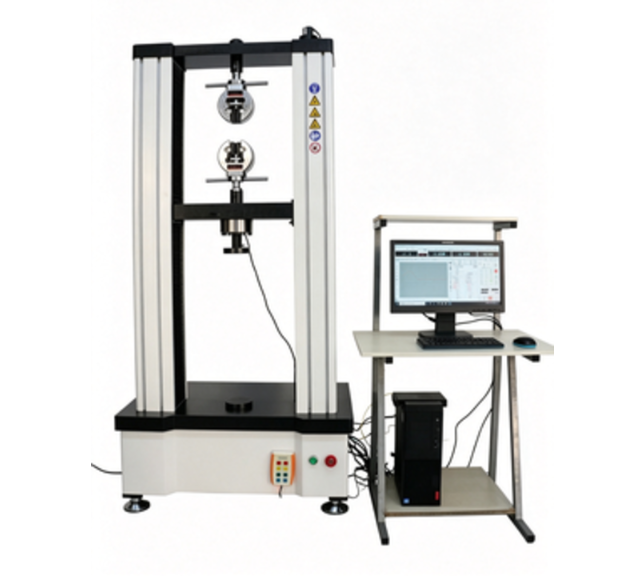
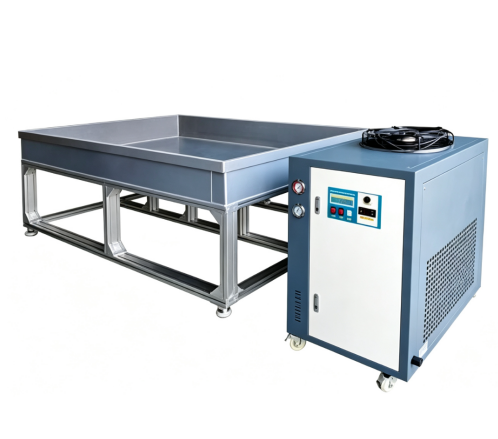
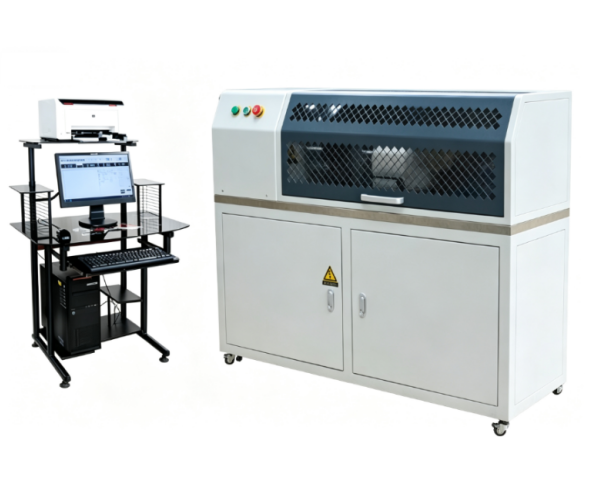
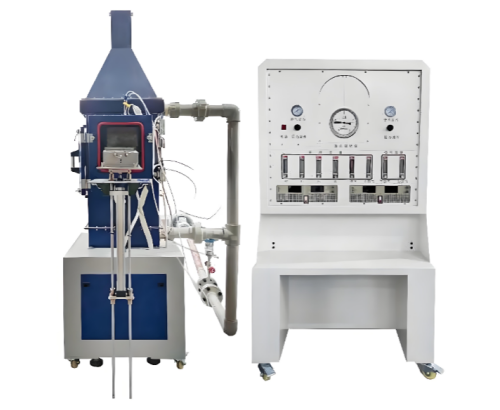
Full Notch Creep Tester ISO 16770
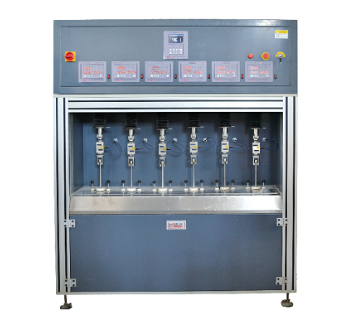


The Full Notch Creep Tester is a professional testing machine designed to evaluate the environmental stress cracking resistance and long-term creep performance of plastic materials under constant load and elevated temperature conditions. It is mainly used for full notch creep testing (FNCT) of thermoplastics, helping researchers and engineers analyze material durability, crack resistance, and long-term service reliability. The equipment features independent test stations, touchscreen operation, precise temperature control, and stable loading performance for reliable laboratory testing.
Application
The Full Notch Creep Tester is widely used for polymer material evaluation, quality control, and research applications.
Typical applications include:
(1) Plastics and Piping Industry
Used for testing creep fracture behavior and environmental stress cracking resistance of plastic pipes and materials such as PE and PPR, supporting reliability evaluation of water supply, gas pipeline, and industrial piping systems.
(2) Automotive Industry
Used to evaluate the long-term creep stability of plastic and composite components exposed to high-temperature environments, such as parts near engines and exhaust systems.
(3) Aerospace and Electronics Industry
Used for studying the creep resistance of composite materials, insulation materials, and electronic packaging materials under continuous thermal and mechanical stress.
(4) Chemical and Energy Industry
Used to evaluate the creep fracture performance of materials applied in chemical equipment, energy storage systems, and high-temperature operating environments.
(5) Material Research and Development
Used for material screening, formulation optimization, and process improvement by providing long-term creep performance data.
Standards
The Full Notch Creep Tester is designed according to the requirements of international creep testing standards:
(1) ISO 16770 – Plastics — Determination of environmental stress cracking (ESC) of thermoplastics — Full-notch creep test (FNCT)
(2) ASTM D2990 – Standard Test Methods for Tensile, Compressive, and Flexural Creep and Creep-Rupture of Plastics
Parameters
| Parameter | Specification |
|---|---|
| Test Stations | 6 fully independent test positions |
| Force Range (Per Station) | 0–2,000 N (standard) / 0–4,000 N (optional) |
| Force Accuracy | ±1% FS (±0.5% with calibration kit) |
| Temperature Control Range | Water bath: 40–95°C |
| Oil Bath Temperature | Up to 150°C (with silicone oil medium) |
| Bath Capacity | 15 L per station / 90 L total |
| Temperature Stability | ±0.1°C |
| Loading Method | Motorized force loading with touchscreen-guided weight adjustment |
| Power Supply | 220V/50Hz (110V/60Hz available) |
| Dimensions (W×D×H) | 1,800 × 750 × 1,650 mm |
| Net Weight | 380 kg |
Features
(1) Independent Multi-Station Testing
Equipped with 6 independent test positions, allowing multiple specimens to be tested simultaneously while maintaining consistent test conditions.
(2) Precise Force and Temperature Control
Provides stable load application and temperature regulation to improve test repeatability and measurement reliability.
(3) Flexible High-Temperature Test Environment
Supports water bath testing up to 95°C and oil bath testing up to 150°C for different polymer material evaluation requirements.
(4) Touchscreen Operation System
The intuitive control interface simplifies parameter setting, test monitoring, and operation management.
(5) Automatic Water Level Monitoring
The built-in water level detection system alerts operators when the medium level is insufficient, helping prevent test interruption.
(6) Modular System Design
The modular structure allows future expansion of testing stations and controller upgrades according to laboratory requirements.
Maintenance Information
(1) Clean the test chamber, sample fixtures, and loading components regularly to prevent contamination affecting test accuracy.
(2) Check and lubricate moving parts, guides, and mechanical structures to maintain smooth operation.
(3) Inspect load cells, temperature sensors, and electrical connections periodically.
(4) Calibrate force and temperature measurement systems according to recommended procedures.
(5) Replace damaged fixtures, clamps, or mechanical components when necessary.
(6) Keep operation records, calibration data, and maintenance history for long-term equipment management.
FAQ
(1) What materials can be tested with the Full Notch Creep Tester?
The Full Notch Creep Tester is mainly used for testing thermoplastic materials, including polymers such as PE and other engineering plastics. It evaluates creep deformation and environmental stress cracking resistance under constant load and elevated temperature conditions, making it suitable for material research, quality inspection, and long-term performance evaluation.
(2) How should I select the suitable Full Notch Creep Tester configuration?
Selection of a Full Notch Creep Tester depends on factors such as required test standards, sample quantity, temperature range, and loading requirements. Laboratories performing ISO 16770 FNCT tests should consider station numbers, force capacity, and temperature control capability based on their testing workload and material requirements.
(3) What is the difference between water bath and oil bath testing?
The Full Notch Creep Tester can use different test media according to temperature requirements. Water baths are commonly used for moderate temperature testing, while silicone oil baths are suitable for higher temperature conditions. The selection depends on the material characteristics and applicable testing standards.
(4) How does the Full Notch Creep Tester improve test reliability?
The Full Notch Creep Tester improves reliability through independent test stations, stable loading control, precise temperature regulation, and real-time monitoring functions. These features help maintain consistent conditions between specimens and provide more reliable data for polymer performance analysis.
(5) What should be considered before purchasing a Full Notch Creep Tester?
Before purchasing a Full Notch Creep Tester, users should confirm the required testing standards, maximum load range, number of test positions, temperature requirements, and available laboratory conditions. Choosing a suitable configuration ensures the equipment meets current testing needs while supporting future material research.
Leave Message Get Price