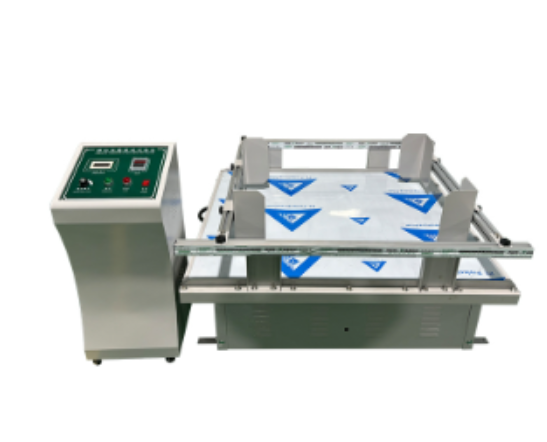
Solar Simulator Tester
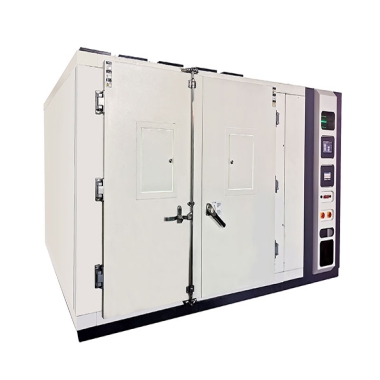


The Solar Simulator Tester is a high-precision solar radiation simulation system designed to reproduce controlled sunlight conditions for photovoltaic (PV) module testing and solar energy research. It simulates solar intensity, spectral distribution, and illumination characteristics under different environmental conditions, providing a stable and repeatable indoor solar testing environment. With BBA-grade solar simulation performance, adjustable irradiance, and intelligent control functions, the system is suitable for PV module performance evaluation, certification testing, research and development, and quality control applications.
Application
The Solar Simulator Tester is widely used for photovoltaic testing and solar energy research, including:
(1) Photovoltaic Module Performance Testing
Used to evaluate maximum power output, conversion efficiency, I-V characteristics, and electrical performance of PV modules under standardized solar conditions.
(2) Large-Area PV Module Evaluation
Suitable for testing large photovoltaic modules with applications including power measurement, temperature coefficient testing, and performance comparison.
(3) Low Irradiance Performance Testing
Simulates different solar intensity conditions to evaluate PV module output performance under weak light environments.
(4) Hot Spot Durability Testing
Provides controlled solar illumination for analyzing module resistance against localized heating and hot spot effects.
(5) Photoaging and Reliability Testing
Used for accelerated light exposure studies to evaluate long-term stability and degradation behavior of solar materials and modules.
(6) Solar Energy Research and Development
Applied in photovoltaic laboratories, universities, research institutes, and certification organizations.
Standards
(1) IEC 60904-9 – Photovoltaic Devices: Requirements for Solar Simulators
(2) IEC 61215 – Terrestrial Photovoltaic (PV) Modules: Design Qualification and Type Approval
(3) IEC 61646 – Thin-Film Terrestrial Photovoltaic (PV) Modules: Design Qualification and Type Approval
(4) ISO 9060 – Solar Energy: Classification of Pyranometers
(5) UL 1703 – Safety Standard for Photovoltaic Modules
(6) CE Certification – Conformité Européenne Requirements
Parameters
| Parameter | Specification |
|---|---|
| Irradiance Range | 200–1200 W/m² (AM1.5G filtered) |
| Spectral Matching | Class B (IEC 60904-9) |
| Uniformity | Grade B (<5% deviation) |
| Stability | Class A (<2% transient flicker) |
| Lamp Type | Metal Halide lamp (400–1100 nm output) |
| Test Area | 2000 mm (W) × 1000 mm (D) |
| Power Supply | 380V/415V 3-phase, 50/60Hz |
| Equipment Dimensions | 2500 mm (W) × 1500 mm (D) × 2200 mm (H) |
| Equipment Weight | 1800 kg (net) / 2500 kg (gross) |
Features
(1) Realistic Solar Simulation
Accurately reproduces sunlight characteristics including irradiance intensity and spectral distribution for reliable photovoltaic testing.
(2) BBA-Grade Solar Performance
Provides controlled solar simulation conditions suitable for PV module research and performance evaluation.
(3) Wide Irradiance Adjustment Range
Supports adjustable illumination levels to simulate different solar environments, from low irradiance conditions to standard testing conditions.
(4) Stable Light Output
Class A transient stability reduces light fluctuation during testing and improves measurement repeatability.
(5) Multi-Mode Testing Capability
Supports STC, NOCT, hot spot simulation, and other photovoltaic evaluation conditions.
(6) Intelligent Irradiance Correction
Automatic compensation technology helps maintain consistent output performance during long-term operation.
(7) Remote Calibration and Data Management
Supports network communication for convenient calibration, monitoring, and laboratory management.
(8) Enhanced Safety Design
Integrated UV filtering and emergency protection systems improve operational safety during testing.
FAQ
(1) What is this product?
The Solar Simulator Tester is a precision solar simulation device designed to reproduce controlled sunlight conditions for photovoltaic module testing. It provides adjustable irradiance and controlled spectral output to evaluate solar product performance in a laboratory environment.
(2) What products can be tested with this solar simulator?
It is mainly used for crystalline silicon PV modules, thin-film photovoltaic modules, large-area solar panels, and solar energy materials. It can also support research applications such as hot spot evaluation, low-light performance testing, and photoaging studies.
(3) How does the Solar Simulator Tester work?
The system uses a controlled light source combined with optical adjustment technology to simulate sunlight characteristics. It regulates irradiance intensity, spectral distribution, and illumination uniformity to create repeatable solar testing conditions.
(4) Why is a solar simulator important for photovoltaic testing?
Natural sunlight conditions are difficult to control and reproduce in outdoor environments. A solar simulator provides stable and standardized illumination, allowing manufacturers and laboratories to accurately compare PV module performance, verify product quality, and support certification testing.
(5) How to choose the right solar simulator for photovoltaic testing?
When selecting a solar simulator, users should consider the PV module size, required test standards, solar simulator classification grade, irradiance range, spectral matching requirements, testing frequency, and application purpose. For certification laboratories, spectral accuracy and stability are critical. For production testing, test area size, automation capability, maintenance requirements, and data management functions should be evaluated.
For customized solar simulation systems or photovoltaic testing solutions, please contact our technical team for professional recommendations.
Leave Message Get Price