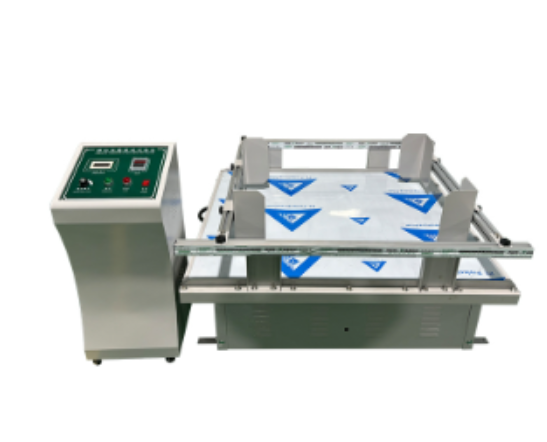
Small Solar Simulator
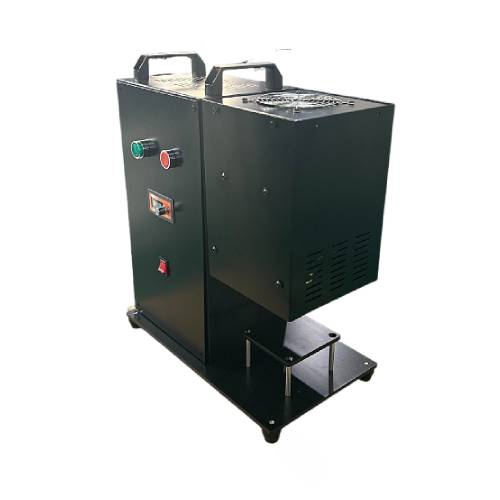


The Small Solar Simulator is a compact and high-precision laboratory device designed to simulate controlled solar radiation for photovoltaic, material, and optical research applications. By accurately reproducing sunlight intensity and spectral characteristics, it provides a stable and repeatable illumination environment for solar cell testing, photovoltaic material evaluation, photocatalytic experiments, and light aging studies. With adjustable irradiance, high illumination uniformity, and a compact tabletop design, the Small Solar Simulator is an ideal solution for laboratories, universities, research institutes, and production testing environments requiring reliable solar simulation.
Application
The Small Solar Simulator is widely used for research, development, and quality evaluation of solar-related products and materials:
(1) Photovoltaic Cell and Module Testing
Used to measure photovoltaic performance parameters including short-circuit current (Isc), open-circuit voltage (Voc), fill factor (FF), and conversion efficiency (η) of solar cells and small PV modules.
(2) Photocatalysis and Chemical Research
Provides stable artificial sunlight for photocatalytic degradation, photochemical synthesis, and light-responsive material research.
(3) Material Weathering and Aging Evaluation
Simulates long-term sunlight exposure conditions to evaluate aging resistance of coatings, plastics, polymers, films, and cosmetic materials.
(4) Photovoltaic Material Development
Suitable for performance research of advanced photovoltaic materials such as DSSC, PSC, and perovskite solar cells under standardized solar spectra.
(5) Space Component Ground Testing
Provides controlled solar radiation environments for testing solar sensors, thermal control materials, and satellite-related components.
Standards
(1) IEC 60904-9 – Photovoltaic Devices: Requirements for Solar Simulators
(2) ASTM E927 – Standard Specification for Solar Simulation for Photovoltaic Testing
(3) IEC 60904-3 – Measurement of Photovoltaic Current-Voltage Characteristics
(4) ISO 9060 – Solar Irradiance Measurement Standards
(5) ASTM G173 – Reference Solar Spectra for Solar Radiation Testing
Technical Parameters
| Performance Item | Specification | Notes |
|---|---|---|
| Spectral Matching | AM1.5G, Class A (≤±10% deviation) | Closely reproduces standard sunlight spectrum |
| Irradiance Range | 350–1000 W/m² adjustable | Supports 0.35–1 sun simulation conditions |
| Spot Uniformity | ≤±2% | Ensures consistent illumination across test area |
| Light Source Type | Xenon lamp or LED array | Flexible selection according to application requirements |
| LED Lifespan | Approx. 10,000 h | Long service life and stable output |
| Operating Mode | Continuous steady-state (CW) | Eliminates transient errors from pulsed illumination |
| Illuminated Area | D50 mm–D200 mm | Customizable according to sample size |
| Power Supply | 220 V ±10% AC, 50/60 Hz | Standard laboratory power supply |
| Cooling System | Air-cooled | Maintains stable operation temperature |
| Equipment Dimensions | Approx. 0.6 × 0.4 × 0.5 m | Compact tabletop design |
Features
(1) High-Precision Solar Simulation
Accurately reproduces AM1.5G solar spectrum and intensity for standardized testing.
(2) Adjustable Irradiance Control
Allows users to adjust light intensity according to different testing requirements, including partial sunlight and full sunlight conditions.
(3) Excellent Illumination Uniformity
Provides ≤±2% uniformity across the testing area, improving measurement consistency.
(4) Flexible Light Source Options
Supports xenon lamp and LED array configurations to meet different requirements for spectral accuracy, stability, and service life.
(5) Stable Continuous Illumination
Continuous-wave output ensures stable lighting conditions for I-V curve measurement and long-duration photochemical experiments.
(6) Compact Laboratory Design
Small footprint allows easy installation on laboratory benches and integration into existing test systems.
(7) Reliable Data Acquisition
Supports irradiance monitoring and test data recording for improved experiment repeatability.
Maintenance Information
(1) Regularly clean optical lenses and reflectors to maintain light transmission efficiency.
(2) Periodically calibrate irradiance sensors and spectral measurement components.
(3) Check the cooling system to ensure stable heat dissipation.
(4) Inspect the light source condition and replace lamps or LED modules when output decreases.
(5) Keep the test area clean to prevent dust from affecting optical performance.
FAQ
(1) What is the Small Solar Simulator mainly used for?
The Small Solar Simulator is mainly used to reproduce sunlight conditions in a controlled laboratory environment. It is suitable for solar cell performance testing, photovoltaic material research, photocatalytic experiments, optical material evaluation, and light aging studies. Compared with outdoor sunlight testing, it provides stable and repeatable illumination conditions, allowing researchers to obtain accurate experimental data without being affected by weather or time variations.
(2) What should be considered when selecting a Small Solar Simulator?
The selection should consider the test sample size, required spectral accuracy, irradiance range, light source type, and application purpose. For photovoltaic testing, spectral matching and illumination uniformity are key factors. For photocatalysis or material aging research, continuous output stability and suitable wavelength range are more important. Users should select the configuration according to specific testing requirements and laboratory conditions.
(3) What are the advantages of xenon lamp and LED light sources?
Xenon lamps provide excellent solar spectrum simulation capability and are widely used for photovoltaic and standard solar testing. LED arrays offer longer service life, lower maintenance requirements, and higher energy efficiency. The suitable light source depends on whether the priority is spectral similarity, operating lifetime, energy consumption, or specific wavelength requirements.
(4) Can the Small Solar Simulator be used for photovoltaic efficiency testing?
Yes. The system can provide controlled solar illumination for photovoltaic performance evaluation, including measurement of current-voltage characteristics, short-circuit current, open-circuit voltage, fill factor, and conversion efficiency. When combined with appropriate electrical measurement equipment, it can support professional solar cell and small module testing.
(5) How to choose the suitable Small Solar Simulator configuration?
The configuration should be selected based on the sample size, required irradiation area, testing standards, and measurement objectives. Small samples such as solar cells usually require smaller illumination areas, while larger modules need expanded irradiation coverage. If the application involves customized spectra, automated data acquisition, or integration with existing laboratory systems, please contact our engineers for a suitable solution.
Leave Message Get Price