Solar Simulator and Test Bench
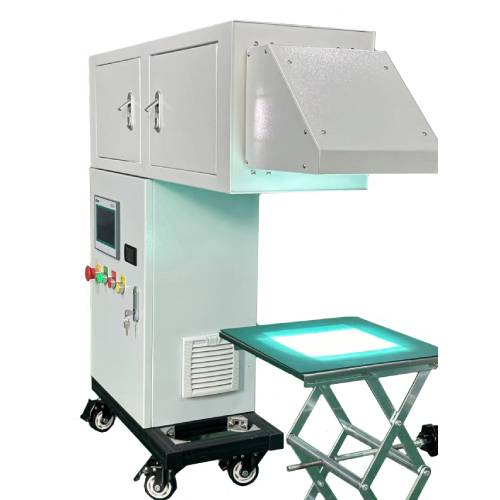


The Solar Simulator and Test Bench is a high-precision laboratory system designed to simulate natural sunlight conditions for photovoltaic testing, material evaluation, and optical research. By accurately reproducing solar irradiance, spectral distribution, and illumination uniformity, the system provides a stable and controllable light environment for testing solar cells, photovoltaic modules, light-sensitive materials, and other solar-related applications. With adjustable irradiance, Grade A spectral matching, and high illumination stability, it is widely used in solar industry R&D, production verification, and quality control.
Application
(1) Photovoltaic Module and Solar Cell Testing
Used for evaluating electrical performance of solar cells and PV modules, including output power, conversion efficiency, I-V characteristics, and degradation behavior under simulated sunlight.
(2) Material Aging and Light Exposure Testing
Suitable for testing the optical stability, weather resistance, and aging performance of coatings, plastics, polymers, films, and other photosensitive materials.
(3) Plant Growth and Agricultural Research
Provides controllable artificial sunlight conditions for indoor plant cultivation studies, including different seasons, geographic locations, and sunlight intensity simulations.
(4) Photochemistry and Optical Experiments
Provides stable and adjustable illumination for chemical reactions, photoelectric conversion research, and light-driven experiments requiring precise spectral control.
(5) Aerospace and Environmental Simulation Testing
Used to simulate solar radiation environments for satellite components, sensors, thermal control materials, and space-related equipment.
Standards
(1) IEC 60904-9 – Photovoltaic Devices: Requirements for Solar Simulators
(2) ASTM E927 – Standard Specification for Solar Simulation for Photovoltaic Testing
(3) IEC 60904-3 – Measurement Principles for Photovoltaic Current-Voltage Characteristics
(4) ISO 9060 – Classification and Measurement of Solar Irradiance Measurement Equipment
(5) ASTM G173 – Reference Solar Spectra for Photovoltaic and Solar Radiation Testing
Technical Parameters
| Parameter | Specification |
|---|---|
| Light Source Type | Short-arc high-pressure xenon lamp |
| Light Source Lifetime | 1000 h+ |
| Light Source Warranty | 800 h |
| Number of Light Sources | Configured according to irradiation area and irradiance requirements |
| Irradiation Area | D100 mm, D300 mm, D500 mm, D600 mm, D700 mm, D900 mm (custom available) |
| Maximum Irradiance in Effective Spot | ≥9 W/mm² |
| Minimum Irradiance in Effective Spot | ≥2 W/mm² |
| Average Irradiance in Effective Spot | ≥4 W/mm² |
| Focus Distance | ≤2 m |
| Reflector Aperture | D300 mm area: ≥300 mm; D600 mm area: ≥500 mm; D900 mm area: ≥890 mm |
| Spectral Range | 300–1700 nm |
| Light Emission Direction | Horizontal output |
| Spectral Matching | Grade A (AM1.5G) |
| Instability | LTI ≤ ±2%, Grade A |
| Equipment Dimension | Approx. 4 m × 1.5 m × 2.6 m (L×W×H) |
| Lamp Head Arrangement | For ≥13 lamp heads: one head faces forward, remaining heads evenly distributed around perimeter |
Features
(1) High-Accuracy Solar Simulation
Reproduces AM1.5G solar spectrum and illumination conditions for reliable testing results.
(2) Excellent Illumination Uniformity
Provides uniform light distribution with spot uniformity ≤±2%, improving measurement consistency.
(3) Adjustable Irradiance Control
Allows adjustment of light intensity, focus distance, and optical alignment according to different testing requirements.
(4) Wide Application Range
Suitable for photovoltaic testing, material aging, optical research, photochemistry, and biological studies.
(5) Stable Xenon Light Source System
High-pressure xenon lamps provide continuous and stable solar-like radiation output.
(6) Flexible Configuration Design
Supports different irradiation areas and customized configurations according to customer requirements.
(7) Reliable Data Reproducibility
Stable spectral output and illumination conditions ensure repeatable experimental results.
FAQ
(1) What is the Solar Simulator and Test Bench mainly used for?
The Solar Simulator and Test Bench is mainly used to reproduce natural sunlight conditions in a controlled laboratory environment. It is commonly used for photovoltaic cell and module testing, material aging evaluation, optical research, photochemistry experiments, and solar radiation simulation. Compared with outdoor sunlight testing, it provides stable and repeatable illumination conditions, allowing researchers and manufacturers to obtain more reliable test data.
(2) What factors should be considered when selecting a solar simulator?
The selection should mainly consider the testing object, required irradiation area, spectral accuracy, irradiance range, and testing standards. For photovoltaic research, spectral matching and illumination uniformity are critical factors. For material aging or optical experiments, irradiation size and long-term stability may be more important. Customers should select the appropriate lamp configuration and optical system according to sample size, test purpose, and laboratory requirements.
(3) Does the Solar Simulator comply with photovoltaic testing standards?
Yes. The system is designed according to international solar simulation requirements, including IEC 60904-9 and ASTM E927 standards. It provides Grade A spectral matching and stable irradiance conditions, making it suitable for professional photovoltaic testing, solar cell performance evaluation, and research applications requiring standardized solar simulation environments.
(4) What are the advantages of using a solar simulator instead of natural sunlight?
Natural sunlight changes continuously due to weather, season, location, and time. A solar simulator provides controlled and repeatable illumination conditions with adjustable intensity, spectrum, and uniformity. This allows researchers to perform accurate comparisons, accelerated testing, and quality evaluations without being affected by outdoor environmental changes.
(5) How to choose the suitable Solar Simulator and Test Bench configuration?
The configuration should be selected according to the sample size, application purpose, required standards, and testing environment. Small irradiation areas are suitable for solar cell and material samples, while larger irradiation areas are recommended for photovoltaic modules or large-area testing. For customized requirements such as special spectra, automated measurement, or integration with existing test systems, please contact our engineers for a suitable solution.
Leave Message Get Price