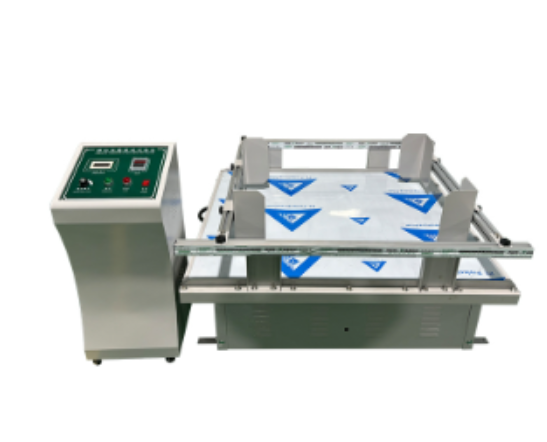
Aging Test System for Varistors
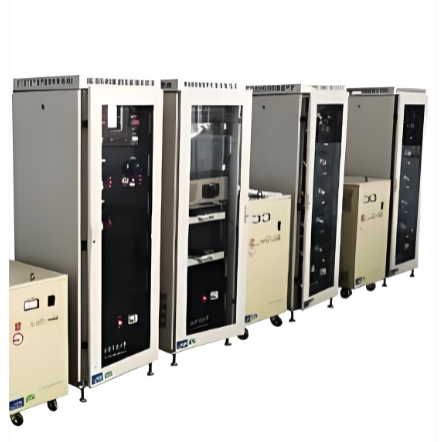


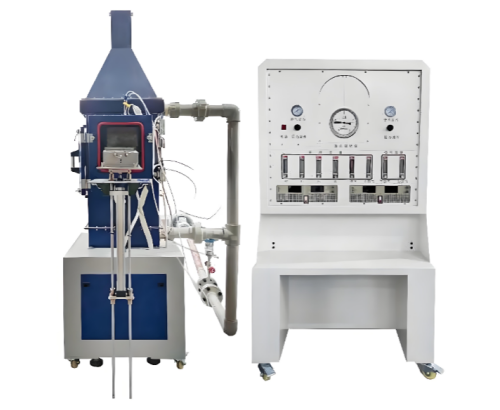
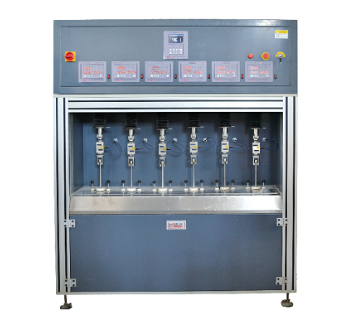
An Aging Test System for Varistors is a specialized testing device used to evaluate the performance degradation and service life of varistors (such as zinc oxide MOVs and surge protective devices) under long-term operating voltage and extreme temperature conditions.By simulating electrical stress and thermal stress encountered in real operating environments, the system helps engineers identify and eliminate early-failure products while verifying their safety and reliability under power grid surges or overvoltage conditions.
Applications
Aging test system can produce AC, half-wave, full-wave and DC high voltage. Thermoelectric accelerated aging test can be carried out on Metal Oxygen Varistor. The full current, resistive current, capacitive current are calculated and P-t curve can be displayed online.
Standards
The test system can meet the requirements of IEC 60099-4 and relevant standards.
Technical Parameters
| Parameters / Source | AC | Half and full wave | DC | Measurement uncertainty |
| Voltage | RMS, 0-15kV | RMS, 0-15kV | Average, 0-15kV | ±1% |
| All current | Peak, 0-100mA | Peak, 0-100mA | Average, 0-100mA | ±1% |
| Resistive current | Peak, 0-100mA | Peak, 0-100mA | Average, 0-100mA | ±1% |
| Power loss | Average, 0-100W | Average, 0-100W | Average, 0-100W | ±1% |
| Environment | AC voltage: 3kV; DC voltage: 3kV
Temperature: 85-145°C | |||
Features
Accelerated Aging and Environmental Simulation: Equipped with a programmable high-temperature oven/climatic chamber capable of setting operating temperatures up to high-temperature conditions or even higher. Combined with rated AC or DC voltage loading, the system utilizes the Arrhenius model to accelerate the aging process of components, significantly reducing the required testing time.
Multi-Mode Voltage Source: The system can output AC, half-wave, full-wave, and high-voltage DC power, meeting the testing requirements of varistors with different materials and specifications.
Multi-Parameter Online Monitoring: During testing, the system can calculate and display total current, resistive current, capacitive current, and power dissipation (P–t curve) in real time, while continuously monitoring changes in leakage current.
Intelligent Data Recording and Curve Analysis: The system software features automatic recording and analysis functions, supporting the plotting of time-varying curves for various electrical parameters, thereby facilitating failure mode analysis and lifetime estimation.
Standards Compliance: The equipment is designed in strict accordance with relevant international and national standards (such as IEC 60099-4), ensuring the authority and reliability of the test data.
Highly Reliable Safety Protection Mechanisms: To address possible short circuits, thermal fuse failures, or breakdown events during testing, the equipment is equipped with multiple overcurrent, overvoltage, and overtemperature protection devices, ensuring the safety of both laboratory environments and operating personnel.
Maintenance Information
Daily Inspection: Check whether the ventilation and exhaust systems of the testing equipment and aging chamber are operating properly, ensure that the cooling vents are not blocked, and maintain the ambient temperature within the allowable range of the system (typically within the specified operating temperature range).
Monthly Cleaning: Clean dust and debris from the equipment surface. Special attention should be given to checking oxidation and wear of all test fixtures and probes. If contamination is present, use a dedicated cleaning agent (such as anhydrous ethanol) for cleaning to prevent excessive contact resistance, overheating, or measurement errors.
Quarterly Inspection: Inspect all input/output (I/O) cables, power cables, and communication lines (such as RS-232. GPIB, and Ethernet cables) for aging, damaged insulation, or loose terminals.
FAQ
1. What is the purpose of a varistor aging test?
The main purpose is to simulate the continuous overvoltage and high-temperature conditions that a varistor may encounter during actual operation. By applying severe electro-thermal stress, the test can expose manufacturing defects in advance and predict the performance degradation of the device over its expected service life, thereby verifying the reliability and safety of the product design.
2. What types of tests can the system perform?
The system is generally capable of performing multiple types of tests, including electro-thermal accelerated aging tests, DC aging tests, AC aging tests, and impulse current aging tests (such as 8/20 μs waveforms). It can generate various high-voltage waveforms, including half-wave, full-wave, AC, and DC outputs.
3. Which key parameters are monitored during the test process?
During test operation, the system typically performs online calculation and real-time monitoring of total current, resistive current, and capacitive current. It also continuously plots the variation curves of leakage current and power dissipation, which serve as important indicators for evaluating the aging condition of the varistor.
4. What are the criteria for determining varistor aging?
The evaluation is mainly based on changes in the nonlinear coefficient, drift of the reference voltage ((U_{1mA})), and the proportion of third-harmonic components in the leakage current. Detailed test severity levels and evaluation criteria can be referenced from international standards such as IEC 60099-4.
5. What are the main hardware components of the system?
The core equipment generally consists of a high-precision multi-channel high-voltage power supply, a high/low-temperature environmental test chamber (with air inlet, exhaust, and temperature control functions), a high-precision data acquisition card, and dedicated data processing and monitoring software. These components enable synchronized testing and automatic data recording for large batches of varistors.
Leave Message Get Price