Anti-Static Testing Machine
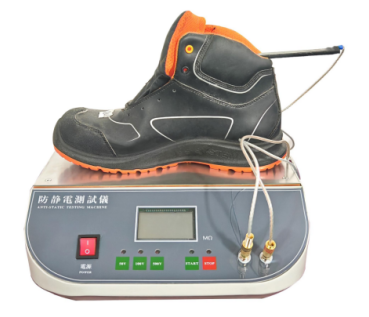


A closed circuit composed of the test specimen, steel balls, and a stainless steel plate is energized under a specified voltage. The electrical resistance is measured to determine whether it falls within the anti-static insulation resistance range, thereby evaluating whether the specimen has anti-static properties.
Application
The instrument is used in various industries for anti-static evaluation:
(1) Safety footwear — anti-static performance testing
(2) Protective shoes — compliance verification
(3) Electronic industry materials — electrostatic control testing
(4) Rubber and polymer materials — resistance measurement
(5) Quality control laboratories — standard compliance testing
(6) Research and development — material property analysis
Standards
Complies with GB/T 20991, GB/T 21148, BS EN ISO 20344, CAN/CSA-Z195, and other relevant standards.
Technical Specifications
Item | Specification |
Voltage Range | DC 50V / DC 100V / DC 500V |
Test Range | 0.001–2000 MΩ |
Accuracy | ±2%, ±5%, ±10% (varies with measurement range) |
Operating Environment | Temperature 0–40°C, Humidity 20–90% RH |
Dimensions | 35 × 34 × 14 cm |
Weight | Approx. 11 kg |
Power Supply | AC 220V, 50Hz |
Accessories
(1) 4 kg of 5 mm stainless steel balls
(2) 1 power cable
(3) 1 instruction manual
(4) 1 warranty certificate
Measurement Notes
(1) EN, GB standards: anti-static range is (0.1–1000) MΩ, test voltage DC 100V
(2) ASTM standard: anti-static range is (1–1000) MΩ, test voltage DC 50V
(3) CSA standard: anti-static range is (1–100) MΩ, test voltage DC 500V
Conclusion
The Anti-Static Testing Machine provides accurate and reliable measurement of electrical resistance for evaluating anti-static properties. It is essential for ensuring safety, compliance, and performance in industries where electrostatic control is critical.
FAQ
1. What is this product?
It is a testing instrument used to measure electrical resistance for evaluating anti-static properties.
2. What is this product used for?
It is used to determine whether materials meet anti-static standards.
3. What is the working principle of this product?
It measures resistance by applying a DC voltage through a closed circuit formed with the specimen.
4. Why is this product important?
It ensures safety by preventing electrostatic buildup in sensitive environments.
5. What industries is this product suitable for?
It is suitable for footwear, electronics, rubber, plastics, quality control, and testing laboratories.
Leave Message Get Price