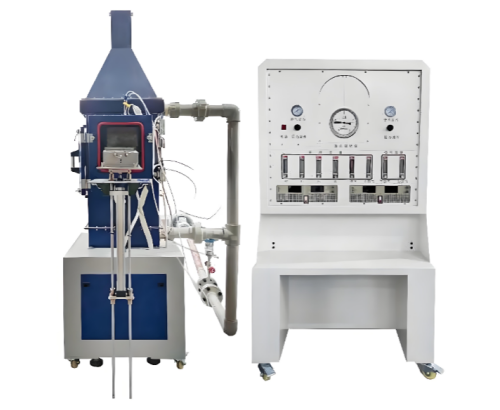
Dust Cloud Minimum Ignition Temperature Tester G-1000A
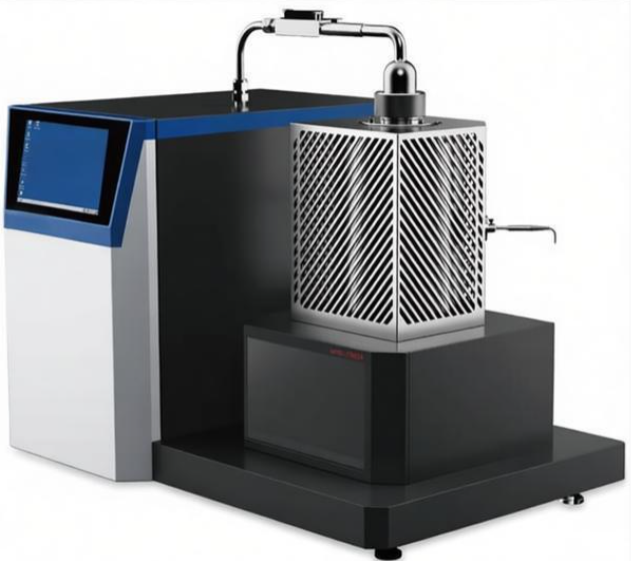


The Dust Cloud Minimum Ignition Temperature Tester is a specialized instrument used to evaluate the ignition sensitivity of dust clouds under specific heating conditions. It is primarily applied in the explosion hazard assessment of dust generated in the production and processing of materials such as aluminum powder, zinc powder, plastic powders, intermediates of organic synthetic pharmaceuticals, wheat flour, sugar, wood dust, dyes, phenolic resin dust, milk powder, tea powder, tobacco dust, coal dust, and plant fiber dust. The instrument enables precise determination of the minimum ignition temperature of dust clouds.
Application
(1) Metal Powder Industry
Applicable to aluminum powder, zinc powder, and other reactive metal dusts.
(2) Chemical and Pharmaceutical Industry
Used for organic intermediates, synthetic pharmaceutical powders, and fine chemical dusts.
(3) Food Industry
Suitable for wheat flour, sugar, milk powder, tea powder, and other food-related dusts.
(4) Energy and Industrial Materials
Evaluates coal dust, plastic powders, dyes, phenolic resin dust, and plant fiber dust.
Standards
(1) ASTM E1491-06
(2) EN 50281-2-1
(3) GB/T 16429
(4) IEC 61241-2
(5) ISO/IEC 80079-20-2
Technical specifications
Item | Specification |
Working Environment | (5–45)°C, <85% RH |
Temperature Range | Room Temperature to 1000°C |
Heating Time | ≤20 min (from room temperature to 500°C) |
Temperature Control Stability | ±5.0°C |
Temperature Measurement Accuracy | ±3.0°C |
Temperature Measurement Precision | ±0.1°C |
Powder Injection Pressure Range | (0–100) kPa |
Pressure Accuracy | ±5% |
Air Storage Chamber Volume | 500 mL |
Ambient Temperature Measurement Range | (-10 to +60)°C |
Ambient Humidity Measurement Range | (5–95)% RH |
Interface | USB × 2 |
Power Supply | 220 VAC / 50 Hz |
Power | 2600 W |
Dimensions | 670 mm × 400 mm × 590 mm |
Features
The Dust Cloud Minimum Ignition Temperature Tester G-1000A provides an accurate solution for evaluating the ignition characteristics of combustible dust clouds. With controlled heating, precise temperature measurement, and compliance with recognized testing standards, it supports explosion risk assessment, material safety evaluation, and process safety improvement for industries involving combustible dust.
(1) Built-in internationally recognized testing standards; supports both standard parameter testing and user-defined settings
(2) Utilizes a fuzzy PID temperature control algorithm to achieve high-precision temperature regulation
(3) Equipped with a temperature sensor calibration interface for convenient calibration and correction
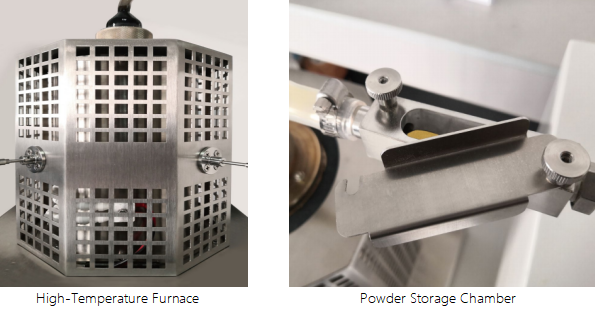
(4) Adopts a Godbert–Greenwald furnace with a built-in quartz tube to ensure reliable operation of the heating system
(5) The furnace chamber is made of thermally insulated vacuum ceramic fiber, providing excellent heat insulation performance
(6) Temperature thermocouples are from internationally recognized brands, ensuring long-term stable operation
(7) Features ambient temperature and humidity monitoring with automatic recording of environmental data
(8) Remote control operation ensures the safety of test personnel
(9) User hierarchical management enables multi-level account access control
(10) USB interface with plug-and-play functionality for convenient data management
(11) Professional industrial design with a clean and elegant appearance
(12) 7-inch color LCD touchscreen with dynamic display of the test process
FAQ
1.What is the purpose of testing the minimum ignition temperature of dust clouds?
The test determines the lowest temperature at which dispersed combustible dust can ignite under defined conditions. The result helps industries evaluate ignition hazards, improve process safety measures, and establish appropriate protection strategies.
2.What types of materials can be tested with this instrument?
The tester is designed for combustible dust materials such as metal powders, chemical powders, food powders, plastic particles, coal dust, and plant fibers. The test suitability depends on the material properties and applicable safety requirements.
3. What is the working principle of this product?
Dust is dispersed into a high-temperature furnace, and the temperature at which ignition occurs is recorded.
4. Why is this product important?
It helps identify hazardous conditions and prevents dust explosions in industrial processes.
5. What industries is this product suitable for?
It is suitable for chemical, pharmaceutical, food processing, energy, and materials industries.
6.What factors may influence the test result?
Dust concentration, particle characteristics, moisture content, heating temperature, and test conditions can affect ignition behavior. Proper sample preparation and standardized procedures are important for obtaining reliable results.
7.How should a suitable dust ignition tester be selected?
Selection should consider the required temperature range, applicable standards, tested materials, laboratory safety requirements, and data management needs. For specific configuration recommendations, please contact QINSUN engineers for professional guidance.
Leave Message Get Price