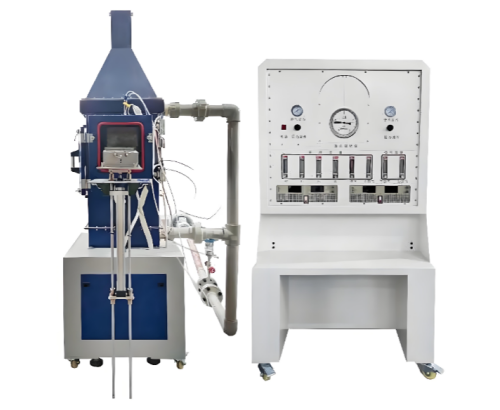
Vertical Fire Resistance Limit Testing Furnace
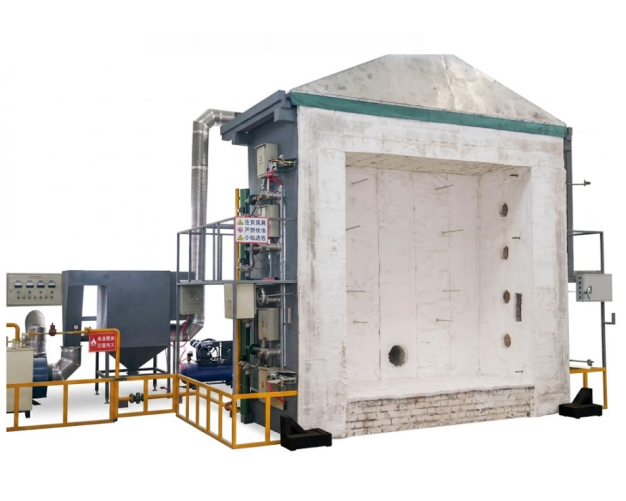


The Vertical Fire Resistance Test Furnace is designed to evaluate the fire resistance performance of building components under vertical fire exposure conditions. The system consists of a furnace body, combustion system, control system, and exhaust system. It is suitable for testing single-sided walls, fire doors, shutters, and similar structural elements. The furnace adopts a fixed structure with high thermal efficiency and stable operation, ensuring compliance with international fire testing standards.
Application
The furnace is used for fire resistance testing of vertical structural components such as walls, fire-rated doors, rolling shutters, and partition systems. It is widely applied in construction material testing laboratories, fire protection product certification, research institutes, and quality inspection agencies.
Standards
(1) EN 1363-1 (Fire resistance tests – General requirements)
(2) ISO 834 (Fire-resistance tests – Elements of building construction)
(3) GB/T 9978 (Fire resistance test methods for building components)
(4) ASTM E119 (Fire tests of building construction and materials)
(5) ASTM E1529 / UL 1709 (Hydrocarbon fire curve)
(6) BS 476 (Fire tests on building materials and structures)
Parameters
Furnace System
| Item | Specification |
|---|---|
| Furnace Type | Vertical fire resistance test furnace |
| Internal Dimensions | 4000 × 4000 × 1500 mm |
| Maximum Temperature | 1150°C |
| Fuel Type | Liquefied petroleum gas (LPG) |
| Max LPG Consumption | 175 kg/h (87.5 m³/h) |
| Max Air Consumption | 2275 m³/h |
| Furnace Pressure | 20 ± 5 Pa (at 3 m height) |
| Continuous Test Duration | Up to 240 min |
| Outer Wall Temperature | ≤ 45°C + ambient |
Specimen Capacity
| Item | Specification |
|---|---|
| Wall / Door Size | Max 3000 × 3000 mm |
| Specimen Type | Walls, fire doors, rolling shutters |
| Fire Exposure | Single-sided |
Temperature Control System
| Item | Specification |
|---|---|
| Heating Curve | ISO 834 / GB/T 9978 |
| Control Accuracy | ≤ ±5% after 30 min |
| Temperature Uniformity | As per standard requirements |
| Thermocouples | 8 channels |
| Specimen Temperature Channels | 40 channels |
Data Acquisition
| Item | Specification |
|---|---|
| Furnace Temperature | 8 channels |
| Specimen Temperature | 40 channels |
| Displacement / Strain | 12 channels |
| Load | 8 channels |
Features
The furnace adopts a full refractory fiber structure, providing fast heating response and energy efficiency. Eight high-speed temperature-regulating burners ensure uniform heat distribution and precise temperature control. The system uses advanced PLC-based automatic control with industrial PC interface, enabling real-time monitoring and curve tracking. Pulse combustion technology optimizes fuel efficiency and environmental performance. The furnace is equipped with multiple observation ports with high-temperature resistant quartz glass for safe monitoring. Comprehensive safety systems include flame monitoring, automatic gas shut-off, pressure control, and alarm functions. Optional high-temperature camera systems allow real-time internal observation during testing.
Accessories
(1) Furnace body with refractory structure
(2) LPG combustion system with burners
(3) Exhaust and chimney system
(4) PLC control system and industrial PC
(5) Thermocouples and sensors
(6) Gas and air pipeline systems
(7) Safety alarm and protection devices
(8) Observation ports
(9) Optional high-temperature camera system
FAQ
(1) What is this product?
It is a vertical fire resistance testing system used to evaluate how building components perform when exposed to fire from one side under controlled conditions.
(2) What is this product used for?
It is used to test fire resistance of walls, fire doors, and shutters, helping determine their integrity, insulation, and load-bearing performance during fire exposure.
(3) What is the working principle of this product?
The furnace generates controlled fire conditions following standard curves, while sensors monitor temperature, pressure, and structural changes of the specimen throughout the test.
(4) Why is this product important?
It ensures compliance with fire safety regulations and helps verify the reliability of building components in real fire scenarios, improving overall construction safety.
(5) What industries is this product suitable for?
It is suitable for construction, fire protection manufacturing, testing laboratories, certification bodies, and research institutions involved in fire safety engineering.
(6) Can QINSUN provide customized fire testing solutions for different laboratories?
Yes. QINSUN provides customized configurations based on specimen size, testing standards, and laboratory requirements. Our engineers can assist with system selection, installation guidance, calibration support, and complete fire testing solutions for different applications.
Leave Message Get Price