Vacuum Cleaner Dust Removal Performance Tester
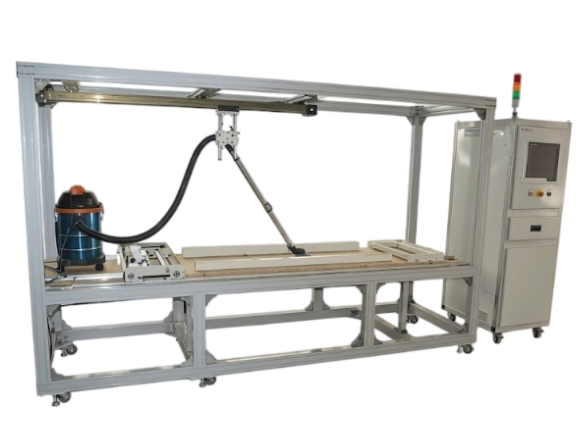


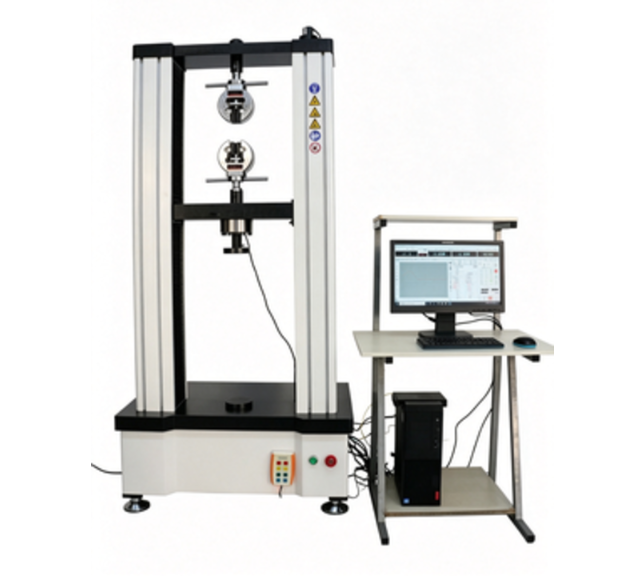
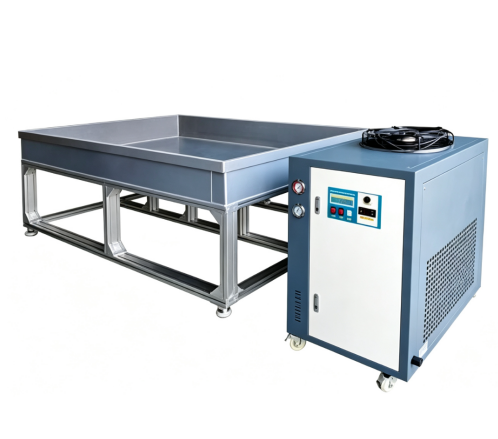
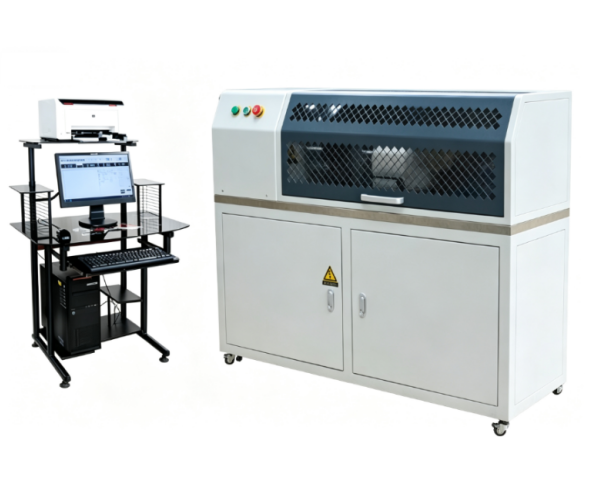
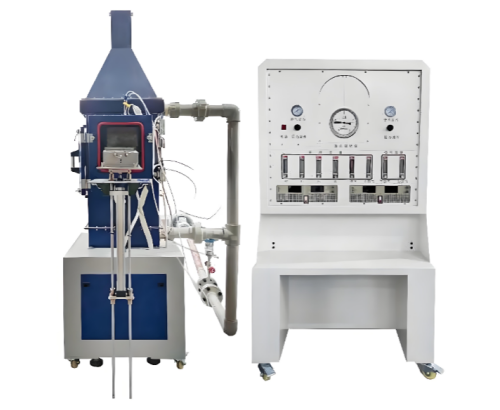
The High-End Vacuum Cleaner Dust Removal Performance Testing Equipment is designed to evaluate the dust removal and cleaning performance of vacuum cleaners on carpets and hard floors. You use this system to simulate real cleaning conditions by driving the vacuum cleaner across standardized test surfaces under controlled speed and stroke settings. Manufactured in compliance with relevant national and international standards, the equipment provides reliable performance data for product development, quality control, and laboratory testing.
The Vacuum Cleaner Dust Removal Performance Testing Equipment provides a professional solution for evaluating cleaning efficiency and dust removal performance under standardized conditions. With precise particle measurement, automated control, and compliance with international testing methods, it supports reliable performance verification for vacuum cleaner manufacturers, laboratories, and research institutions.
Applications
Dust removal performance evaluation of household vacuum cleaners
Cleaning efficiency testing on carpets and hard floor surfaces
Product development and performance comparison during R&D
Type testing and routine quality inspection in manufacturing plants
Performance verification by third-party testing laboratories
Standards
GB/T 20291.1-2014: Household and Similar Electrical Appliances – Vacuum Cleaners – Part 1: Methods for Measuring Performance
IEC 60312:2010: Vacuum Cleaners for Household Use – Methods for Measuring the Performance
IEC 62885-2:2020: Surface Cleaning Appliances – Part 2: Dry Vacuum Cleaners for Household or Similar Use – Methods for Measuring the Performance
Technical Parameters
| Item | Specification |
|---|---|
| Particle Size Measurement Range | 0.3 μm – 10 μm |
| Counting Range | < 1 – 1,000,000 particles/cm³ |
| Power Supply | 220V, 50/60 Hz, 1.5KW |
| Filtration Efficiency Calculation Method | Laser particle counter |
| Control System | 17-inch touch screen + industrial computer + Mitsubishi PLC (Japan) |
| Particle Size Counting Method | Upstream + downstream synchronization |
| Dust Generator | Vacuum dispersion technology |
| Test Chamber | 1100×600×1400 mm, with visual observation window; Weight: approx. 170 kg |
| Gas Filtration Technology | High-efficiency filter |
| Equipment Dimensions | 1850×820×2250 mm (W×D×H) |
Features
You can accurately simulate real cleaning motion through synchronized servo-driven movement
PLC-controlled operation ensures stable speed, stroke, and test repeatability
Automatic dust dispersion improves consistency of dust distribution on test surfaces
Supports both carpet and hard floor dust removal performance evaluation
Integrated electrical parameter monitoring records voltage, current, power, and energy consumption
Touchscreen interface allows intuitive parameter setting and test control
USB data export enables convenient result storage and report generation
Accessoriess
(1) Servo-driven dust distribution unit
(2) Standard carpet test surface
(3) Standard hard floor test surface
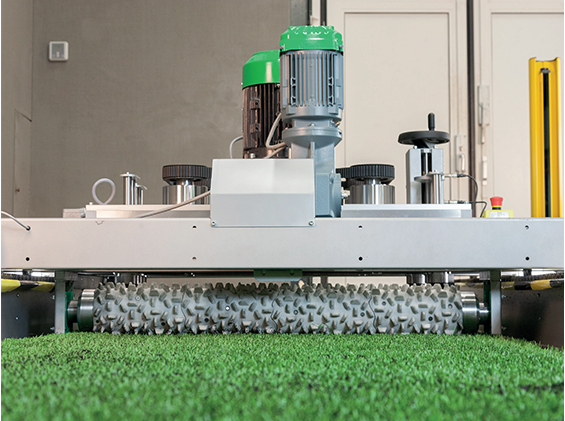
(4) Dust roller and fiber roller assemblies
(5) USB data export interface
FAQ
1. What types of vacuum cleaners can be tested using this equipment?
You can test household vacuum cleaners designed for carpet and hard floor cleaning, including upright and canister models.
2. Can the test speed be adjusted to match real usage conditions?
Yes, you can freely adjust the travel speed between 0 and 1.0 m/s through the PLC control system.
3. How is dust applied to the test surface?
Dust is evenly distributed using a servo-driven automatic dust dispersion system with mechanical roller vibration.
4. What parameters are recorded during testing?
The system records voltage, current, power, electrical energy, and operational test data.
5. How are test results stored and exported?
You can export test data via USB and print the results as needed.
6. Is the equipment suitable for laboratory certification testing?
Yes, it is designed in accordance with relevant GB and IEC standards and is suitable for laboratory and certification testing.
7.Why are carpet and hard floor tests performed separately?
Different surfaces affect dust retention and airflow behavior. Carpet fibers can trap particles, while hard floors allow easier movement of dust. Separate testing provides more accurate evaluation of actual household cleaning performance.
8.How does the laser particle counter improve test accuracy?
The laser particle counter measures particle concentration changes during cleaning and supports upstream and downstream comparison. This avoids relying only on visual assessment and provides quantitative performance data.
9.What factors should be considered when selecting this testing system?
Users should consider applicable standards, test surface requirements, particle measurement range, automation level, and data analysis capability. The configuration should match the laboratory's testing scope and product evaluation needs. Contact QINSUN engineers for professional selection advice.
10.How often should the equipment be maintained or calibrated?
Maintenance frequency depends on testing workload and environment. Regular cleaning, filter inspection, and particle counter calibration are recommended to ensure measurement stability and maintain reliable test results over long-term operation.
Leave Message Get Price