Vacuum Cleaner Filtration Efficiency Testing Equipment
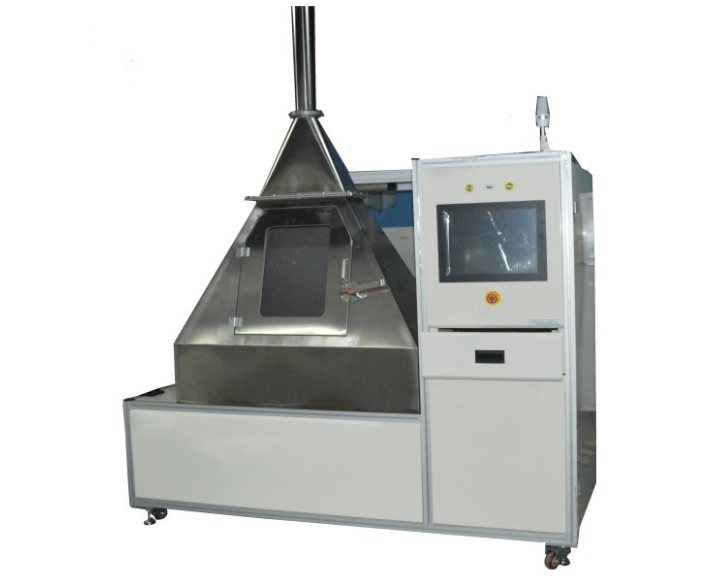


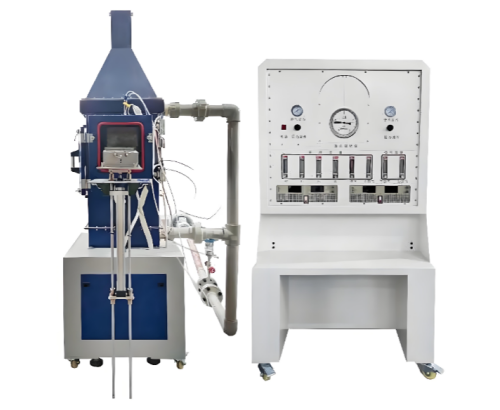
The Vacuum Cleaner Filtration Efficiency Testing Equipment is designed for precise evaluation of dust separation and filtration efficiency in vacuum cleaners. You use this system to measure particle concentration upstream and downstream of the filtration system, enabling accurate calculation of filtration efficiency across multiple particle sizes. By combining a proprietary control system with imported laser particle counters, the equipment delivers reliable, repeatable, and standards-aligned test data suitable for product development, quality control, and certification testing.
Applications
Filtration efficiency testing of household vacuum cleaners
Performance verification of vacuum cleaner dust separation systems
Comparative testing of different filter structures and materials
R&D validation during vacuum cleaner product development
Incoming and outgoing quality inspection in manufacturing plants
Testing services provided by third-party laboratories
Standards
IEC 60312-1: Vacuum cleaners for household use – Methods for measuring the performance – Part 1: Dry vacuum cleaners
IEC 62885-2: Surface cleaning appliances – Part 2: Dry vacuum cleaners for household or similar use – Methods for measuring the performance
ASTM F431: Standard Test Method for Measuring the Filtration Efficiency of Vacuum Cleaners
ASTM F558: Standard Test Method for Measuring Air Performance Characteristics of Vacuum Cleaners
ISO 29463: High-efficiency filters and filter media for removing particles from air
Technical Parameters
| Item | Specification |
|---|---|
| Particle Size Measurement Range | 0.3 μm – 10 μm |
| Counting Range | < 1 – 1,000,000 particles/cm³ |
| Power Supply | 220V, 50/60 Hz, 1.5KW |
| Filtration Efficiency Calculation Method | Laser particle counter |
| Control System | 17-inch touch screen + industrial computer + Mitsubishi PLC (Japan) |
| Particle Size Counting Method | Upstream + downstream synchronization |
| Dust Generator | Vacuum dispersion technology |
| Test Chamber | 1100×600×1400 mm, with visual observation window; Weight: approx. 170 kg |
| Gas Filtration Technology | High-efficiency filter |
| Equipment Dimensions | 1850×820×2250 mm (W×D×H) |
Features
You achieve high-precision filtration efficiency analysis using imported laser particle counters
Proprietary control system ensures stable particle generation and synchronized upstream/downstream measurement
Real-time data acquisition with automatic calculation of filtration efficiency
Integrated dust generation and suction duct design improves test repeatability
Touchscreen operation simplifies parameter setting and test monitoring
USB data export allows easy report generation and traceability
Enclosed test chamber with viewing window enhances safety and visibility
Accessoriess
(1) Imported laser particle counter
(2) Upstream and downstream sampling probes
(3) Vacuum dispersion dust generator
(4) Standard suction duct (100 mm diameter)
(5) HEPA exhaust filtration module
(6) USB data export interface
FAQ
1. What types of vacuum cleaners can you test with this equipment?
You can test upright, canister, handheld, and other suction-based vacuum cleaners designed for dry dust collection.
2. How is filtration efficiency calculated?
Filtration efficiency is calculated by comparing particle concentrations measured upstream and downstream using laser particle counters.
3. Does the system support multiple particle size ranges?
Yes, you can measure particles from 0.3 μm to 10 μm simultaneously.
4. How do you export test results?
Test data and results can be exported directly via USB for report generation and record keeping.
5. Is the dust generation process stable and repeatable?
Yes, the vacuum dispersion dust generator ensures uniform particle distribution for consistent test results.
6. What safety measures are included?
The enclosed test chamber, HEPA exhaust filtration, and viewing window ensure safe operation and environmental protection.
7. How to choose the right configuration for this tester?
The appropriate configuration depends on the vacuum cleaner type, required particle size range, testing standards, automation requirements, and production environment. Users should consider factors such as particle counter accuracy, dust generation method, chamber size, and data management functions when selecting the suitable system.
Leave Message Get Price