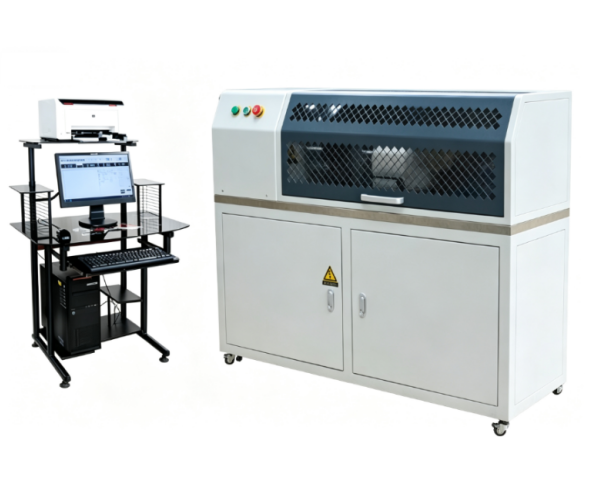
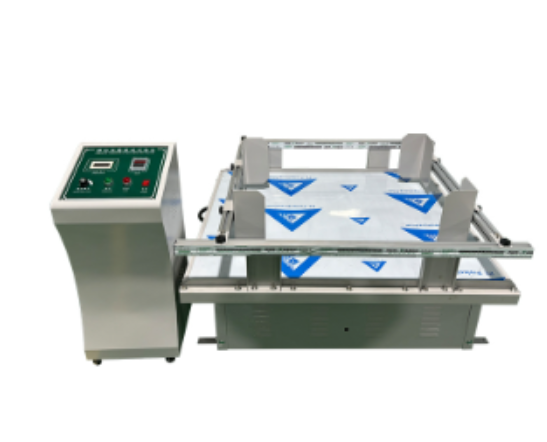
Coated Fabric Flexing Test Machine
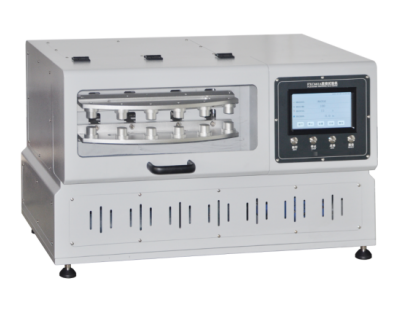


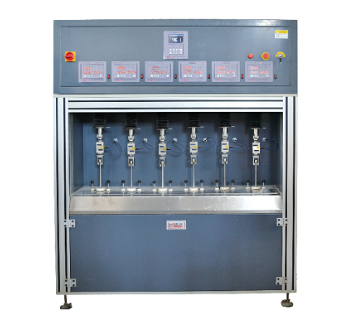
A rectangular strip of coated fabric is wrapped around two opposing cylindrical positions, forming a tubular shape. One of the cylinders moves reciprocally along its axis, causing the coated fabric tube to alternately compress and relax, which induces folding in the sample. This folding action continues either until the predetermined number of cycles is reached or the sample exhibits significant damage.
Applicable Standards
ISO 7854
GB/T 12586 – Method B
BS 3424: Part 9
Other relevant international and national standards
Features
The rotation and movement of the discs are controlled by a precision motor system, ensuring controllable speed and accurate displacement.
The instrument’s motion is driven by a cam structure, providing reliability and stability.
The instrument’s moving stroke is equipped with imported precision guide rails, ensuring durability.
Technical Specifications
(1) Clamps: 6 or 10 sets
(2) Rotation Speed: 8.3 Hz ± 0.4 Hz (498 ± 24 r/min)
(3) Cylinders: Outer diameter 25.4 ± 0.1 mm
(4) Test Path: Arc radius R460 mm
(5) Test Stroke: 11.7 ± 0.35 mm
(6) Clamp Width: 10 ± 1 mm
(7) Distance Inside Clamp: 36 ± 1 mm
(8) Sample Size: 50 × 105 mm
(9) Dimensions: 40 × 55 × 35 cm
(10) Weight: Approx. 65 kg
(11) Power Supply: 220 V, 50 Hz
Configuration List
(1) Main Unit – 1 set
(2) Sampling Template – 1 piece
(3) Certificate of Conformity – 1 copy
(4) User Manual – 1 copy
(5) Delivery Note – 1 copy
(6) Acceptance Report – 1 copy
FAQ
1.What is a Coated Fabric Flexing Test Machine?
A Coated Fabric Flexing Test Machine is a specialized device used to evaluate the durability and flexibility of coated fabrics. This machine simulates the repetitive bending and flexing that materials undergo during use, allowing manufacturers to assess the longevity and performance of their products under various conditions. It is essential for quality assurance in industries such as automotive, textiles, and outdoor gear.
2.Why is flex testing important for coated fabrics?
Flex testing is crucial for coated fabrics because it helps determine how well the material will withstand repeated stress and flexing during its lifecycle. This is especially significant in applications like seat covers, tents, and apparel, where flexibility is vital. Testing ensures that the fabric maintains its integrity and functionality, preventing premature wear and failure.
3.How does the Coated Fabric Flexing Test Machine operate?
The Coated Fabric Flexing Test Machine operates by subjecting a sample of the coated fabric to a controlled flexing motion over a set number of cycles. The machine typically records data on parameters such as the number of flexes, any visible damage, and changes in physical properties. This data is crucial for assessing the material's performance and lifespan.
4.What standards are used for flex testing coated fabrics?
Flex testing of coated fabrics may adhere to various industry standards, including ASTM D 4268 for flex resistance of textile fabrics. These standards provide guidelines on testing methods, sample preparation, and equipment specifications, ensuring consistency and reliability in test results across different laboratories and manufacturers.
5.How can I choose the right Coated Fabric Flexing Test Machine?
When selecting a Coated Fabric Flexing Test Machine, consider factors such as the type of fabrics you will test, the desired testing speed, data collection capabilities, and compliance with relevant industry standards. It's essential to ensure that the machine is versatile and can handle various coatings and fabric types to meet your testing needs.
Leave Message Get Price