Sulfur Dioxide + Composite Salt Spray Test Chamber
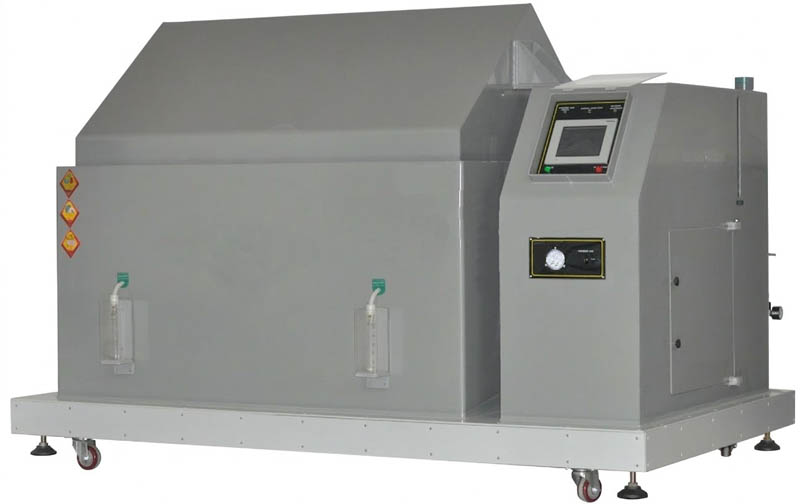


1. Product Name | ||
1.1 Name 1.2 Model | Salt Spray Test Chamber G-AHL-510 | |
2. Application and Description | ||
2.1 Scope of Application | 1.This equipment is suitable for environmental simulation reliability tests, such as evaluating the corrosion resistance of products or metal materials under artificially simulated salt spray conditions. 2.Using this equipment for purposes other than the above may cause personal injury or equipment damage. | |
2.2 Specimen Restrictions | 1.Testing or storing specimens that are flammable, explosive, or highly volatile. 2.Testing or storing specimens with strong electromagnetic emission sources. | |
3. Volume and Dimensions | ||
3.1Inner Chamber Dimensions | (W)1200mm*(H)850mm*(D)500mm | |
3.2 Outer Chamber Dimensions | (W)2150mm*(H)1450mm*(D)1200mm | |
3.3 Volume | Test chamber volume: 500 L | |
4. Performance | ||
4.1 Temperature Control Method | Waterless temperature control is used with five-sided heating, which greatly improves uniformity and reduces the effect of water vapor on pH value. This ensures that the pH of the salt spray remains stable and meets the latest domestic and international testing standards. | |
4.2 Requirements | Air compressor (5–6 kg/cm²) | |
4.3 Temperature/Humidity Range | Temperature: 35℃ to 50℃ | |
4.4 Temperature Fluctuation | Temperature fluctuation: ±0.5℃ | |
4.5 Temperature Deviation | Temperature: ≤ ±1℃ | |
4.6 Temperature Uniformity | ≤2℃ | |
4.9 Settling Rate | 1~2ml/80cm² 1hr | |
4.10 Spray Method | Compressed air spray tower method | |
4.11 Spray Pressure | 1±0.1kg/cm² | |
4.11 Fog Removal Method | Air generated by the compressor enters the test chamber to disperse excess fog. The gas is discharged through the exhaust holes at the back of the chamber, keeping the chamber cover free of fog and condensation, allowing clear observation of the corrosion status inside the chamber. | |
4.12 Applicable Standards and Equipment Compliance | GB/T 10125-1997: "Corrosion Tests in Artificial Atmospheres – Salt Spray Test" | |
4.13 Common Test Conditions | Neutral Salt Spray Test (NSS) Acetic Acid Salt Spray Test (ASS) Copper-Accelerated Acetic Acid Salt Spray Test (CASS) | |
4.14Sulfur Dioxide and Carbon Dioxide Test Conditions | 1. Neutral salt spray test for 2 hours, followed by drying under laboratory conditions for 22 hours. 2. NO₂ concentration 10×10⁻⁶, SO₂ concentration 5×10⁻⁶, humidity 95%, temperature 25℃, test duration 48 hours. 3. Neutral salt spray test for 2 hours, followed by drying under laboratory conditions for 22 hours. 4. NO₂ concentration 10×10⁻⁶, SO₂ concentration 5×10⁻⁶, humidity 95%, temperature 25℃, test duration 72 hours. | |
5. Structural Components | Remarks | |
5.1 Inner Chamber Material | Made of PP (polypropylene) temperature- and impact-resistant board, thickness 10 mm. | |
FAQ
1.What is a Salt Spray Test Chamber?
A Salt Spray Test Chamber is an equipment used to simulate the corrosive environment of saltwater conditions. It subjects materials to a saline mist or fog, allowing manufacturers to evaluate the corrosion resistance of their products, coatings, or materials. This testing is crucial for industries such as automotive, aerospace, and marine to ascertain the durability and longevity of components in harsh environments.
2.How does a Salt Spray Test Chamber work?
The Salt Spray Test Chamber operates by dispersing a saline solution into the testing environment where specimens are placed. The chamber maintains controlled temperature and humidity to recreate the corrosive atmosphere found in coastal regions. By continuously exposing the samples to this salt-laden mist, manufacturers can observe the onset of corrosion and the effectiveness of protective coatings over time.
3.What are the standards for Salt Spray Testing?
Salt Spray Testing is conducted according to various industry standards, with the most common being ASTM B117. This standard outlines the methodology for conducting salt spray tests, including the concentration of the salt solution, temperature conditions, and duration of exposure. Other standards, like ISO 9227, may also be referenced depending on the specific requirements of the industry or project.
4.What materials can be tested in a Salt Spray Test Chamber?
A variety of materials can be tested in a Salt Spray Test Chamber, including metals, coatings, paints, and various alloys. Commonly tested materials include stainless steel, aluminum, and galvanized steel, as well as protective finishes like powder coatings, paints, and anodized coatings. This testing helps determine which materials and finishes can withstand corrosive environments effectively.
5.How long does a Salt Spray Test take?
The duration of a Salt Spray Test can vary based on the specific requirements of the test and the materials being evaluated. Typically, tests can last anywhere from 24 hours to several weeks, depending on the desired outcome and the expected lifespan of the materials under normal use. For standardized testing, durations might be predefined based on regulatory guidelines or industry expectations.
6.What are the benefits of using a Salt Spray Test Chamber?
Using a Salt Spray Test Chamber offers numerous benefits, including providing a controlled environment to accurately assess corrosion resistance, helping manufacturers improve product quality, and reducing long-term maintenance costs. By identifying weaknesses in materials and coatings before they reach the market, companies can enhance their products' durability and reliability, ensuring customer satisfaction and compliance with industry standards.
Leave Message Get Price