Textile Flammability Tester (Large 45°)
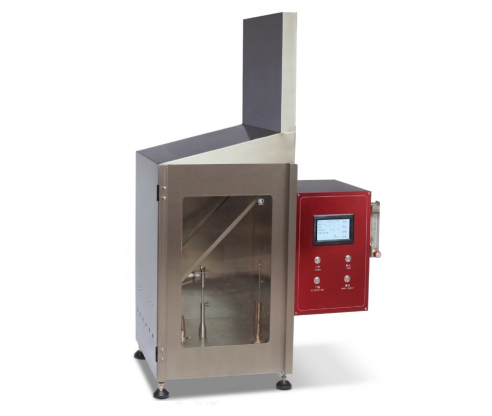


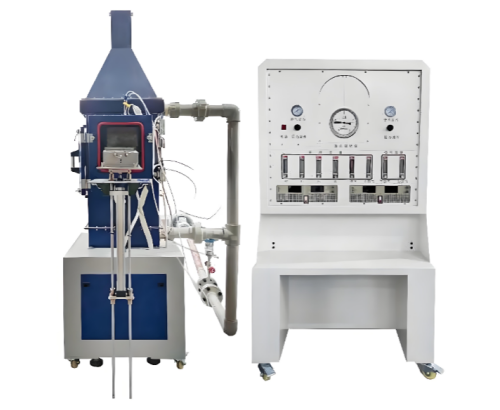
The Textile Flammability Tester (Large 45°) is designed to evaluate the flammability characteristics of textile materials at a 45° angle. It allows determination of afterflame time, afterglow time, damaged length, damaged area, and the number of flame contacts required for specified burning conditions. This tester is suitable for textile research, quality control, and compliance testing according to national and international flammability standards.
Application
The Textile Flammability Tester (Large 45°) is used to ignite fabrics at a 45° angle for two methods:
Method A: Determines the damaged area and damaged length of textiles and similar materials.
Method B: Determines the number of flame contacts required when textiles melt under heat and burn to a specified length.
It is widely applied in textile manufacturing, laboratories, and R&D institutions for flammability testing and product certification.
Standards
The Textile Flammability Tester (Large 45°) complies with the following standards:
(1) GB/T 14645-2014 — Method A and Method B for textile flammability
(2) Other related national and international textile flammability testing standards
Test Principle
The Textile Flammability Tester (Large 45°) ignites the specimen at a 45° angle in a controlled combustion chamber. The flame height and position are precisely adjusted using a rotor flowmeter. During testing, the specimen is supported by dedicated clamps or coils depending on the method used. After ignition, the afterflame and afterglow times are recorded, and the extent of damage is measured to evaluate the material’s flammability performance.
Technical Specifications
Specimen HolderFixed at 45° in the combustion chamber
Combustion Chamber Size350 × 350 × 900 ± 2 mm (L × W × H)
Method A Specimen HolderTwo stainless steel frames, thickness 2 mm, length 490 mm, width 230 mm; inner frame 250 × 150 mm
Method B Specimen Support CoilHard stainless steel wire Ø0.5 mm, coil inner Ø10 mm, wire spacing 2 mm, length 150 mm
Igniter — Method A Thin TextilesNozzle Ø6.4 mm, flame height 45 mm, distance to specimen 45 mm, ignition time 30 s
Igniter — Method A Thick TextilesNozzle Ø20 mm, flame height 65 mm, distance to specimen 65 mm, ignition time 120 s
Igniter — Method B TextilesNozzle Ø6.4 mm, flame height 45 mm, distance to lowest end of specimen 45 mm
Ignition Time0–999 s ±0.05 s adjustable
Afterflame Timing0–999.9 s, resolution 0.1 s
Afterglow Timing0–999.9 s, resolution 0.1 s
Power Supply220 V, 50 Hz
Weight30 kg
Features
The Textile Flammability Tester (Large 45°) offers:
Color touch screen display with Chinese/English interface and menu-style operation.
High-quality 304 stainless steel construction for durability and easy cleaning.
Precision rotor flowmeter-controlled flame height for stable and adjustable ignition.
Corrosion-resistant, deformation-free B63 burners for both Method A and Method B.
Accurate timing and measurement of afterflame, afterglow, and specimen damage.
Accessories
The Textile Flammability Tester (Large 45°) is supplied with:
Main unit — 1 set
Method A specimen clamp — 1 set
Method B specimen clamp — 1 set
Ø20 igniter — 1 piece
Ø6.4 igniter — 1 piece
Flame height gauge — 1 piece
Gas pipe with buckles — 2 pieces
Product certificate — 1 copy
Product user manual — 1 copy
Delivery note — 1 copy
Acceptance sheet — 1 copy
Product brochure — 1 copy
FAQ
1. What is this product?
The Textile Flammability Tester (Large 45°) is a laboratory instrument designed to evaluate the flammability of fabrics at a 45° angle, measuring afterflame time, afterglow time, damaged length, damaged area, and number of flame contacts.
2. What is it used for?
It is used to test textiles and similar materials to determine their flame behavior according to Method A and Method B, supporting quality control, research, and compliance testing.
3. How does it work?
The tester ignites the specimen at a controlled 45° angle. The flame height and position are precisely adjusted using a rotor flowmeter, and the specimen is held in clamps or coils. Afterflame, afterglow, and damage measurements are recorded to assess material flammability.
4. Why is it important?
This tester provides standardized and accurate flammability data, ensuring reliable results for safety certification, regulatory compliance, and material research.
5. Which industries can use it?
It is suitable for textile manufacturers, quality inspection laboratories, R&D institutions, and certification bodies involved in testing fabrics and flame-resistant materials.
Leave Message Get Price