Compression Tester FB3-A
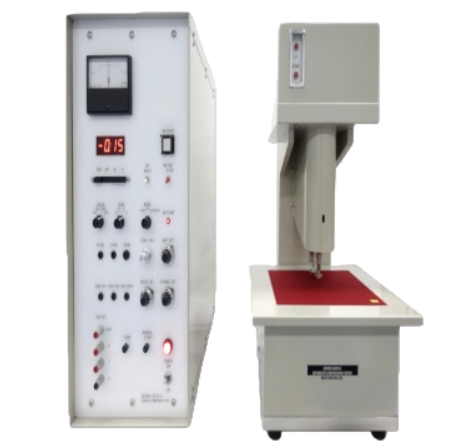


The Compression Tester FB3-A is a professional instrument designed for quantitative evaluation of material behavior under compression. It mechanically simulates the “finger press” action used in tactile material assessment, measuring force and deformation during compression and recovery. This converts subjective hand-feel evaluation into objective, reproducible numerical data. The instrument provides key parameters such as compressive stiffness, compression energy, and recoverability, supporting material R&D, process comparison, quality control, and tactile performance analysis.
Application
The Compression Tester FB3-A is suitable for a wide range of flexible and thin materials, including fiber assemblies, woven, knitted, and nonwoven fabrics, paper and paperboard, medical and hygiene materials such as diapers and nonwovens, functional films and composites, automotive interior soft materials, home textiles and bedding, and new flexible materials in R&D stages.
Standards
This instrument supports testing according to the following national and international standards, including equivalents or enterprise-specific methods:
(1) GB/T 3820 — Textiles: Determination of Thickness
(2) GB/T 24218.2 — Textiles: Nonwoven Fabrics Test Method, Thickness Measurement
(3) GB/T 451.3 — Paper and Paperboard: Determination of Thickness
(4) JIS L 1096 — Textiles: Test Methods (Thickness and Compression Related Tests)
(5) ISO 9073-2 — Textiles: Nonwoven Fabrics, Thickness Measurement
(6) ASTM D1777 — Standard Test Method for Thickness of Textile Materials
(7) ASTM D903 — Peel Adhesion of Pressure-Sensitive Tape
(8) ASTM E8 / ASTM E4 — Tensile Testing of Metallic Materials
(9) CNS 11888 — Equivalent mechanical test standards
(10) JIS K6854 — Adhesive Tape Testing
(11) PSTC-7 — Pressure-Sensitive Tape Peel Adhesion
(12) ASTM D828 — Tensile Properties of Paper and Paperboard
(13) ASTM D882 — Tensile Properties of Thin Plastic Sheeting
(14) ASTM D1938 — Tensile-Propagation of Tear in Thin Plastic Sheeting
(15) ASTM D412 — Rubber Tensile Properties
(16) ISO 8339 — Compression testing of foam materials
(17) ASTM D3330 — Peel Adhesion of Pressure-Sensitive Tapes
(18) ASTM F88 / ASTM F904 — Peel and Adhesion Testing for Flexible Materials
(19) ISO 37 — Rubber tensile test
(20) JIS P8113 — Tensile and compression testing for plastics
(21) QB/T 2358 / QB/T 1130 — Chinese textile standards
(22) ISO 527 — Plastics tensile properties
(23) ISO 178 — Plastics flexural properties
Parameters
| Parameter | Specification |
|---|---|
| Device dimensions / weight | W285 × D405 × H500 mm / 40 kg |
| Electronic amplifier dimensions / weight | W230 × D450 × H500 mm / 20 kg |
| Power supply | AC 100V |
| Maximum power | 40 W |
| Test environment | 20–30°C / 50–70% RH, no condensation |
| Compression load detection | Differential transformer (ring-type load cell) |
| Load range | 0.2 / 0.5 / 1 / 2.5 kgf (four ranges switchable) |
| Load accuracy | ±0.5% F.S. |
| Compression displacement detection | Potentiometer |
| Displacement range | 10 mm |
| Displacement accuracy | ±0.5% F.S. |
| Compression speed (standard) | 0.02 mm/s (1 mm / 50 s) |
| High-sensitivity speed | 0.0067 mm/s (1 mm / 150 s) |
| Variable speed | 0.01 – 0.10 mm/s |
| Standard test load | 50 gf/cm² |
| High-sensitivity test load | 10 gf/cm² |
| Variable test load | 10 gf/cm² – 1.25 kgf/cm² |
| Compression platen | Circular, 2 cm² |
| Test repetitions | Continuous, 3 times |
| Sample size | 10–20 cm square (standard) |
Features
Simulated fingertip compression converts tactile evaluation into quantitative data.
Low-load measurement allows testing extremely soft or minimally deformable materials.
Multiple load and speed settings enable broad applicability across material types.
High-sensitivity mode is ideal for R&D and comparative analysis of subtle differences.
High repeatability ensures consistent results for batch consistency management.
Automated multi-cycle testing reduces human error and improves efficiency.
Accessories
| Category | Name | Function / Purpose |
|---|---|---|
| Standard | Circular platen, 2 cm² | Standard compression surface |
| Standard | Load sensor | Built-in differential transformer for load detection |
| Standard | Electronic amplifier | Signal amplification and processing |
| Standard | Power cable | AC 100 V supply |
| Optional | Platen of different area | For testing special materials |
| Optional | Calibration weights | Load calibration |
| Consumable | Sample pad | Prevent sample slipping or damage |
Test Principles
The instrument measures the load applied to the sample surface using a ring-type load cell while a displacement detector records the deformation during compression. Under controlled speed and load conditions, the sample undergoes multiple compression–recovery cycles. The resulting load–displacement curves allow calculation of compressive stiffness, compression energy, and recovery performance, which characterize the material’s softness, resilience, and loft properties.
FAQ
(1) What is this product?
This product is a professional compression tester designed to measure the mechanical behavior of flexible and thin materials under compression, including stiffness, compression energy, and recovery characteristics.
(2) What is this product used for?
You can use it to quantify tactile hand-feel, evaluate material softness, elasticity, and resilience, and support material research, product development, and quality control.
(3) How does this product work?
The device works by applying controlled compressive forces via a ring load cell while recording the sample’s deformation with a potentiometer. Load-displacement data is captured over repeated compression-recovery cycles to calculate stiffness, compression energy, and recovery parameters.
(4) Why is this product important?
It is important because it converts subjective hand-feel assessments into objective, repeatable data, allowing for accurate evaluation of material properties and consistent product quality.
(5) Which industries is this product suitable for?
This tester is suitable for industries such as textiles, nonwovens, paper, films, medical materials, automotive interiors, household textiles, bedding, and other fields where compression and tactile properties are critical.
Leave Message Get Price