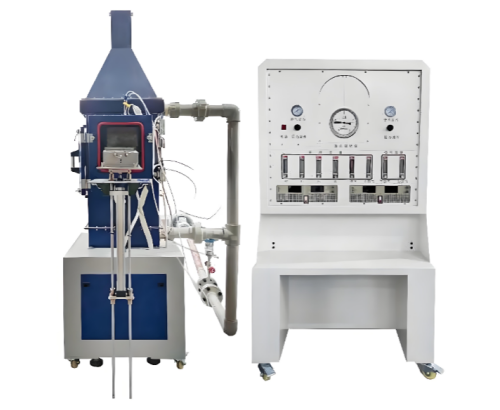
Toilet Corrosion Test Chamber (HCl and Ammonia)
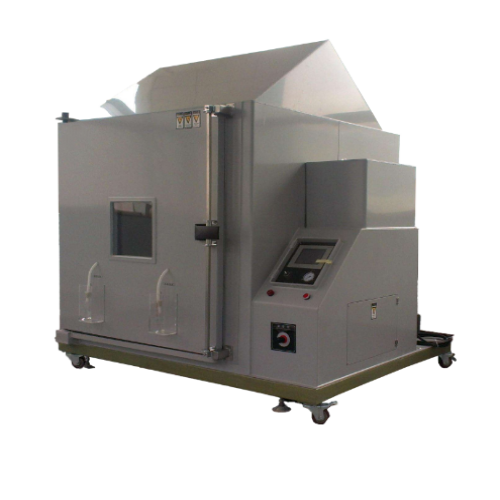


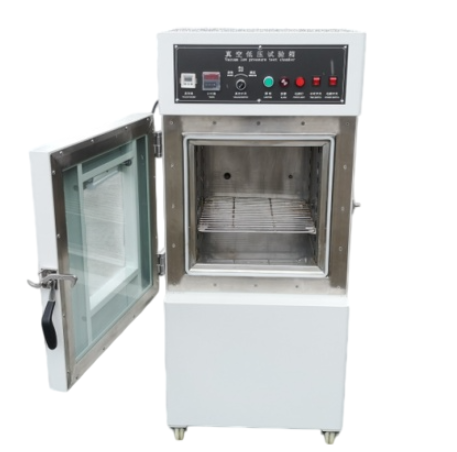
The Toilet Corrosion Test Chamber (HCl and Ammonia) is used to evaluate the rust resistance of toilet products to detergents and urine, meeting the corrosion testing requirements of GB/T 4706.53-2024 and IEC 60335-2-84:2019 standards. This equipment simulates an ammonia and hydrochloric acid environment to conduct a 96-hour corrosion test on the toilet, ensuring its continued normal operation under harsh conditions. Key technical parameters include test chamber dimensions, temperature, and gas concentration, and it is equipped with appropriate safety and sealing measures.
Applications
Toilet seat hydrochloric acid and ammonia corrosion tester is used for testing to evaluate the ability of toilet seat products to provide adequate rust protection against detergents and urine. The test chamber by simulating ammonia components, hydrochloric acid solvent body, medium on the toilet electrical components or other inorganic cover layer in condensation conditions of corrosion test. The test chamber is electronic toilet sampling and testing of product quality supervision and inspection institute 3 testing organizations and toilet manufacturers of essential test equipment.
Standards
GB/T 4706.53-2024: Safety of household and similar electrical appliances - Part 2: Particular requirements for commercial dishwashing machines, glass-washing machines and utensil-washing machines
IEC 60335-2-84:2019: Household and similar electrical appliances - Safety - Part 2-84: Particular requirements for commercial dishwashing machines, glass-washing machines and utensil-washing machines
Technical Parameters
| No. | Main Parameters | Specifications |
|---|---|---|
| 1 | Inner box size | W1200×H1200×D1200mm |
| 2 | Outer box size | About W2350×H1700×D1500mm |
| 3 | Test temperature | Room temperature |
| 4 | Ammonia concentration | 0.055%±0.005 |
| 5 | Hydrochloric acid concentration | 0.0005%±0.0002 |
| 6 | Test gas generation method | Cylinder method |
| 7 | Test gas control | Calculate by volume ratio (per test requirements), then control flow rate via anticorrosive mass flow meter |
| 8 | Sample test frame | Maximum load ≥50kg; placed vertically at 90°±2° |
| 9 | Use environment & temperature | Clean room (no strong airflow); temperature 25℃±2℃ |
| 10 | Use environmental humidity | <75% RH |
| 11 | Equipment power supply | AC 220V 50/60Hz |
| 12 | Installed power | 400W |
Features
1. Precise and Controllable Corrosive Environment: It can stably maintain specific concentrations of ammonia (0.055%±0.005%) and hydrochloric acid (0.0005%±0.0002%), using a gas cylinder method for gas generation and a corrosion-resistant mass flow meter for flow control, ensuring precise matching of the corrosive medium concentration and flow rate to test requirements.
2. Standardized Test Conditions: It requires operation in a cleanroom environment without strong airflow. Temperature (25℃±2℃) and humidity (<75% RH) are strictly controlled to ensure the repeatability and reliability of test results.
3. Strong Sample Load Capacity Adaptability: The equipped sample test rack has a maximum load capacity of ≥50kg and can maintain a vertical placement at 90°±2°, adapting to the fixing requirements of large items such as toilet seats.
4. Reasonable structural dimensions: The inner casing (W1200×H1200×D1200mm) is large enough to accommodate a toilet, while the outer casing (approximately W2350×H1700×D1500mm) balances operating space with equipment integration.
5. Low operating energy consumption: The installed power is only 400W, and it is compatible with AC 220V universal power supplies, resulting in high cost and environmental adaptability.
Accessoriess
1. Hydrochloric acid and ammonia corrosion test chamber 1 set
2. A set of exhaust gas filtering device
3. ammonia gas cylinder 1 bottle
4. Matching special pressure reducing valve 1pc
Test Procedures
The following tests shall be performed on the toilet samples, except where the electrical components are in a closed state or where they are unlikely to be exposed to the polluted environment.
Place the toilet sample in an indoor atmosphere with an ammonia gas volume fraction of (0.055 ± 0.005)% for 96 hours.
Then place the toilet sample in an indoor atmosphere with a hydrochloric acid volume fraction of (0.0005 ± 0.0002)% for 96 hours.
After the tests, the toilet sample should not exhibit any damage that would result in non-compliance with GB/T 4706.53-2024 or IEC 60335-2-84:2019 standards.
FAQ
1. What is this product?
It is a laboratory accelerated corrosion chamber specifically designed to simulate the humid environment of a restroom, rich in ammonia (from urine decomposition) and acidic substances (from powerful cleaning agents).
2. What is this product used for?
It helps you quickly test whether toilets and their accessories are prone to rusting, green discoloration, bubbling, or cracking under real-world usage conditions, predicting the product's warranty lifespan.
3. How does it work?
Heating and pressurization systems saturate the sealed chamber with hydrochloric acid or ammonia solutions as aerosols or volatile gases. Under high-temperature, high-humidity conditions, this accelerates chemical reactions, replicating years of natural corrosion within a short timeframe.
4. Why is this product important?
Bathroom environments present unique challenges where standard metal components are highly susceptible to damage. Passing this test is crucial for gaining brand supplier approval and preventing large-scale post-sale recalls.
5. Which industries benefit from this product?
Primarily suited for toilet manufacturers, bathroom hardware suppliers, smart home R&D departments, electroplating plants, and third-party quality inspection agencies.
Leave Message Get Price