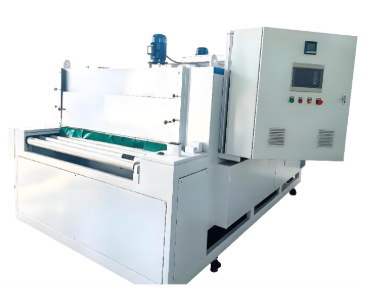
Spray Aerosol Ignition Distance Tester
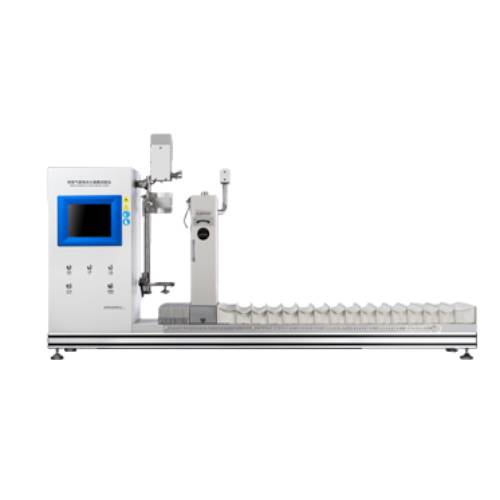


The Spray Aerosol Ignition Distance Tester is a high-precision safety instrument specifically designed to determine the ignition distance of spray aerosols. By measuring the maximum distance between an ignition source and the aerosol actuator at which sustained combustion occurs, you can accurately assess the flammability risks associated with pressurized spray products. This tester is particularly suited for aerosols with a spray range of 15cm or more. It provides an automated, standardized environment to classify hazardous materials for transport and labeling, ensuring that the fire risk of consumer and industrial aerosols is quantified with scientific precision.
Applications
Spray Aerosol Ignition Distance Tester is a specialized device for measuring the ignition distance of spray aerosols, designed to assess fire hazards associated with aerosol products. It is suitable for spray aerosol products with a spray distance of 15 cm or greater.
Standards
United Nations Recommendations on the Transport of Dangerous Goods, Manual of Tests and Criteria 31.4 Ignition Distance Test for Spray Aerosols
GB/T 21630-2008 “Dangerous Goods - Ignition Distance Test Method for Spray Aerosols”
GAT 536 “Classification and Test Methods for Fire Hazard of Flammable and Explosive Dangerous Goods”
NY/T 1860 “Guidelines for Determining Physicochemical Properties of Pesticides” Part 27: Flammability of Aerosols
Parameters
| Item | Specifications |
|---|---|
| Operating Environment | (-5 ~ 45)°C, <95% RH |
| Detection Method | Near-infrared detection |
| Spectral Response Range | 760 ~ 1100nm (infrared band) |
| Spectral Response Frequency | 5000Hz |
| Ambient Temperature Measurement Range | (-10 ~ +60)°C |
| Ambient Temperature Measurement Accuracy | ±0.5°C |
| Ambient Humidity Measurement Range | (5 ~ 95)% RH |
| Ambient Humidity Measurement Accuracy | ±5.0% RH |
| Combustion Detection Response Time | ≤6ms |
| Combustion Detection Distance | (15 ~ 90)cm |
| Positioning Accuracy | ±1mm |
| Timing Accuracy | ±0.01s |
| Minimum Press Hold Time | 5s |
| Ignition Method | Gas igniter |
| Aerosol Can Positioning | Automatic rotation of aerosol can body |
| Compatible Spray Can Dimensions | Height (120 ~ 400)mm, Diameter (30 ~ 80)mm |
Accessories
Main Control Unit (1 set): Integrated chassis with 8-inch touchscreen.
Motorized Positioning Track (1 set): For precise movement of the igniter.
Aerosol Can Clamping System (1 set): Compatible with standard can sizes, featuring automatic inversion.
Near-Infrared Sensor Module (1 set): High-speed combustion detection unit.
Gas Ignition Source (1 unit): Adjustable gas burner for standard flame generation.
Fireproof Bellows (1 set): To protect the internal drive components.
Water Bath (Optional): For sample pre-conditioning at $25^{\circ}\text{C}$.
Features
1) Embedded processor with Windows CE operating system.
2) 8-inch LCD touchscreen for real-time display of test status.
3) Integrated “Standard Mode” and “Custom Mode” operation.
4) Automatic spray dispensing with can holder that automatically positions cans upright or inverted.
5) Nanosecond-level photosensitive sensor detection module automatically monitors spray combustion.
6) Hybrid stepper motor drive with optical encoder ensures precise positioning of measurement points.
7) Ignition gun source produces a blue, non-luminous flame 4-5 cm high, with adjustable flame height.
8) Fully automated testing process requires no manual intervention, supporting parameter settings, data storage, and report viewing.
9) Dedicated fire-resistant bellows cover effectively prevents equipment contamination.
10) Equipped with a temperature and humidity module for real-time monitoring of test environment conditions.
11) Combustion gas source housed in a dedicated sealed chamber to ensure gas supply safety.
12) Streamlined testing process operates fully automatically after initiation, eliminating the need for personnel supervision and ensuring operator safety.
FAQ
1.Why is near-infrared (NIR) detection used instead of visible light sensors?
NIR sensors are far more sensitive to the heat signature and specific spectral peaks of a chemical flame. This allows the system to detect "invisible" or pale blue flames that standard cameras might miss, and it provides a much faster response time ($\leq 6\text{ ms}$) compared to video analysis.
2.Does the tester account for the orientation of the aerosol can?
Yes. Since many aerosols use different dip-tube designs, their flammability can change depending on whether they are upright or inverted. The automated flipping mechanism allows you to test both orientations to find the "worst-case" ignition distance.
3.How does the system prevent environmental drafts from affecting the result?
While the test should be performed in a well-ventilated area, the fireproof bellows and integrated wind shields help stabilize the flame. The system also monitors ambient temperature and humidity to ensure conditions remain within the range specified by UN 31.4.
4.What happens if the aerosol produces a very large flame?
The system is designed with safety as a priority. The emergency stop button and fireproof shielding protect the electronics. Furthermore, the testing process is designed to find the ignition distance from the furthest point inward, minimizing the duration of large flame exposure.
5.Can the ignition flame height be adjusted?
Yes. You can manually adjust the gas flow to achieve a standard flame height of 4–5 cm.The system's blue, non-luminous flame is specifically designed to meet the requirements of GB/T 21630 and UN 31.4 without introducing excessive radiant heat.
Leave Message Get Price