Minimum Ignition Energy (MIE) – Dust Cloud Tester
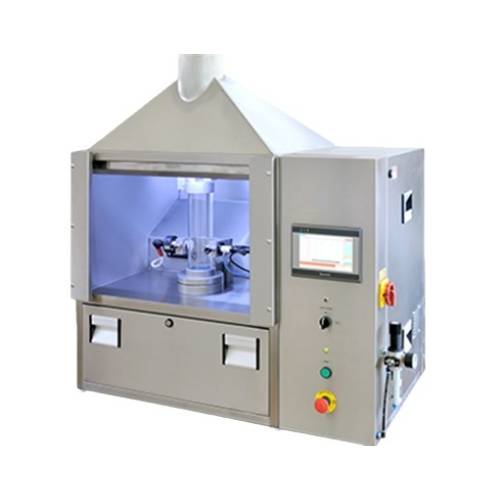

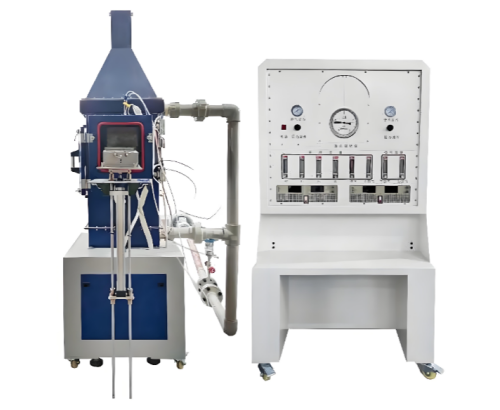
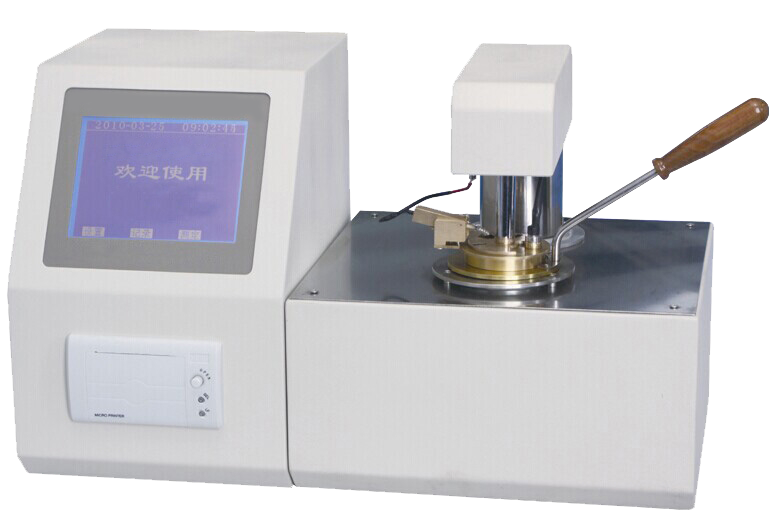
Dust Cloud Minimum Ignition Energy Tester disperses a certain mass of dust specimen to be tested into the Hartmann tube device through a certain pressure of compressed air to form a cloud of dust, uses a specified spark energy to ignite the dust cloud, and obtains the minimum ignition energy of the dust specimen to be tested through a series of tests. It reflects the sensitivity of dust ignition from the energy point of view, and is suitable for evaluating the potential explosive hazard of dust clouds.
Applications
1. Chemical Industry: Determine the Material Effects (MI) of chemical dusts such as organic synthesis intermediates and plastic powders to guide explosion-proof safety design in production/storage processes;
2. Food Processing Industry: Test the MI of food dusts such as flour and sucrose powder to optimize safety measures for dust control in workshops;
3. Mining/Materials Industry: Assess the ignition risk of dusts such as coal dust, aluminum dust, and wood dust to assist in the configuration of explosion-proof facilities in mines and material processing plants;
4. Light Industry: Test the MI of tobacco powder and plant fiber powder to support workshop safety management and risk classification;
5. Safety Testing Institutions: Conduct compliance testing and certification for dust explosion risks based on standards such as ASTM and IEC.
Standards
ASTM E2019: Standard Test Method for Minimum Ignition Temperature of Dust Layers
IEC 61241-2-3: Electrical Apparatus for Use in Explosive Dust Atmospheres - Part 2-3: Test Methods - Determination of Minimum Ignition Temperature of Dust Layers
ISO/IEC 80079-20-2: Explosive Atmospheres - Part 20-2: Equipment Protection Levels (EPL) - Classification of Equipment for Dust Atmospheres
GB/T 16428: Test Method for Explosion Limits of Dust Clouds
Technical Parameters
Operating Environment | (5~45)℃, <85%RH |
General Purpose Mode | 1 mJ,3 mJ,10 mJ |
Spark Energy | 30 mJ,100 mJ,300 mJ,1000 mJ,3000mJ |
Custom Mode | (1~3000)mJ, settable, step 1mJ |
Spark Energy | (0~15)kV |
Charging Voltage | No load, 1mH inductive load |
Discharge Load | 1.2L Hartmann Tube |
Experiment Vessel | Diameter 2mm Tungsten Electrode |
Electrodes | (2~10)mm, Adjustable |
Electrode Spacing | High Voltage relay triggered,... Moving electrode trigger |
Electrode Trigger Mode | 20ms~180ms, adjustable |
Ignition Delay Time | 0.4MPa~0.7MPa, adjustable |
Powder Spray Pressure | USB*2 |
Interfaces | 90~260VAC/47~63Hz |
Power | 300W |
Features
1. It has built - in commonly used international test standards, allowing for testing according to standard parameters or custom - setting.
2. During testing, only the ignition energy value needs to be input, and the instrument automatically selects the optimal combination of capacitance and voltage.
3. The high - voltage charging module automatically disconnects, improving operational safety.
4. The powder dispersion device is reasonably designed to ensure uniform dispersion of powder samples.
5. The instrument is flexible to use, with easy adjustment of the electrode spacing, spraying pressure, and delay time.
6. It automatically records the number of times the electrode ignites and reminds users to replace the electrodes in a timely manner to prevent electrode wear from affecting the test results.
7. The Hartmann tube is equipped with a lifting and rotating mechanism, which is convenient for cleaning and saves experimental time.
8. Remote ignition ensures the safety of experimenters.
9. User - level management enables the management and control of accounts at different levels.
10. The USB interface is plug - and - play, facilitating data management.
11. With professional industrial design, it is simple and elegant.
12. It has a user - friendly human - machine interaction, making it easy to learn, understand, and operate.
13. It is equipped with a 7 - inch color liquid - crystal touch screen that dynamically displays the experimental progress.
Accessoriess
1. Hartmann tube testing device (core chamber for forming a uniform dust cloud)
2. Compressed air delivery assembly (including pressure regulation module for dust dispersion)
3. Spark ignition energy regulation assembly (provides different spark energies to suit testing needs)
4. Dust sample quantitative feeding device (precisely controls the quality of test dust)
5. Hartmann tube seal (ensures the sealing performance of the test chamber)
6. Calibration standard dust sample (calibration component for reference standards)
7. Data acquisition and analysis module (synchronously records ignition test data)
FAQ
1.What is the minimum ignition energy of a dust cloud?
1 mJ to 1000 mJ
MIE values usually range from 1 mJ to 1000 mJ. A lower value means the dust is more easily ignited – even a small spark could cause an explosion. Knowing the MIE of your dust is important for: Designing equipment that won't create ignition sources.
2.What is the minimum ignition energy test?
The MInimum Ignition Energy (MIE) test is conducted to determine the lowest spark energy that will ignite a powder when dispersed in air, as a dust cloud.
3.What is considered a low mie?
MIE typically range from 1 mJ to 1000 mJ [Janes]. The lower the MIE, the higher is the risk of explosion as a very small energy input can trigger a dust cloud explosion. MIE < 3 mJ should be processed with specific measures, the dust is extremely sensitive to ignition.
4.What is mie value?
The Minimum Ignition Energy (MIE) value is used to assess the likelihood of ignition during processing and handling. It helps to define explosion prevention methods. MIE < 100 mJ indicates a potential for ignition from static discharges from personnel.
5.How many microns is a combustible dust?
420 microns
In general terms, a combustible dust is a combustible solid particle having an effective diameter of 420 microns (μm) or smaller and is capable of being suspended in air.
6.How should laboratories select suitable test configurations?
Selection depends on dust characteristics, required standards, energy range, and safety evaluation objectives. QINSUN engineers can provide suitable configuration recommendations based on specific testing requirements.
Leave Message Get Price