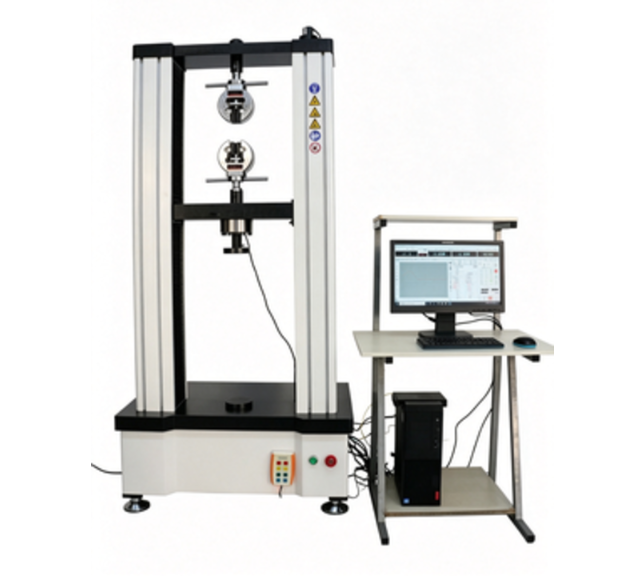
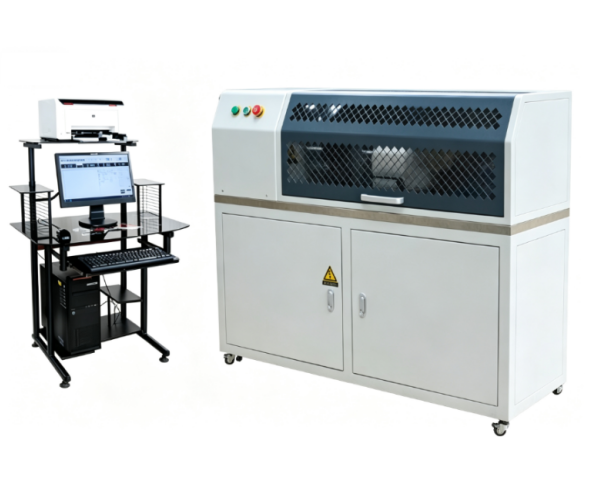
Battery Powder Compaction Density Measurement System
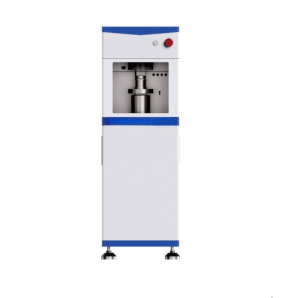


The Battery Powder Compaction Density Measurement System is a precision testing system designed to determine the tapped density and compaction behavior of powders under controlled tapping and environmental conditions. It provides accurate and repeatable measurements for battery electrode powders, pharmaceuticals, 3D printing powders, ceramics, and other fine particulate materials. The system supports automated protocols, high-resolution sensing, and compliance with global standards, enabling R&D, quality control, and process optimization.
Application
(1) Measurement of tapped density and compaction characteristics of lithium-ion, sodium-ion, and solid-state battery powders.
(2) Evaluation of pharmaceutical excipients and active pharmaceutical ingredients (APIs) for quality control and formulation studies.
(3) Testing of 3D printing powders, including metal, ceramic, and polymer powders, for additive manufacturing applications.
(4) Determination of powder properties for abrasives, catalysts, and food additives.
(5) Calculation of Hausner Ratio and Carr Index for flowability and packing behavior analysis.
(6) R&D and production-scale sample testing using variable cell volumes (1–500 cm³).
(7) Environmental testing under controlled temperature (-10°C to 80°C) and humidity (5–95% RH) conditions.
(8) Automated data acquisition and real-time plotting of tapped density vs. tap count for process optimization.
Standards
(1) ISO 3953 – Determination of tapped density of powders.
(2) ASTM B527 – Powder density measurement and compaction testing.
(3) CE/UL – Laboratory equipment safety compliance.
(4) USP <616> – Powder density testing methods for pharmaceuticals.
(5) 21 CFR Part 11 – Electronic records and data integrity compliance for FDA-regulated applications.
Parameters
| Parameter | Specification |
|---|---|
| Tapping Range | 1–3000 taps (adjustable speed: 10–60 taps/min) |
| Density Measurement | 0.1–5.0 g/cm³ (±0.005 g/cm³ accuracy) |
| Pressure Application | 0–370 MPa (programmable ramp rates) |
| Temperature Control | -10°C to 80°C (±0.2°C stability) |
| Humidity Tolerance | 5–95% RH (non-condensing) |
| Display/Interface | 10.1" touchscreen with multi-language GUI |
| Power Consumption | 600 W (110–240 V AC, 50/60 Hz) |
| Dimensions (W×D×H) | 500 × 600 × 800 mm |
Features
(1) Programmable tapping system with adjustable tapping cycles and speed for different powder materials.
(2) High-resolution sensing technology provides accurate powder volume and density measurement.
(3) Automated testing workflow reduces manual operation errors and improves testing efficiency.
(4) Generates real-time density change curves to analyze powder compaction behavior.
(5) Suitable for various powder materials including battery materials, pharmaceuticals, metals, ceramics, and polymers.
(6) Integrated temperature and humidity monitoring improves testing consistency under different environmental conditions.
(7) Closed-loop pressure control system provides stable compaction force application.
(8) Supports calculation of Hausner Ratio and Carr Index for powder flowability evaluation.
(9) Equipped with safety protection functions including overpressure protection and emergency stop.
(10) Supports data management and connection with laboratory information systems.
Accessories
(1) Main Unit: Powder Tapped Density Analyzer with integrated safety enclosure.
(2) Software Package: Compliance-ready SPC software with FDA 21 CFR Part 11 modules.
(3) Testing Kits: Set of three stainless-steel density cells (10 cm³, 50 cm³, 250 cm³).
(4) Calibration Weights: 100 g and 500 g with certificates.
(5) Dust Management: HEPA filter unit and anti-static brush.
(6) User Documentation: Multilingual quick-start guide and maintenance manual.
Maintenance Information
(1) Inspect density cells, tapping mechanism, and sensors regularly for wear or contamination.
(2) Calibrate density measurement system periodically using certified reference standards.
(3) Keep the control system, touchscreen interface, and software environment clean and free from dust or moisture.
(4) Verify the functionality of safety interlocks, overpressure protection, and HEPA filters before testing.
(5) Lubricate moving components according to manufacturer recommendations to ensure smooth operation.
FAQ
1. What is this product?
It is a precision instrument that compresses bulk powder into a fixed shape by applying a known vertical pressure, measures its volume change, and calculates the mass per unit volume.
2. What is this product used for?
It helps determine the maximum theoretical density achievable for powder materials during processing (e.g., before battery coating or during pharmaceutical tableting), enabling optimization of process parameters.
3. How does this product work?
Utilizing Hooke's Law and density formulas, it dynamically calculates the functional relationship between pressure and density. This is achieved by applying precise force and simultaneously measuring the height displacement of the powder layer within a mold of known cross-sectional area.
4. Why is this product important?
In the lithium battery industry, compaction density directly determines the battery's volumetric energy density. Insufficient density leads to inadequate capacity, while excessive density may impair electrolyte wetting. This instrument is the sole means to measure this critical balance.
5. How should users select the suitable configuration for different powder materials?
Configuration selection depends on powder type, expected density range, sample characteristics, and testing requirements. Battery electrode powders, pharmaceutical powders, and metal powders may require different testing conditions. QINSUN engineers can provide suitable configuration recommendations based on specific applications.
6. How does QINSUN ensure testing accuracy and provide technical support?
Each QINSUN instrument is calibrated and tested before shipment to verify measurement accuracy and operational reliability. Our engineers provide installation guidance, application support, and customized testing solutions according to laboratory requirements. Contact engineers for more testing solutions and configuration guidance.
Leave Message Get Price