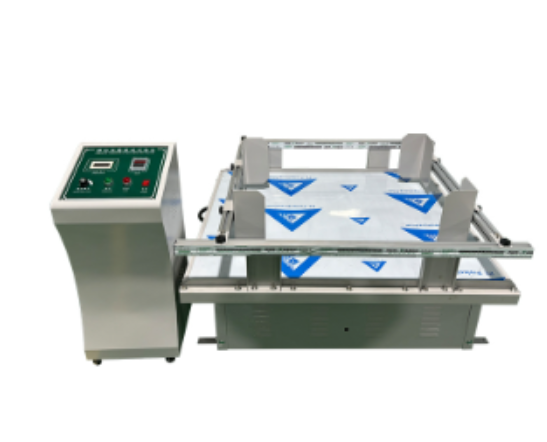
Air Jet Erosion Tester
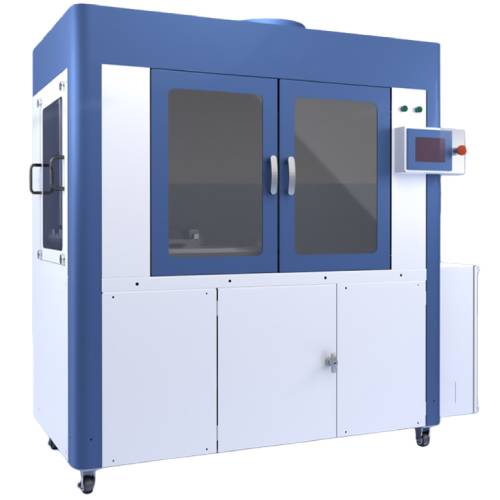


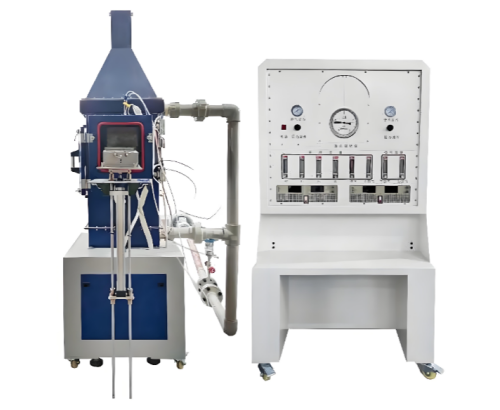
The Air Jet Erosion Tester is a controlled gas-driven erosion testing system designed to evaluate the erosion resistance of materials and coatings under repeated particle impact. By accelerating abrasive particles using a high-velocity gas stream and exposing specimens to controlled temperature conditions up to 900 °C, the tester simulates realistic erosion environments. With closed-loop temperature control, adjustable impact angles, and precise particle velocity measurement, the system enables accurate and repeatable erosion performance evaluation across a wide range of applications.
Application
The Air Jet Erosion Tester is used to assess erosion behavior by exposing materials to abrasive particles of varying size, shape, temperature, and impact velocity.
Typical application scenarios and tested products include:
Aerospace materials and coatings: erosion and wear resistance evaluation
Metallic materials: gas-borne particle erosion performance
Polymer materials: erosion resistance under particle impact
High-temperature coatings: durability under thermal and erosive environments
Structural materials subjected to particulate flow conditions
Standards
The Air Jet Erosion Tester complies with internationally recognized erosion testing standards, including:
(1) ASTM G76 – Standard Test Method for Conducting Erosion Tests by Solid Particle Impingement Using Gas Jets
(2) ASTM G211 – Standard Test Method for Conducting Elevated Temperature Erosion Tests by Solid Particle Impingement Using Gas Jets
Parameters
| Parameter | Specification |
|---|---|
| Maximum temperature | Up to 900 °C |
| Temperature control | Closed-loop PID temperature control |
| Particle velocity | 30–200 m/s (optional ranges available) |
| Erodent feed rate | 1–10 g/min (optional ranges available) |
| Particle hopper capacity | Up to 3 L (optional ranges available) |
| Impact angles | 15°, 30°, 45°, 60°, 90° |
| Velocity measurement | Closed-loop high-speed dual-disc system |
| Positioning system | Automated positioning stage |
| Erodent types | Multiple particle sizes available |
Features
Repeated particle impact testing using gas-driven abrasive flow
Closed-loop PID temperature control up to 900 °C
Real-time particle velocity measurement using dual-disc timing method
Adjustable impact angles for comprehensive erosion characterization
Automated positioning platform for accurate and repeatable testing
Stainless steel particle feeding system with programmable delivery
Suitable for both ambient and high-temperature erosion testing
Accessories
(1) Automated positioning stage
(2) Stainless steel particle hopper and vibratory feeder
(3) Programmable screw-type particle feeding system
(4) Dual-disc high-speed velocity measurement module
(5) Gas pressure controller and pressure gauges
Test Procedures
Load the test specimen onto the automated positioning stage.
Select the desired abrasive particle type, size, and feed rate.
Set the required test temperature and allow the system to reach thermal stability.
Adjust the impact angle according to the test requirement.
Initiate gas flow to accelerate abrasive particles toward the specimen surface.
Monitor particle velocity, temperature, and erosion conditions during testing.
Complete the test cycle and analyze erosion results based on material loss or surface damage.
Maintenance Information
Regularly inspect and clean the particle feeding and gas flow components.
Verify calibration of the velocity measurement system to ensure accuracy.
Check temperature sensors and PID control performance periodically.
Ensure the pressure control system and gauges operate correctly.
Perform routine inspections of seals and high-temperature components to maintain safe operation.
FAQ
1. What is the primary purpose of the Air Jet Erosion Tester?
The Air Jet Erosion Tester is designed to evaluate the erosion resistance of materials and coatings by exposing them to high-velocity abrasive particles carried by a gas stream. The system simulates real service conditions in which solid particles impact material surfaces, causing wear and material loss. By controlling particle velocity, temperature, impact angle, and feed rate, the tester provides repeatable and reliable data for comparing erosion performance across different materials and coating systems.
2. How does the tester control and measure particle velocity during erosion testing?
Particle velocity is measured using a closed-loop high-speed dual-disc timing system. The flight time of abrasive particles is determined by a controlled path length between two rotating discs, allowing real-time and precise velocity measurement. This method enables accurate process control throughout the test and ensures that erosion results are directly correlated to the actual particle impact velocity applied to the specimen surface.
3. Can erosion testing be performed at elevated temperatures?
Yes. The Air Jet Erosion Tester supports erosion testing at temperatures up to 900 °C. A closed-loop PID temperature control system maintains stable and accurate temperature conditions throughout the test. This capability is essential for evaluating materials and coatings used in high-temperature environments, where erosion behavior is influenced by thermal effects, chemical reactions, and changes in material properties.
4. What impact angles are available, and why are they important?
The system allows adjustment of impact angles to 15°, 30°, 45°, 60°, and 90°. Impact angle plays a critical role in erosion behavior, as different materials exhibit varying erosion mechanisms depending on whether the particle impact is shallow or normal to the surface. Adjustable angles enable comprehensive characterization of erosion performance under realistic service conditions.
Leave Message Get Price