Aluminum Foil Pinhole Tester
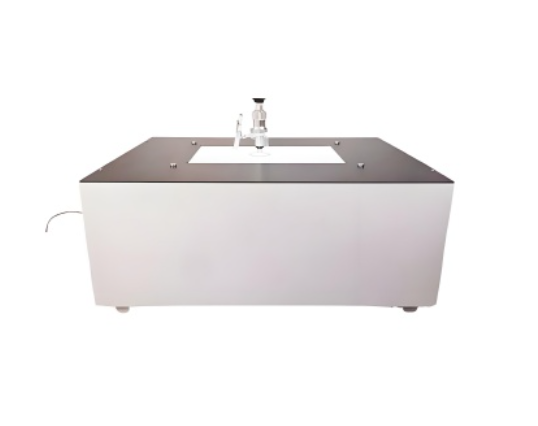


The pinhole tester for aluminum foil is a device specifically used to detect micro - pinholes in aluminum foil materials.
Applications
The pinhole tester for aluminum foil plays a crucial role in the quality control of aluminum foil and its composite materials. As a material widely used in packaging, construction, electronics, and other fields, the size of the pinholes in aluminum foil directly affects its moisture - proof, gas - barrier, and light - shielding properties. Especially in the production of pharmaceutical aluminum foil, the detection of pinhole size is a key step related to the airtightness of pharmaceutical packaging and the quality of drugs. If there are dense, continuous, and periodic pinholes in the aluminum foil, it will increase the permeability of gases such as oxygen and water vapor through the aluminum foil, thereby affecting its moisture - proof performance and leading to the deterioration of drugs. Therefore, using a pinhole tester for aluminum foil to conduct strict pinhole detection on aluminum foil is an important means to ensure the quality of aluminum foil.
Standards
- YBB00152002 - 2015 Pharmaceutical Aluminum Foil
- GB/T 3198 - 2010 Aluminum and Aluminum Alloy Foil
- GB/T 22638.2 - 2008 Test Methods for Aluminum Foil
Technical Parameters
| Technical Parameter | Specification |
|---|---|
| Observation Size | Generally 400mm×250mm; covers testing needs of most aluminum foil samples. |
| Transmitted Light Illuminance | Usually 1000Lux; ensures pinholes on aluminum foil can be clearly observed. |
| Ambient Light Illuminance for Application | Generally between 20Lux and 50Lux; adapts to different testing environments. |
| Magnification Graduation Value | 0.1mm; enables precise measurement of pinhole sizes. |
| Objective Lens Magnification | Usually 10X×10X (100-fold magnification); makes pinhole details more visible. |
| Minimum Measuring Grid Value | 0.01mm; capable of detecting tiny pinholes. |
| External Dimensions | Generally 800mm (length) × 600mm (width) × 300mm (height); facilitates placement and movement. |
| Net Weight | Usually about 20kg; features a compact and stable structure. |
Features
• Maximum measuring aperture supports 2mm
• Exclusive top-opening cover design for easy lamp replacement
• Built-in handle on the top cover for easy handling and movement
• Quick-release latches on both sides of the top cover for convenient and fast opening
• Three adjustable power settings: 15W, 30W, and 45W
• High-quality lamp tubes ensure stable light source and long lifespan
• High-transmittance glass backing minimizes light obstruction
• 100X high-definition magnification for easier result observation
• Built-in inspection light for convenient counting
Accessoriess
Main unit, 100X magnifying glass, power cord, certificate of conformity, fuse
FAQ
1. What is this product?
Answer: It is a system consisting of a friction device and a charge capture device, specifically designed to detect the total amount of static electricity generated by object friction.
2. What is the purpose of this product?
Answer: It quantifies the magnitude of charge generated by fabrics, helping you determine whether the fabric meets industry-mandated anti-static safety standards.
3. How does this product work?
A: It generates static electricity through mechanical friction. Subsequently, it utilizes the electrostatic induction principle of a Faraday cage to capture all charges on the sample and convert them into digital signals for reading.
4. Why is this product important?
Answer: In flammable or explosive environments, excessive charge can trigger spark discharges leading to accidents. This instrument serves as a critical safety quality control measure in protective clothing manufacturing.
5. Which industries is this product suitable for?
Answer: It is suitable for textile testing institutions, anti-static protective clothing manufacturers, petrochemical safety research institutes, and high-performance fiber R&D laboratories.
6. What causes pinholes in aluminum foil?
Pinhole defects may result from factors such as impurities in raw materials, rolling process conditions, excessive foil thinning, or surface damage during production. Testing helps manufacturers identify quality issues during production.
Leave Message Get Price