Aluminum Ointment Tube Toughness Tester
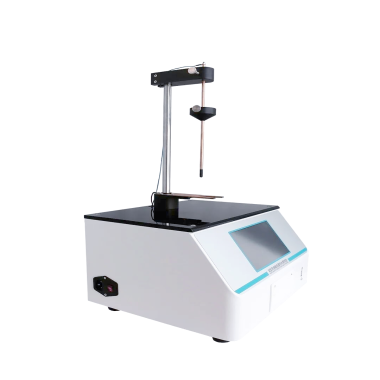


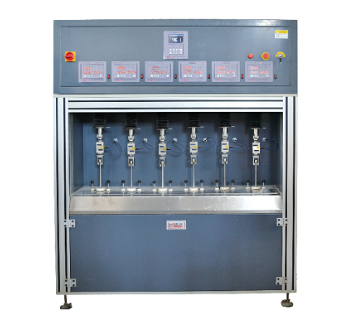
The ductility tester for aluminum tubes is a device specifically used to detect the ductility indicators of packaging materials such as aluminum soft tubes.
Applications
The main purpose of the ductility tester for aluminum tubes is to evaluate the deformation and recovery ability, that is, the ductility, of packaging materials such as aluminum soft tubes under external forces. Through testing, we can understand the performance of aluminum tubes when subjected to external forces such as extrusion and bending during transportation, storage, and use, thereby ensuring the safety and integrity of products. This is particularly important for industries such as medicine, cosmetics, glue, and toothpaste. As the main packaging material for products in these industries, the ductility of aluminum soft tubes directly affects the product's user experience and market competitiveness.
Standards
The design and manufacture of the ductility tester for aluminum tubes usually comply with a series of national and international standards to ensure the accuracy and reliability of test results. Among them, common standards include YBB00162002 - 2015 Aluminum Pharmaceutical Soft Tubes, etc. These standards specify in detail the test methods for the ductility of aluminum tubes, specimen preparation, test conditions, etc., providing a unified standard for the use of the tester.
Technical Parameters
| Technical Parameter | Specification |
|---|---|
| Measurement Range | Usually applicable to aluminum soft tubes with a diameter between 10 and 45mm (some devices cover 8-45mm) and a certain tube length; covers most common aluminum tube specifications for wide applicability. |
| Gate Plate Weight | Precisely controlled within 70g±1g (a key pressure-applying component, ensuring testing consistency and accuracy). |
| Testing Accuracy | Equipped with a high-precision measurement system (e.g., current measurement accuracy reaches ±0.1mA) to quantify aluminum tube deformation under external forces (specific accuracy varies by device). |
| Automation Level | Adopts automatic and intelligent technologies; features one-click operation, automatic timing, and data recording to reduce operator burden and improve test accuracy/traceability. |
| Appearance Dimensions and Weight | Usually compact and portable (varies by model/brand), enabling use in different production sites and laboratories for flexible, convenient testing. |
| Working Environment | Requires a specific environment: working temperature 23℃±2℃, relative humidity ≤80% (no condensation); ensures equipment stability and test result accuracy. |
Accessoriess
Standard configuration: Main unit
Features
Designed strictly according to national or industry standards, it meets standard testing requirements, ensuring compliant test results and accommodating all hose specifications.
Utilizing a high-precision measurement system, it accurately reads the gate's scale markings, thus quantifying the aluminum tube's toughness.
Made of 304 stainless steel with electroplating, it boasts a beautiful appearance and high material strength.
FAQ
1. What is this product?
Answer: It is a physical testing instrument that quantitatively measures a material's ability to become electrically charged and the rate at which it discharges, using high-voltage induction technology.
2. What is this product used for?
Answer: It helps determine the degree to which a fabric becomes electrically charged when exposed to an electric field, as well as the speed at which the charge dissipates, thereby evaluating the fabric's anti-static performance level.
3. How does this product work?
A: It uses high-voltage tip discharge to generate an induced electric field that charges the sample. An inductive sensor then monitors the natural decay process of the charge on the sample.
4. Why is this product important?
Answer: Electrostatic decay rate is a core metric for antistatic fabrics. A shorter half-life indicates faster charge dissipation, enhancing the fabric's safety in hazardous environments (e.g., igniting gas or explosives).
5. Which industries is this product suitable for?
Answer: Primarily applicable to specialized labor protection equipment manufacturing, petrochemical research, electronic precision packaging material development, and third-party fiber testing institutions.
Leave Message Get Price