Catheter Power Injection Flow and Pressure Tester
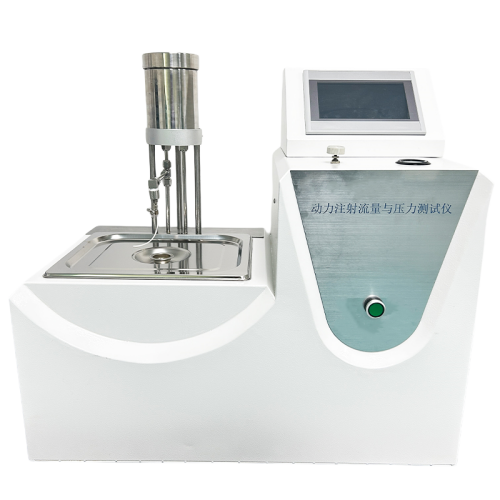


The Catheter Power Injection Flow and Pressure Tester is designed to evaluate the flow and pressure performance of catheters under high-speed and high-pressure injection conditions. The core components of the tester include an injection pump, flow sensor, and pressure sensor, enabling automated control, data visualization, and multi-functional testing.
Applications
The catheter flow and pressure tester for power injection is an important medical device, mainly used to detect key parameters such as flow and pressure of medical catheters (especially micro - catheters) during power injection. These parameters are crucial for evaluating the safety, reliability, and therapeutic effects of catheters. The tester can simulate clinical usage scenarios, conduct pressure resistance tests and flow measurements on catheters, ensuring that catheters will not rupture or leak under high - pressure injection, while maintaining the stability and accuracy of the flow.
Standards
YY 0285.1 - 2017 Disposable Sterile Intravascular Catheters, etc.
Technical Parameters
| Technical Parameter | Specification |
|---|---|
| Test Pressure | Generally adjustable within 0 - 10MPa, with an error not exceeding ±2%. Some devices may have a smaller pressure range, such as 0 - 28MPa. |
| Test Flow | Generally 0 - 500ml, with an error not exceeding ±2% |
| Water Bath Temperature | Usually 37°C, with an error not exceeding ±1°C |
| Data Storage | It can store multiple groups of test data, such as 200 groups or 500 groups, etc. |
| Accuracy | High - precision sensors and data acquisition systems ensure the accuracy of test results |
Accessoriess
Main unit, printer, temperature control device, balance
Features
1. High-Precision Measurement: The tester employs high-precision pressure and flow sensors to accurately measure flow and pressure data during dynamic injection, ensuring reliable test results.
2. Real-Time Monitoring and Feedback: The tester features real-time monitoring capabilities, enabling timely detection of problems during injection, such as leaks or blockages, and providing corresponding feedback. This helps doctors or operators take timely measures to ensure patient safety.
3. Automated Operation: The tester utilizes an automated control system, simplifying the testing process, reducing human error, and improving testing efficiency and accuracy.
4. Flexibility and Adaptability: The tester is suitable for different sizes and types of intravascular catheters, meeting the needs of various dynamic injection scenarios. Furthermore, it can be customized to meet specific testing requirements.
Test Procedures
1. Operating Procedure
Sample Preparation: Select a clean, undamaged catheter and connect it to the testing instrument interface.
Parameter Setting: Input parameters such as pressure, flow rate, and temperature according to testing requirements. For example, when testing a central venous catheter, set the pressure to 5 MPa, the flow rate to 300 ml/min, and the temperature to 37°C.
Test Start: Start the test via the touchscreen. The device automatically simulates the injection process and records data.
Result Analysis: Generates a flow-pressure curve to determine if the catheter performance meets the standards. For example, if the curve fluctuation exceeds the set range, retesting or adjustment of the catheter design is required.
2. Maintenance Points
Regular Calibration: Calibrate the pressure and flow sensors every 6 months to ensure testing accuracy.
Cleaning and Maintenance: Keep the testing instrument's water tank and tubing clean to avoid residual liquid affecting test results.
Lubrication of Transmission Devices: Regularly lubricate the pump and valves to reduce wear and extend equipment life.
FAQ
1. What is the main function of the Catheter Power Injection Flow and Pressure Tester?
The Catheter Power Injection Flow and Pressure Tester is designed to evaluate the flow and pressure performance of catheters under high-speed and high-pressure injection conditions. By simulating clinical usage scenarios, the tester ensures that catheters, especially micro-catheters, maintain structural integrity, do not rupture or leak, and provide stable flow. It is essential for verifying the safety, reliability, and therapeutic effectiveness of medical catheters.
2. Which catheters can be tested with this instrument?
This tester is suitable for various intravascular catheters, including disposable sterile catheters and micro-catheters. It can accommodate different sizes and types, making it adaptable for diverse dynamic injection scenarios. Additionally, the system can be customized to meet specific testing requirements, allowing manufacturers or laboratories to assess performance parameters that closely simulate real clinical conditions.
3. How does the tester ensure accurate measurement and monitoring?
The tester employs high-precision flow and pressure sensors that capture real-time data during dynamic injections. This ensures that any subtle changes in pressure or flow are recorded accurately, providing reliable results. Real-time monitoring allows operators to detect issues such as leaks, blockages, or abnormal fluctuations promptly. The automated control system reduces human error, improves testing efficiency, and guarantees precise, reproducible measurements.
4. What technical parameters can be controlled or measured during testing?
Key parameters include test pressure (generally 0–10 MPa with ±2% error, customizable up to 28 MPa), test flow (0–500 ml with ±2% error), and water bath temperature (usually 37°C with ±1°C error). The tester can store hundreds of test data sets for further analysis. Automated data acquisition produces flow-pressure curves, allowing operators to determine whether catheter performance meets required standards
5. How is a typical test performed?
First, a clean, undamaged catheter is connected to the tester. The operator sets parameters including pressure, flow rate, and temperature according to testing requirements. The device then simulates the injection process automatically while recording data. The system generates flow-pressure curves to assess performance. If the curve fluctuations exceed the set range, the catheter may require retesting or design adjustments. This procedure ensures reliable, repeatable evaluation of catheter safety and efficiency.
Leave Message Get Price