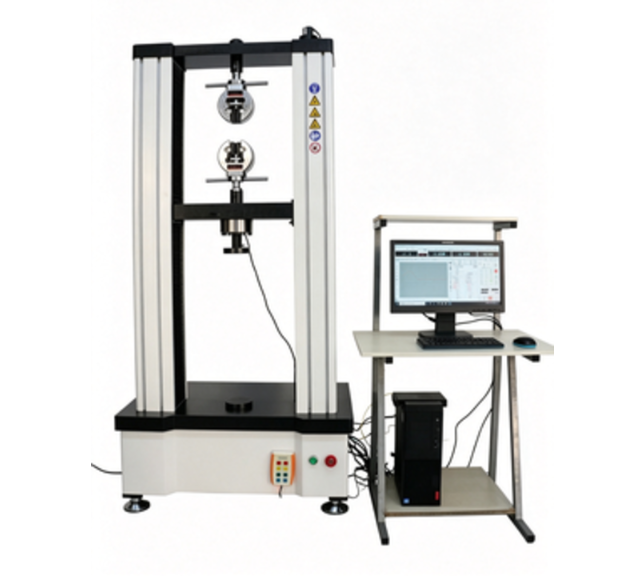
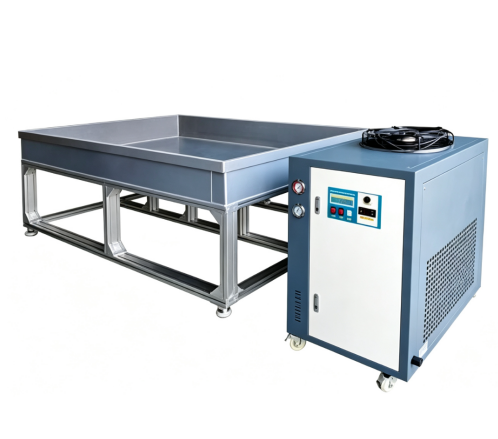
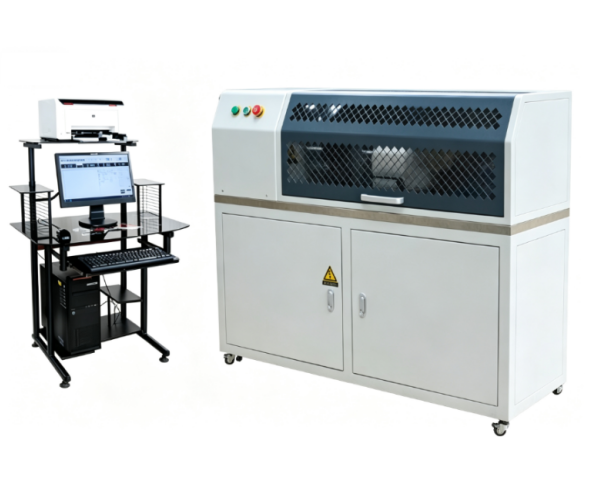
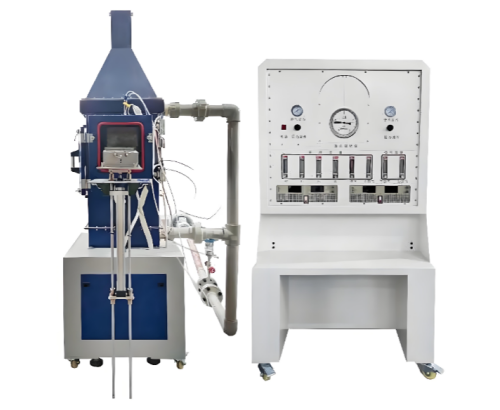
Catheter Leakage and Compliance Tester
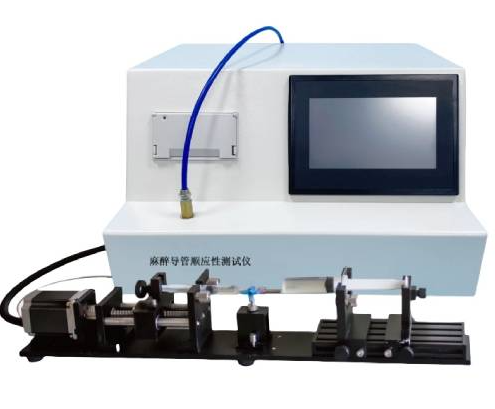


The Catheter Leakage and Compliance Tester is a professional testing device used to evaluate the expansion capacity (compliance) and leak resistance of medical tubing (such as infusion lines, vascular catheters, and respiratory tubing) under varying pressure conditions.
Applications
The catheter leakage and compliance tester is mainly used to detect the leakage and compliance of medical catheters (such as the breathing circuits of ventilators and anesthesia machines). Specifically, it can: Leakage Test: By applying a certain pressure inside the catheter and monitoring the rate or extent of pressure drop, it determines whether there is leakage in the catheter. This is crucial for ensuring the sealing and safety of the catheter during medical procedures. Compliance Test: Compliance refers to the ability of the catheter to deform when subjected to external forces. The tester applies a certain pressure inside the catheter and measures the volume change of the catheter to evaluate its compliance. This is of great significance for understanding the flexibility and elasticity of the catheter, as well as its applicability in medical applications.
Standards
ISO 13988-1:2017: Intravascular catheters - Part 1
ISO 8536-4:2016: Medical infusion equipment
YY/T 0285.4-2017: Intravascular catheters - Part 4
YY/T 1551.1-2017: Non-intravascular catheters
Technical Parameters
| Parameter | Specification |
|---|---|
| Pressure Range | Determined by test object & application scenarios:- e.g., 0 - 300kPa for medical breathing circuits- Narrower range (e.g., 0 - 50kPa) for routine compliance testing |
| Pressure Accuracy | Key for test accuracy; generally requires ±0.1% or higher (e.g., 0 - 50kPa pressure sensor can reach one-thousandth accuracy) |
| Flow Range | Covers various flow situations of tested catheters; common flowmeter range: 0 - 100L/min |
| Flow Accuracy | Important indicator; generally requires ±1% or higher (e.g., ±1%FS for 2L/min mass flow controller) |
| Volume Measurement Range and Accuracy | - Range: From a few milliliters to several liters (adapts to different catheter volumes)- Accuracy: Generally needs to reach ±0.1ml or higher (to accurately calculate catheter compliance) |
| Test Time Range | - Leakage tests: Flexible setting (a few seconds to several hours)- Compliance tests: Controls pressure change rate & time interval to capture catheter volume changes at different pressure stages |
Accessoriess
Standard accessories include: specialized connectors for different sizes of medical tubing (such as ventilator/anesthesia machine breathing circuits), pressure/flow test tubing, tubing fixing clamps (to ensure sample stability during testing), standard test samples for equipment calibration (including standard leakage and compliance components), operating manual, and calibration certificate.
Features
Color LCD large screen display: Real-time display of test data and statistical values, intuitive and clear.
Intelligent touch control operation: Simple human-machine interface for quick experiment switching.
High-precision electronic flow meter: Achieves precise flow control, avoiding testing errors.
Top-tier sensor system: High-sensitivity data acquisition ensures stable and consistent test results.
Data security management: Four-level access control and encrypted storage prevent unauthorized operations and ensure the integrity and traceability of results.
Convenient result output: Equipped with a micro printer, supporting instant printing of single test results and statistical data.
Test Procedures
Sample Pretreatment
Tubing Aging Treatment: Immerse in physiological saline at 37°C for 24 hours to relieve material stress;
Connection Sealing Inspection: Apply soapy water to the interfaces to confirm no initial leakage.
Typical Test Modes
Static Compliance Test:
Pressurize to 100kPa, maintain pressure for 30 seconds, and record the volume change ΔV1;
Release pressure to 0kPa, and record the volume recovery ΔV2;
Compliance calculation: C = (ΔV1 - ΔV2)/ΔP (unit: mL/kPa).
Dynamic Leakage Test:
Apply a sinusoidal pressure wave with a frequency of 1Hz and an amplitude of ±50kPa for 10 minutes;
Collect the leaked fluid and calculate the leakage rate using the weighing method (≤0.5mL/10min is considered acceptable).
Result Evaluation Standards (Refer to YY/T 0285.4-2017)
Compliance Deviation: ≤±15% compared to the nominal value;
Leakage: ≤1mL/minute under positive pressure of 100kPa, and no visible bubbles under negative pressure of -50kPa.
FAQ
1. What is the main purpose of the Catheter Leakage and Compliance Tester?
The Catheter Leakage and Compliance Tester is designed to evaluate the leakage and compliance of medical catheters, including breathing circuits, infusion lines, and vascular catheters. The leakage test applies pressure inside the catheter and monitors pressure drops to detect leaks, ensuring sealing and safety during medical procedures. The compliance test measures the catheter’s volume change under pressure to assess its flexibility and elasticity, which is crucial for its performance and suitability in clinical applications.
2. Which standards does this tester comply with?
This tester is designed to meet multiple international and national standards, including ISO 13988-1:2017 (Intravascular catheters – Part 1), ISO 8536-4:2016 (Medical infusion equipment), YY/T 0285.4-2017 (Intravascular catheters – Part 4), and YY/T 1551.1-2017 (Non-intravascular catheters). Compliance with these standards ensures that the device provides accurate, reliable, and standardized evaluation results for catheter leakage and compliance testing.
3. How is the compliance of a catheter measured using this device?
The compliance test typically involves a static test procedure. The catheter is pressurized to a specific value, such as 100 kPa, and the volume change (ΔV1) is recorded after maintaining the pressure for a set time, usually 30 seconds. The pressure is then released to 0 kPa, and the volume recovery (ΔV2) is recorded. Compliance is calculated using the formula C = (ΔV1 - ΔV2)/ΔP, expressed in mL/kPa. This method ensures precise measurement of catheter deformation under pressure and provides data on flexibility and elasticity for medical evaluation.
4. What are the key features of the Catheter Leakage and Compliance Tester?
The tester features a large color LCD display for real-time data visualization, intelligent touch operation, and a high-precision electronic flow meter for accurate flow control. It uses a top-tier sensor system for stable, repeatable measurements. Data security is managed via four-level access control and encrypted storage. Results can be printed instantly via a micro printer. These features ensure reliable, traceable, and user-friendly testing suitable for medical and research applications.
5. What is the acceptable leakage rate and compliance deviation according to the test standards?
According to YY/T 0285.4-2017. the acceptable leakage rate is ≤1 mL/min under a positive pressure of 100 kPa, and no visible bubbles should appear under a negative pressure of -50 kPa. Compliance deviation should not exceed ±15% compared to the nominal value. These thresholds ensure that tested catheters maintain adequate sealing and consistent elasticity for safe clinical use.
Leave Message Get Price