Catheter Flexibility Tester
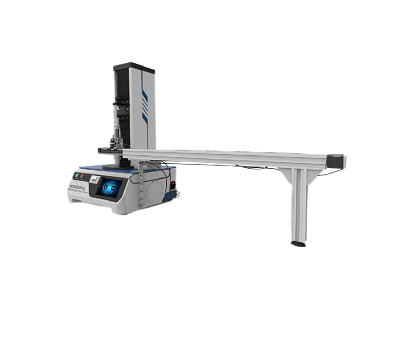


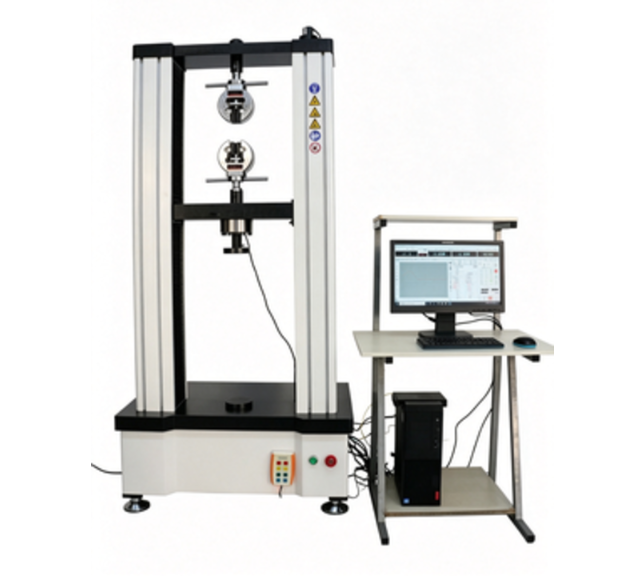
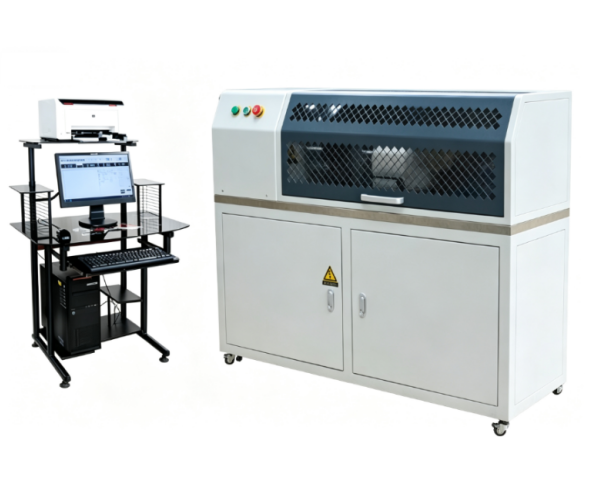
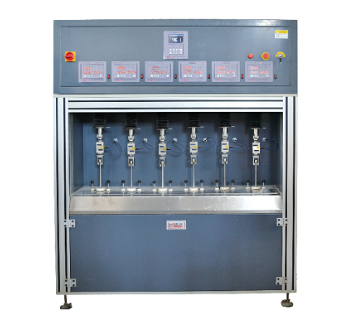
The Catheter Flexibility Tester utilizes a control system combining a PLC and an industrial computer, along with a color touch screen interface. It has a force range of 0-10 kg and an accuracy of 0.1%. The device features fully automatic pneumatic catheter compression and is suitable for guidewire flexibility and three-point bending tests. Its main technical parameters, including force range, compression speed, and guidewire span, can all be set on the touch screen. This equipment is used to test the flexibility and stiffness of catheters under different conditions, and is characterized by its ease of operation and accurate testing.
Applications
The catheter flexibility tester is mainly used to evaluate the flexibility and durability of catheters or guidewires during bending or twisting processes. This equipment is widely applied in medical, industrial and other fields to ensure the safety and reliability of catheters during use. In the medical field, it is particularly suitable for evaluating the flexibility and durability of medical catheters such as blood vessel catheters, urinary catheters, and biliary catheters, ensuring that they will not cause harm to patients during use. In the industrial field, it can be used to assess the flexibility of catheters transporting fluids, gases and other media in different environments, ensuring their good performance during use. In addition, in fields such as aviation and automotive, the catheter flexibility tester is also used to evaluate the flexibility and durability of catheters under different temperature and pressure conditions.
Standards
ISO 10555 -Intravascular catheters- Sterile and single-use catheters
ISO 11o70- Catheter introducers, dilators, and guidewires
ASTM F2394-Guidewire mechanical property evaluation
ASTM F2908- Stiffness and flexibility of guidewires
ISO 178:2oo1 -Flexural properties of plastics (applicable to catheter materials)
Technical Parameters
| Parameter | Specification |
|---|---|
| Testing Range (Force Range) | Usually 0 - 10 kilograms or more, depending on the tester's model and specifications |
| Testing Stroke | Varies in vertical & horizontal directions; e.g., vertical stroke: 0 - 300mm, horizontal stroke: 0 - 700mm |
| Testing Speed | - Press-down Speed: Adjustable within 0 - 300mm/min- Wire-drawing Speed (for applicable testers): 0 - 500mm/min or faster |
| Catheter Clamping Method | Usually adopts pneumatic or mechanical clamping, ensuring the stability and accuracy of the catheter during testing |
| Control System | Adopts PLC control system (high precision & stability); operation interface may be equipped with a color touch screen for convenient setting and operation |
Features
7-inch touchscreen interface with programmable test parameters and intuitive controls
Real-time force vs. displacement data acquisition with automated reporting
Dual-system control for independent force and displacement parameter setting
High-precision ball screw drive and guide mechanism for smooth operation
O.5% FS force sensor accuracy with resolution up to O.01 N
Supports catheter diameters up to 3.3 mm (customization available)
Advanced displacement control with O.1 mm accuracy
Pneumatic clamping system designed for fast, secure catheter mounting
Stores up to 1oo,ooo test records, supports audit trails and data export
Includes Rs232 interface and micro printer for traceable output
Accessoriess
Main unit, computer, horizontal traction module, pneumatic gripper, 7-inch color touch screen
FAQ
1. What is the Catheter Flexibility Tester mainly used for?
The Catheter Flexibility Tester is used to evaluate the flexibility and stiffness of catheters and guidewires under bending or compression conditions. By performing guidewire flexibility tests and three-point bending tests, the device helps determine how catheters behave when subjected to mechanical stress. This is essential for verifying whether catheters can maintain performance without deformation or failure during clinical use. The tester is widely applied in medical, industrial, aviation, and automotive fields to ensure catheter reliability under different working environments.
2. Which types of catheters and guidewires can be tested with this equipment?
This tester is suitable for a wide range of medical catheters and guidewires, including intravascular catheters, urinary catheters, biliary catheters, and related guidewires. It supports catheter diameters up to 3.3 mm, with customization available for other sizes. By using pneumatic clamping and adjustable test spans, the equipment can accommodate different catheter structures and materials. This flexibility allows manufacturers and laboratories to evaluate mechanical properties such as flexibility and durability across multiple catheter types and application scenarios.
3. What standards does the Catheter Flexibility Tester support?
The Catheter Flexibility Tester is designed in accordance with multiple international standards related to catheter and guidewire mechanical performance. These include ISO 10555 for sterile and single-use intravascular catheters, ISO 11070 for catheter introducers and guidewires, ASTM F2394 and ASTM F2908 for guidewire mechanical property and stiffness evaluation, and ISO 178:2001 for flexural properties of plastics. Compliance with these standards ensures that test methods and results are consistent, reliable, and suitable for regulatory and quality evaluation purposes.
4. How does the tester ensure accurate and repeatable flexibility measurements?
The tester combines a PLC control system with an industrial computer and a color touchscreen interface, enabling precise parameter setting and stable control. It features a force range of 0–10 kg with high accuracy, and uses a high-precision ball screw drive and guide mechanism to ensure smooth movement. Real-time force versus displacement data is captured during testing, allowing operators to monitor changes throughout the process. Fully automatic pneumatic clamping further reduces manual variation, improving test repeatability and measurement accuracy.
Leave Message Get Price