Vacuum Blood Collection Tube Suction Volume Tester
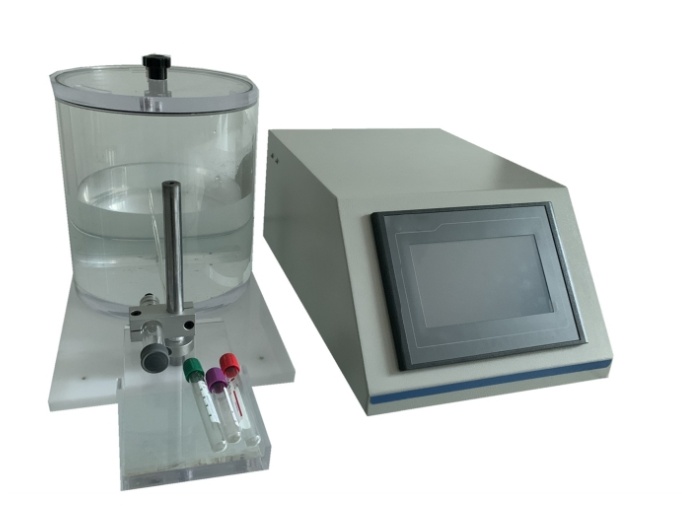


In the medical field, particularly in processes involving blood sample collection, the accuracy of the suction volume of Vacuum Blood Collection Tube Suction Volume Testers is crucial. Specifically designed for testing the suction volume of single-use human venous blood sample collection containers, this device accurately measures the suction volume of vacuum blood collection tubes at different altitudes, ensuring compliance with relevant standards and providing a reliable foundation for clinical diagnosis and medical research.
Applications
The Vacuum Blood Collection Tube Aspiration Volume Tester is mainly used to detect the aspiration volume of disposable human venous blood sampling containers, especially to check whether they meet the standard requirements in different altitude areas. The tester precisely measures the aspiration volume of blood collection tubes by simulating different altitude or air pressure conditions, thereby evaluating the performance of blood collection tubes in various environments. This is crucial for ensuring the accuracy and reliability of blood collection tubes in actual use, and helps maintain the quality of blood samples and the accuracy of diagnostic results.
Standards
The design and manufacture of the Vacuum Blood Collection Tube Aspiration Volume Tester must comply with relevant medical industry standards, such as YY 0314 - 2021Disposable Human Venous Blood Sampling Containers. This standard clearly specifies key indicators, including the error range of the aspiration volume of blood collection tubes, container leakage tests, and container strength tests, to ensure the usability and safety of blood collection tubes. The tester must strictly adhere to these standards during the design and manufacturing process to ensure the accuracy and reliability of test results.
Technical Parameters
| Serial No. | Parameter Item | Parameter Details |
|---|---|---|
| 1 | Vacuum Degree | Test range: 0 - 90kPa (meets testing requirements of different altitude areas) |
| 2 | Vacuum Degree Accuracy | 0.5- level (ensures measurement precision) |
| 3 | Vacuum Degree Maintenance Performance | Equipped with automatic air-supplement and constant-pressure maintenance functions (ensures vacuum degree stability during testing) |
| 4 | Operation Control Mode | Fully automatic control + touch-screen operation (simplifies testing process and improves efficiency) |
| 5 | Air Source Pressure Requirement | 0.7 - 0.9MPa (air source to be provided by user; ensures normal operation of the tester) |
| 6 | Air Source Generator | Uses imported components (e.g., Japanese SMC generators) with a stability of ±0.1kPa (improves testing accuracy) |
| 7 | Power Supply | Supports multiple specifications (e.g., AC 220V 50Hz/120V 60Hz) (adapts to different regional power environments) |
| 8 | External Dimensions | Main unit size: 300mm(L)×385mm(W)×150mm(H) (specific size may vary by model; easy to place and operate) |
| 9 | Weight | Net weight of main unit: approximately 7kg (actual weight may vary by configuration; facilitates portability and movement) |
| 10 | Language | Supports Chinese/English (standard configuration); other languages (e.g., Russian, Traditional Chinese) available for customization (meets different users' needs) |
Accessoriess
1. Main Unit: The RDVT-01 testing instrument main unit integrates the PLC control system, human-machine interface touchscreen, vacuum chamber, and other core components, making it the core of the entire testing system.
2. Puncture Needle: Made of high-quality materials to ensure smooth and accurate puncture, avoiding damage to the blood collection tube.
3. High-Precision Weighing Sensor: Used to accurately measure the weight difference of the blood collection tube before and after testing, ensuring the accuracy of the test results.
4. Connecting Tubing: Features good sealing and corrosion resistance, ensuring stable and reliable pressure transmission.
5. Operation Manual: Provides detailed instructions on the operation methods and maintenance precautions of the testing instrument, helping users to correctly use and maintain the equipment.
Features
1.Adoption of PLC Industrial Control System: The PLC industrial control system offers high stability and reliability, ensuring precise control of the testing process. It can quickly respond to various commands, enabling accurate adjustment of parameters such as test pressure and time, guaranteeing high accuracy and repeatability of test results. For example, when performing multiple blood collection tube aspiration volume tests, the PLC control system ensures consistent test conditions each time, improving testing efficiency and accuracy.
2. 7-inch HMI Touchscreen: Operation is simpler and more intuitive. Test personnel can easily set test parameters and view test results via the touchscreen, eliminating complex operating procedures. Even first-time users can quickly master the operation method, improving work efficiency.
3. Extra-thick Acrylic Vacuum Chamber: Provides excellent sealing and visibility. The sealing ensures the stability of the pressure environment during testing, preventing external air interference with test results; the visibility allows test personnel to observe the puncture and blood collection process of the blood collection tube, enabling timely detection and resolution of problems.
4. Built-in Vacuum Device:Eliminates the need for an external air source, reducing the complexity and cost of equipment use. Users only need to connect the power supply to quickly start testing, making it convenient and suitable for testing needs in various locations.
FAQ
1. What is the main purpose of the Vacuum Blood Collection Tube Suction Volume Tester?
The Vacuum Blood Collection Tube Suction Volume Tester is specifically designed to measure the suction volume of single-use human venous blood collection tubes. By accurately measuring the aspiration volume under controlled pressure conditions, including different simulated altitudes, the tester verifies whether blood collection tubes meet relevant standard requirements. This ensures that the tubes can collect the correct blood volume during actual clinical use, providing a reliable foundation for clinical diagnosis and medical research while maintaining the quality and consistency of blood samples.
2. How does the tester evaluate suction volume performance at different altitudes?
The tester evaluates suction volume performance by simulating different altitude or air-pressure environments through controlled vacuum levels. With a vacuum degree test range of 0–90 kPa and high-precision vacuum control, the instrument reproduces pressure conditions corresponding to various altitudes. During testing, the blood collection tube aspirates a standard medium, and the suction volume is calculated based on the weight difference before and after aspiration. This method allows accurate assessment of whether blood collection tubes maintain compliant aspiration volumes in different geographic and environmental conditions.
3. Which standards does the Vacuum Blood Collection Tube Suction Volume Tester comply with?
The tester is designed and manufactured in accordance with YY 0314-2021 Disposable Human Venous Blood Sampling Containers. This standard specifies requirements for aspiration volume error range, container leakage testing, and container strength testing, ensuring the safety and usability of blood collection tubes.
4. What are the key technical features that ensure testing accuracy and stability?
The instrument adopts a PLC industrial control system for precise and repeatable control of test parameters, a 7-inch HMI touchscreen for intuitive operation, an extra-thick acrylic vacuum chamber for excellent sealing and visibility, and a built-in vacuum device that ensures stable pressure conditions during testing.
5. What is the vacuum performance range of the tester?
The tester supports a vacuum degree range of 0–90 kPa with 0.5-level accuracy. It is equipped with automatic air-supplement and constant-pressure maintenance functions to ensure vacuum stability throughout the testing process.
6. What accessories are included with the tester?
Standard accessories include the main testing unit, a puncture needle, a high-precision weighing sensor, connecting tubing with good sealing performance, and an operation manual for proper use and maintenance guidance.
Leave Message Get Price