Thermal Radiation Flame Spread Tester
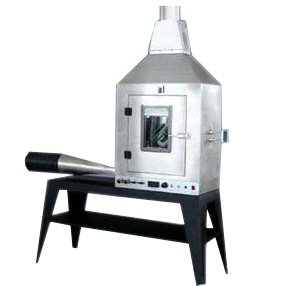


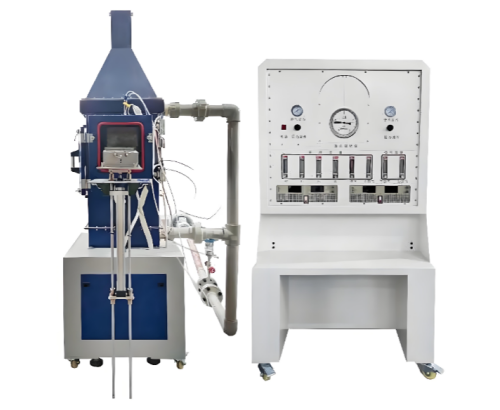
The Thermal Radiation Flame Spread Tester is designed to evaluate the combustion characteristics of building materials, high-speed train materials, and marine materials. It focuses on critical parameters such as flame spread rate, ignition heat, and total heat release. The device measures flame spread, critical heat flux, and sustained burning heat according to standards such as GB/T 28752-2012 and ISO 5658-2. It is widely applied in building construction, transportation, and shipbuilding for material performance testing under fire conditions.
Applications
The tester is widely used in:
(1) Fire performance testing of construction materials, panels, and insulation boards.
(2) Evaluation of flame spread and heat release for railway vehicle interior materials.
(3) Quality control for industrial safety compliance of rigid and elastic polymeric materials.
(4) R&D of fire-retardant treatments and coatings for building and transport applications.
(5) Certification laboratories assessing compliance with international fire safety standards.
(6) Educational and training institutions teaching material combustion behavior and fire dynamics.
Standards
The instrument complies with domestic and international standards, including:
NF P92-501 – Rate of flame spread for building materials
TB/T 2639.1 – Fire performance testing of railway materials – Radiation test method
ISO 5660 series – Reaction-to-fire tests, heat release rate
ASTM E1354 – Standard test method for heat and visible smoke release rates for materials using oxygen consumption calorimeter
EN 13823 – Reaction to fire tests for building products – Building products excluding floorings exposed to the single burning item
GB/T 28752-2012 – Test Method for Lateral Flame Spread on Vertical Surfaces
ISO 5658-2 – Fire Spread Test for Vertical Surfaces of Building Products
IMO Res.A653(16) – Surface Flammability Test for Bulkhead, Ceiling, and Deck Materials
Instrument Features
(1) Stainless Steel Test Chamber – Interior lined with fire-resistant materials and equipped with transparent observation window.
(2) Air Supply System – Stainless steel tubular inlet with filtration to prevent contamination.
(3) 45° Sample Test Holder – Stainless steel ruler for accurate flame spread distance measurement.
(4) Thermal Radiation Source – Provides adjustable 30 kW/m² heat flux; panel displays real-time power output, eliminating frequent calibration.
(5) Top and Bottom Stainless Steel Burners – Ignites volatile gases; needle valves control flame height with flame height gauges.
(6) Pilot Flame System – Convenient ignition before testing for upper and lower burners; quarter-turn plug valve allows easy flame isolation.
(7) Temperature Monitoring – Thermocouples at top and air inlet display real-time temperature differences.
(8) Software Control – Automated calculation of flame indices: Flame Initiation Index (i), Average Flame Height Index (S), Maximum Flame Height Index (h), and Heat Release Index (C); built-in report generation and print capability.
Technical Specifications
| Parameter | Specification |
|---|---|
| Overall Dimensions (W×D×H) | 1900 × 460 × 2100 mm (74.8 × 18.1 × 82.6 in) |
| Shipping Weight | 208 kg (Main unit: 158 kg; Table: 50 kg) |
| Radiation Source Rated Power | 500 W |
| Power Meter Accuracy | 0.5 class |
| Gas Regulation Valve Pressure Range | < 0.1 MPa |
| Electrical Supply | AC 220V, 50Hz, 550 W |
| Sample Thickness | >5 mm |
| Heat Flux | Adjustable, up to 30 kW/m² |
| Test Angles | 45° sample holder with scale |
| Flame Height Control | Needle valve with flame gauge |
| Data Outputs | Flame initiation index (i), average flame height (S), maximum flame height (h), heat release index (C) |
Accessories
(1) 45° stainless steel test holder with measurement scale
(2) Transparent observation window
(3) Air filtration unit for clean airflow
(4) Thermocouples and digital display
(5) Software package with automated calculation and reporting
Test Procedures / Maintenance
(1) Mount the sample on the 45° test holder.
(2) Adjust the thermal radiation source to the required 30 kW/m² heat flux.
(3) Ignite top and bottom burners using pilot flame system.
(4) Observe flame propagation and record data via software.
(5) Software automatically calculates flame indices and generates reports.
(6) After testing, extinguish burners, clean chamber interior, and remove residue.
(7) Regularly calibrate radiation flux, thermocouples, and flame height gauges to ensure accurate results.
FAQ
1.What is this product?
The Thermal Radiation Flame Spread Tester evaluates flame spread, ignition heat, and heat release characteristics of materials.
2.What is it used for?
It measures critical parameters of material combustion under thermal radiation to assess fire performance.
3.How does it work?
Samples are exposed to controlled thermal radiation, while sensors record heat release, flame propagation, and ignition data.
4.Why is it important?
Provides essential fire performance data for materials in construction, transportation, and marine applications.
5.Which industries is this product suitable for?
Building materials, high-speed rail, shipbuilding, fire safety products, and material manufacturers.
Leave Message Get Price