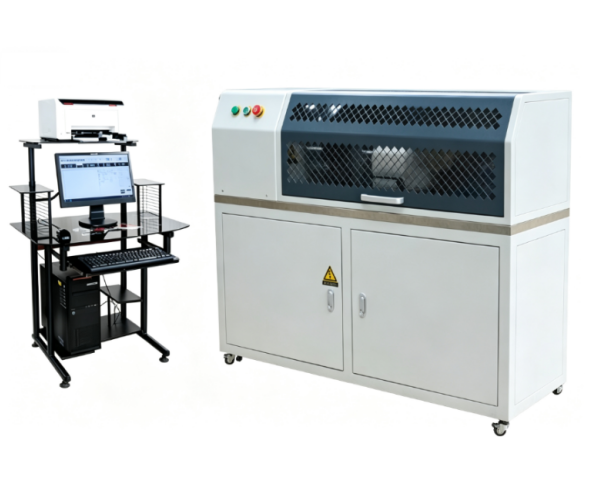
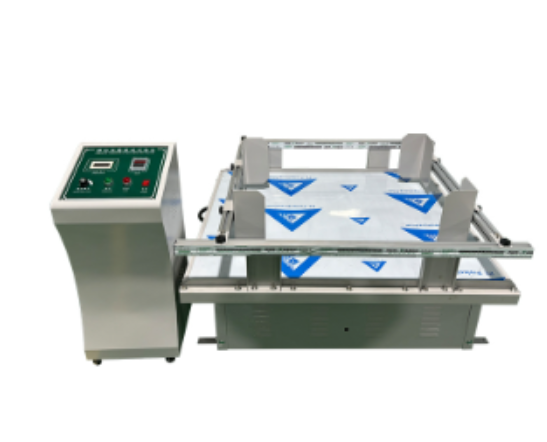
Cross Hatch Cutting and Adhesion Tester T110
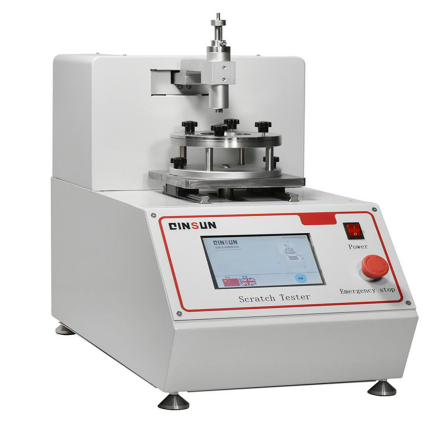


The Cross Hatch Cutting and Adhesion Testing provides a relative movement of the scratch head to the surface of the material, and finally evaluates the sensory level of the scratch after scratching, the chromatic aberration of the scratched area and the unscratched area, or peeling condition of the surface coating of the sample after being scraped and adhered by tape, which is a common test instrument for evaluating the scratch resistance of the surface of the material and the coating. The good repeatability of the experimental data can help the manufacturer to effectively control the production and verify the performance of the product.
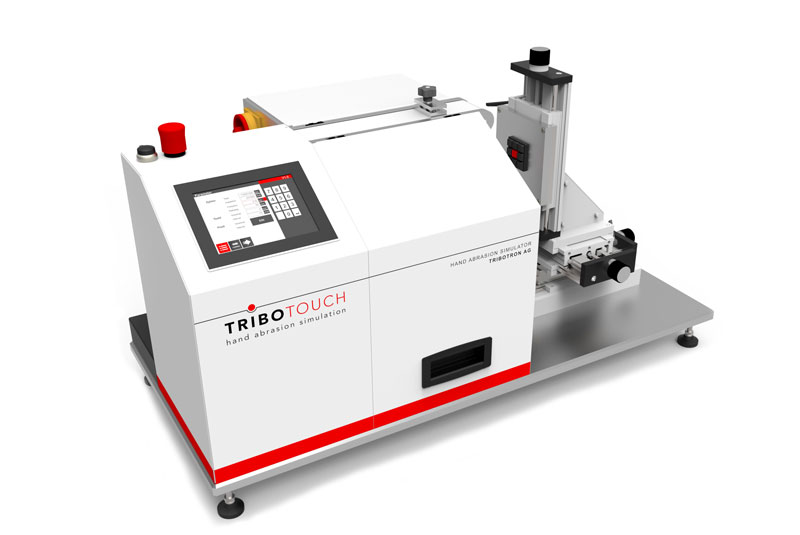
1. The LCD screen is used to control and display the test process. The test grid number, length, and speed can be freely set according to user' s requirements. Unique sample holder enables the sample clamping is firm and easy to use.
2. The equipment adopts the stepping motor of high quality, and adopts the guide rail structure transmission in the horizontal and vertical directions. With characteristics of small gap, uniform movement, lower noise, higher test precision, good repeatability and long service life.
Application
It is suitable for testing automotive interior materials, plastics, rubber, leather, coated fabrics, coating materials, composite materials, paints, inks, soft metals and other industries. It is widely used in product quality control, new product development performance verification, testing mechanism testing and other fields.
It is applicable to the performance verification of new products, quality control of the production department, and the of material properties for the third-party testing organization, the product performance verification laboratory, and the quality and technical supervisiondepartment, etc.
Standards
PV 3952 Plastic interior parts scratch resistance test
Ford BN 108-03. 13 Scratch resistance test
BMW 0180. PA-P 028 Scratch resistance test (cross-cut method)
DAF KEUR 00824-401 Scratch resistance test (cross-cut method)
GME 60401 Scratch resistance test (cross-cut method)
GM 14829 Scratch resistance test (cross-cut method)
Jaguar-Landrover TPJLR.52.00 Scratch resistance test
GM N 14688 Scratch resistance test
8350Z-SDA-9000 Scratch test
NES M M0159 Polypropylene interior parts scratch resistant test
Features
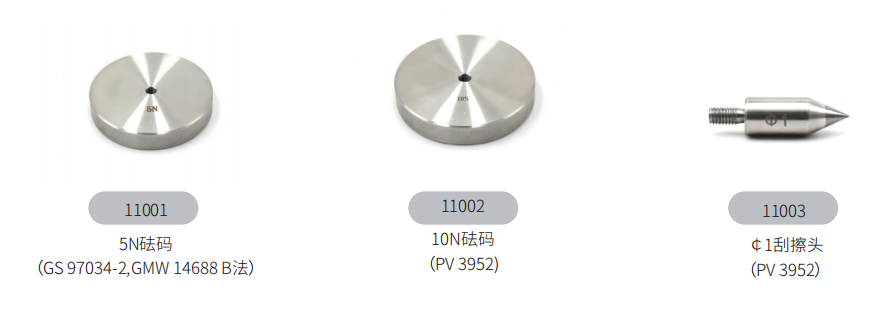
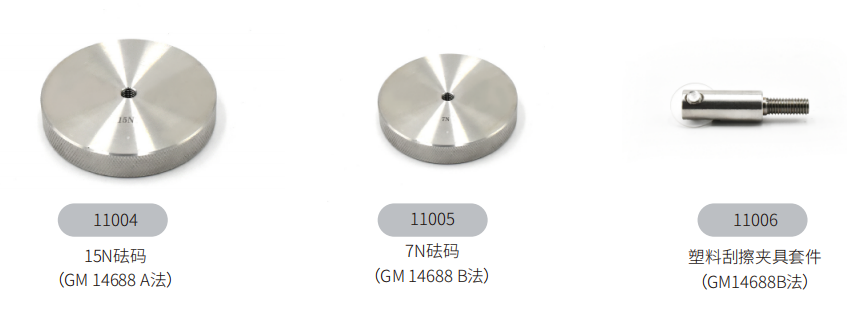
Interchangeable multi-range weights
The instrument has a wide load range and can meet different standard tests. And also, the different pressurization loads can be customized according to customer' s requirements.
Simple and reliable sample fixation
The spinning type fixed sample enables that the sample is easy to install and not easy to slide, the replacement type stationary fixture is replaced according to the type and size of the friction head to meet a certain friction area.
Smart touch screen operation
The touch screen operation interface is simple and easy to use, and can be selected in both Chinese and English. It is convenient to select the stroke, speed, and scraping grid number, and can achievedifferent pressure tests at the same time.
Rail positioning
The device adopts guide rail transmission with high precision, low noise and long service life.
Multiple test suites
The flexible fixture can be interchanged with the imported friction head to meet different standards and different test requirements.
Technical Parameters
Test mode: automation | Scraper head lift: pneumatic |
Test speed: 10-200mm/s | Control screen: intelligent touch |
Number of scratches: it can be freely set | Working station: single station |
Scratch head size: it can be interchanged | Appearance size: 360mm*650mm*640mm |
Weight: 65Kg | Power: 220V |
Accessories
Standard Configuration
Optional Accessories
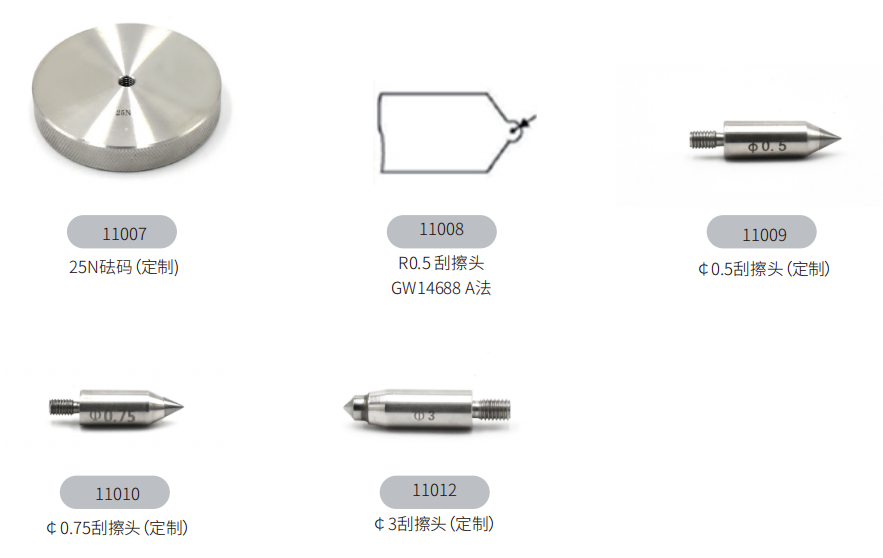
Test Procedure
1. First, prepare the accessories and test samples.
2. Place the test sample into the fixture and tighten securely. Attach the scraper head to the bottom of the guide rod and tighten securely. Attach the weight to the top of the guide rod and tighten securely.
3. Turn on the power switch to enter the LCD operation interface. Set parameters such as speed, grid count, spacing, and stroke.
4. The guide rail drives the scratching head to perform a scraping motion against the material surface. When the set value is reached, the second-stage dialog box automatically pops up.
5. Remove the screws on both sides, rotate the test fixture horizontally by 90 degrees, and reconfigure parameters such as speed, number of passes, spacing, and stroke.
6. The scratching head performs a scraping motion against the material surface. It automatically stops upon reaching the set value. Remove the sample for observation.
7. Shut down the instrument to end the test. Remove the sample for analysis and comparison. Evaluate the visual grade of post-scratch marks, color difference changes between scratched and un-scratched areas, or coating peeling after tape adhesion treatment on the sample surface.
FAQ
1.What is the cross hatch test for adhesion?
This basic and very subjective test method involves the user cutting an “X” through the coating, down to the substrate, using a sharp utility knife. The blade of the knife is then used to determine how easily the coating lifts off the substrate at the intersection point of the cut.
2.What is the ISO standard for cross hatch adhesion test?
Cross Hatch Adhesion testing is a proven technique for estimating the adhesion of coatings, including painted surfaces. This method, which is carried out in accordance with DIN EN ISO 2409, is explicitly not used to measure the adhesive strength, but rather to estimate it.
3.What is the ISO 4624 adhesion test?
ISO 4624:2016 specifies three methods (i.e. one dolly or two dollies on a painted panel and two dollies, one as painted substrate) for determining the adhesion by carrying out a pull-off test on a single coating or a multi-coat system of paint, varnish or related product.
4.What is the purpose of an adhesion test?
An adhesion test measures the force required to separate two surfaces that have been brought into contact under controlled conditions. It quantifies a product's adhesive strength, tack, and cohesiveness, helping manufacturers understand how strongly a product sticks to another surface or itself.
5.What is the ISO standard for adhesion test?
ISO 4624 – It is the standard for the pull-off test for paint and varnish adhesion. ASTM D2197 – It is the standard for the scrape test for testing the adhesion of organic coatings. ASTM D6677 – It is the standard for the knife test for testing adhesion.
Leave Message Get Price