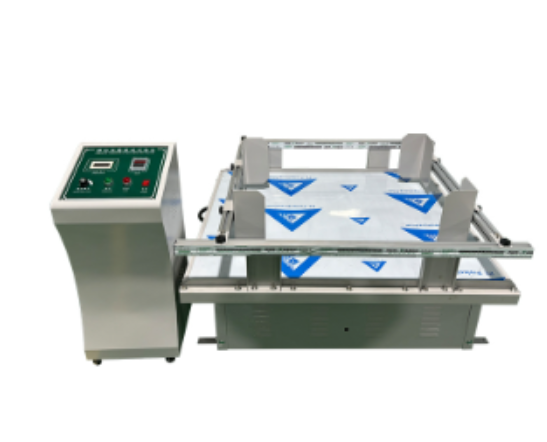
Single Station Jounce Tester
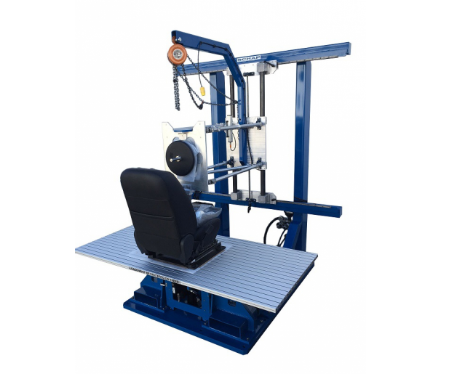


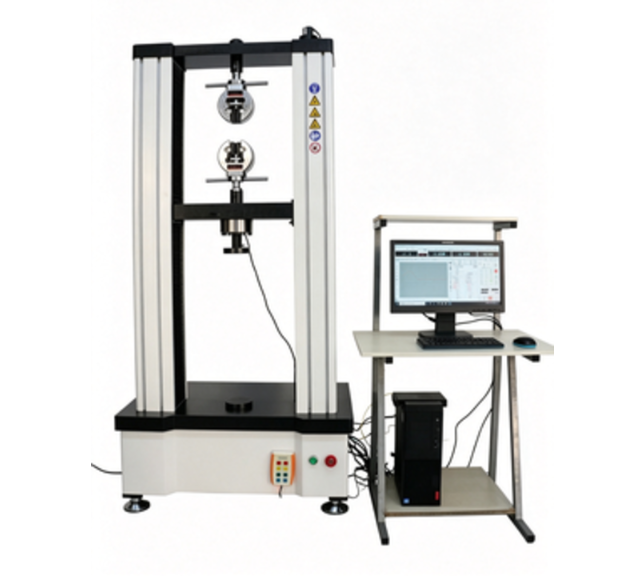
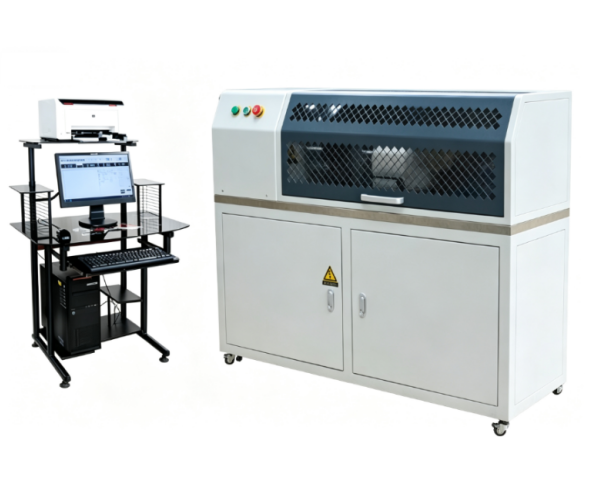
The Single Station Jounce Tester is designed for vibration durability testing of automotive seat cushions and backrests. It evaluates the fatigue strength, wear resistance, and overall durability of seat components, including the frame, foam, and upholstery. This tester ensures realistic simulation of body weight and vibration loads without introducing excessive inertia, making it suitable for both seat components and complete seating systems.
Application
Mechanical Manufacturing and Precision Manufacturing: Detection of runout error is a core indicator for measuring the quality of rotating parts, directly affecting the smoothness of equipment operation.
Industrial Inspection Equipment: Runout testers are used to detect the outer diameter, runout value, and out-of-roundness of workpieces such as metal shafts and rubber rollers.
Automated Production Lines: Runout testers are used in automated production lines to ensure the accuracy and stability of equipment.
Quality Control: Runout testers are used in quality control processes to detect and analyze the runout error of equipment, ensuring product quality.
Scientific Research and Development: Runout testers are used in scientific research and development to test and verify the performance and reliability of equipment.
Standards
QC/T 740-2017 – Automotive Seat Assembly Fatigue Test Standard
SAE J826-2002 – Anthropomorphic Test Devices for Vehicle Seats
Test Principle
The tester applies controlled vibration to the seat cushion and backrest at a set frequency and amplitude for a predetermined number of cycles. After testing:
Seat frame should remain intact with no cracks.
Foam and cushion should maintain their shape without deformation.
Upholstery should show no damage.
Maximum H-point variation remains within rated range.
Typical test setup:
Seat cushion: 100.000 vibration cycles at 100 times/minute.
Backrest: 50.000 vibration cycles at 100 times/minute.
Parameters
| Parameter | Specification | Standard/Typical Value |
|---|---|---|
| Torsion Angle Amplitude | 0 – 50° | 21° |
| System Power | Mechanical vibration | — |
| Vibration Frequency | 1 – 5 Hz, adjustable | 1.5 Hz |
| Vibration Amplitude | 0 – 35 mm, adjustable | 30 mm |
| Loading Method | Weight loading | — |
| Load Weight | Cushion: 68 kgf, Backrest: 29 kgf | — |
| Vibration Cycles | 0 – 999.999 | — |
| Workstations | 1 (optional 2-seat testing) | — |
| Stop Mode | Automatic stop when cycles reached | — |
Features
Simulates real-world vertical vibration loads with sinusoidal motion.
Evaluates fatigue life of seat frame, cushion foam, and fabric upholstery.
Upper jounce assembly includes body form and adjustable weights for realistic load simulation.
Height and lateral adjustment ensure proper alignment and horizontal parallelism.
Overhead crane for easy installation and removal of test samples.
Servo-hydraulic lower jounce table with PC-based closed-loop control.
Programmable vibration frequency, amplitude, and acceleration with four control modes: table displacement, table acceleration, upper assembly displacement, and upper assembly acceleration.
Optional slave stations allow simultaneous testing of multiple samples.
Designed to prevent excessive inertia loads, ensuring realistic and reliable test results.
Accessories
Additional slave stations for multiple seat testing.
Extra weight sets to simulate different passenger weights.
Data acquisition system for logging vibration and displacement data.
Custom fixtures for various seat types and sizes.
FAQ
1. What is the significance of the "H-point variation" in this test?
The H-point (Hip-point) represents the pivot center of the human torso and thigh. By measuring its variation before and after the test, you can determine if the seat foam has "sagged" or if the frame has shifted, which directly impacts long-term driver ergonomics and safety.
2. Why is the test frequency typically set around 1.5 Hz?
A frequency of 1.5 Hz closely replicates the natural frequency of the human body and the typical vibration patterns of a moving vehicle. This frequency is most effective at identifying potential fatigue issues in foam and structural welds.
3. Can this bench test the backrest and the cushion simultaneously?
Yes. The upper assembly and torsion systems allow you to apply simultaneous or independent loads to the cushion and backrest, simulating the "bump and crawl" motion where the occupant's weight shifts dynamically.
4. How does the system handle "excessive inertia," and why is that important?
Excessive inertia in a test rig can create "artificial" force spikes that the seat would never encounter on the road. This tester uses a tuned mass and servo-controlled damping to ensure the forces applied are strictly representative of the occupant's weight and the road vibration.
5. What happens if the seat frame develops a crack during the test?
The system is equipped with safety sensors that detect abnormal displacement or resistance. If a structural failure occurs, you can set the software to trigger an alarm or shut down the test to prevent further damage to the machine and to record the exact cycle count of the failure.
6. How can I choose the suitable configuration for my automotive seat testing project?
Configuration selection depends on seat type, testing standards, cycle requirements, and production needs. QINSUN engineers can provide equipment recommendations, customized fixtures, calibration support, and more application solutions according to your requirements.
Leave Message Get Price