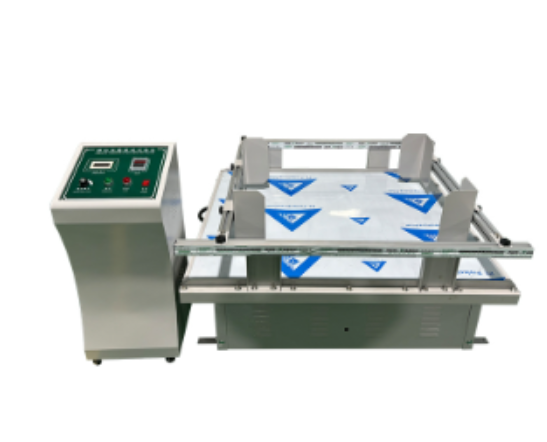
PVT Coolant Pulse Test Machine
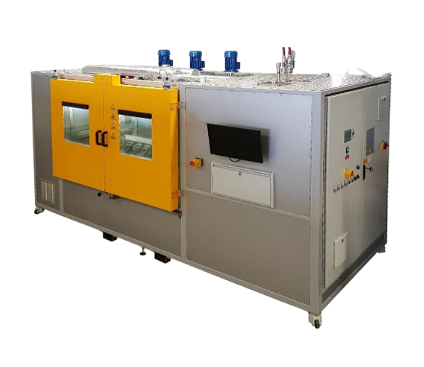


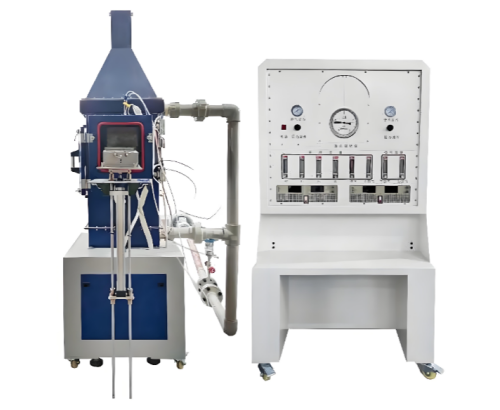
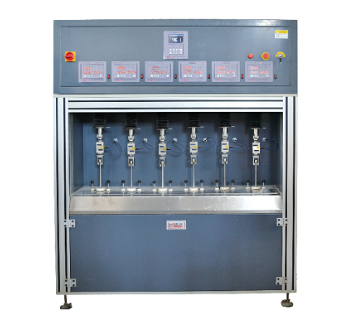
The PVT Coolant Pulse Test Machine is designed for testing automotive cooling components, with a particular focus on rubber coolant hoses. It integrates linear vibration and eccentric rotation mechanisms, enabling automatic leak detection and leak testing. The machine is equipped with an automatic shutdown function for failed samples, ensuring safety and efficient testing workflows.
Application
You can use the PVT Coolant Pulse Test Machine to evaluate the durability, functionality, and leak resistance of automotive cooling system components.
Testing rubber coolant hoses and tubes under dynamic pressure conditions.
Evaluating seals and connectors in cooling systems.
Simulating real-world vibration and thermal stress on components.
Integrating with automotive testing standards for component reliability.
Commonly used testing products with this machine:
Rubber coolant hoses
Plastic connectors and fittings
Cooling system assemblies
Automotive engine cooling components
Standards
VW 78007 / TL 82048 / TL 81165 / TL 874 (4.4) – Volkswagen Group specifications for cooling system and interior material performance
TL 82002 / TL 52682 / TL 886 / TL 889 / TL 82086 – Volkswagen Group specifications for system component material performance and durability
PV 1712 (Ag 99-03) / GMW3155 – Fiat / General Motors engineering specifications for materials and component performance
PTL14052-A1203 / PTL14100-A0911 – Internal technical standards for component functionality and reliability
BMW LH 10356681 (10.5) / LH 10757369 (6.) / QV 17004 – BMW Group engineering specifications for material and component functionality and durability
BMW LH 7823444.6 / LH 10591317 / LH 10274837 – BMW Group engineering specifications for system component performance and functional validation
DIN 73411-2 [39] / Daimler M139 (2) / M177 (2) – Daimler engineering specifications / German industrial standards for component material and functional testing
Parameters
| Parameter | Details |
|---|---|
| Machine Dimensions | 4350 mm × 2520 mm × 2150 mm (W × H × D) |
| Test Chamber Internal Dimensions | 1800 × 1000 × 1000 mm (W × H × D) |
| Rated Power | 60 kW |
| Test Medium | Glycol / Water |
| Pressure Range | 0 … 5 bar |
| Medium Flow Control | Up to approx. 100 l/min |
| Linear Motion | ±25 mm at 1 Hz ±12 mm at 5 Hz ±6 mm at 10 Hz ±2 mm at 20 Hz |
| Test Medium Temperature Range | -40°C … +150°C |
| Environment Temperature Control Range | -40°C … +150°C |
| Test Channels | 8 |
Features
Combines linear and eccentric motion mechanisms for pressure pulse testing.
Operates in a pressure range of 0.1 … 5 bar.
Heats the test chamber by monitoring maximum surface temperature limits.
Automatic leak detection and leak testing with shutdown of failed samples.
Integrated recirculation pump prevents coolant leakage.
Windows / LabView-based control unit for data acquisition and monitoring.
Maintenance Information
Regularly check and clean the recirculation pump and medium lines to prevent blockages.
Inspect motion actuators for wear and lubricate as recommended.
Calibrate pressure and temperature sensors periodically to ensure accurate testing.
Clean the test chamber and remove any residue from previous tests.
Update the control software and verify data acquisition integrity.
FAQ
1. What is this product?
It is a testing machine designed for evaluating automotive cooling components, particularly rubber hoses, under dynamic pressure and temperature conditions.
2. What is it used for?
You use it to simulate real-world vibration, pressure, and thermal stress on coolant system components, verifying durability, functionality, and leak resistance.
3. How does it work?
The machine applies linear and eccentric motion to components under controlled pressure and temperature. It automatically detects leaks and shuts down failed samples while recording all test data.
4. Why is it important?
It ensures cooling system components meet automotive standards for safety, reliability, and long-term durability, reducing the risk of failure in real vehicles.
5. Does the instrument support different filter element sizes?
The standard fixture supports common filter materials and elements. For special-size filter elements or thicknesses beyond the standard range, customized fixtures and test platforms can be designed according to customer requirements.
6. How can I choose the correct configuration for my filter testing requirements?
The suitable configuration depends on the filter type, pore size range, sample dimensions, and applicable standards. QINSUN engineers can provide selection guidance, customized fixture solutions, calibration support, and more application cases according to your requirements.
Leave Message Get Price