Sweating Guarded Hotplate
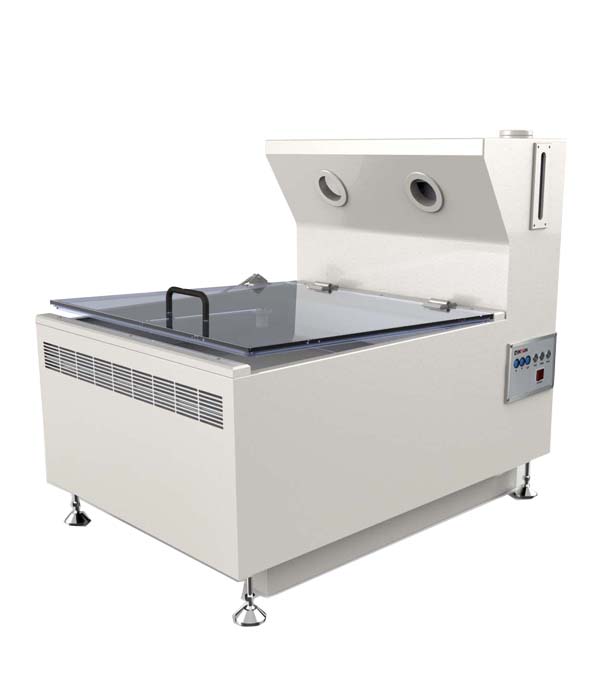


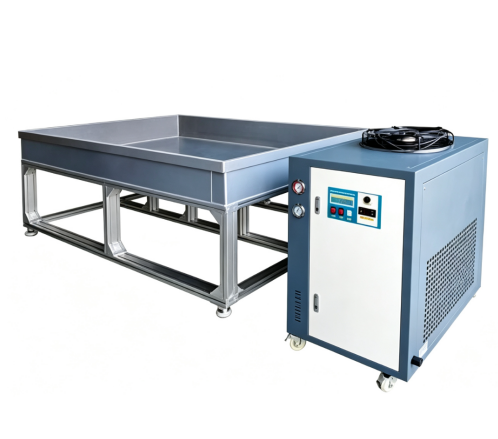
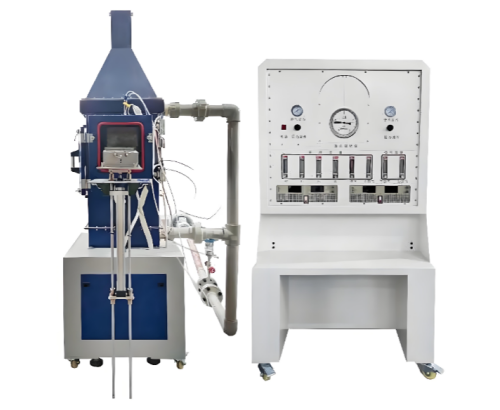
G259A Sweating Guarded Hotplate is the most professional, most advanced Thermal and Evaporative Resistance test instrument, simulate the human skin test plate, Auto matic water supply system, Wind speed stabilization system, test unit and Climate Chamber completely separated design, Aluminum alloy shell to ensure that won't rust.
Sweating Guarded Hotplate tester to determine the thermal and evaporative resistance of clothing materials, under standard test environment, heat the fixed aluminum or copper. Keep them to maintain a fixed temperature and heating power. At the same time, after covering the aluminum or copper with test fabric, do the power test under the same situation, and test the size of test platen with the power difference. And then determine the thermal or dampness of the test sample.
Applications
Measurement of the thermal resistance and the evaporative resistance, under steady-state conditions, of fabrics, films, coatings, foams, and The quilt,including multi-layer assemblies, for use in Clothing production.
Standards
ISO 11092: International standard for "Textiles — Physiological effects — Measurement of thermal and water-vapour resistance under steady-state conditions" (directly governs its core function of testing thermal/evaporative resistance; product’s separated climate chamber and stable wind speed meet its strict environmental control requirements).
JIS L1096-2010: Japanese Industrial Standard "Textiles — Test methods for colour fastness" (extends to Breathability/Moisture permeability testing; product’s precise water supply and stable air flow support its moisture permeability assessment).
ASTM D6701-16 Standard Test Method for Determining Water Vapor Transmission Rates Through Nonwoven and Plastic Barriers.
ASTM D1518-2014: American Society for Testing and Materials standard "Textiles — Thermal and evaporative resistance" (specifies test methods for thermal properties; product’s automatic water system and stabilized wind speed ensure compliance with its precision criteria).
ASTM F1868-09/02: ASTM standards for "Thermal and Evaporative Resistance of Clothing Materials" (focuses on protective garment testing; product’s skin-simulating design and separated test/climate chamber meet its demand for realistic human body contact conditions).
BS8515: British Standard "Code of practice for the design of buildings and their approaches to meet the needs of disabled people" (indirectly relevant for material performance in humid environments; product’s stable moisture control supports material assessment in such applications).
GB/T 11048: Chinese National Standard "Textiles — Determination of thermal resistance" (defines domestic textile thermal resistance test parameters; product’s design aligns with its requirement for accurate, repeatable measurements).
Features
1.Sweating Guarded Hotplate (SGHP) Equipped with heating plate, which fully simulate the Human skin structure.
2.Completely separate the design of temperature test chamber and this machine.
3.Integration design of control system and automatic supply system.
4.Automatic water supply and drainage system, and powerful water adding system.
5.Permeability of heating plate would be faster while dampness test.
6.Thermal resistance wet resistance tester: high precision automatic platform moving system.
7.Input the specimen thickness, and then the platform will move to the corresponding position.
8.Quickly reach a steady test state, automatically adjust the PID control parameters with specimen.
9.Simulation human skin sweat evaporation tester: thickness and then quickly reach the test conditions.
10.Patented wind parallel stabilization system, which make speed and test result more stable.
11.Sweating Guarded Hotplate Speed: 0-1.2m/s continuous adjustable,which can meet standard for wet thermal resistance and thermal performance test.
12.The width of heating protection ring assure the heat only transmit by specimen.
13.LED soft lighting system. Support USB and WIFI. Total stainless steel housing.
14.Guarded Sweating Hot Plate Instrumentation equipped with test software and various test standards.
Technical Parameters
(RCT)Thermal resistance range : 0.002-2.0 m2K/ W | The sample platform lift range:0~50mm automatic lift |
Repeatability: ≤ ± 2% | Sample thickness: 0~50mm |
Resolution: 0.001m2K/W | Test plate area: 254mm X 254mm |
(Ret)evaporative Resistance range : 0-1000m2Pa/ W | Guard ring size: 512mm X 512mm |
Repeatability: ≤ ± 2% | Guard ring width: 127mm |
Resolution: 1m2. Pa/W | Sample size:500mm*500mm |
Test plate temperature range: 30C ~40C adjustable | Dimensions: 73X61×35cm (LxWxH) (not including Climate Chamber) |
Temperature control accuracy: ± 0.03 C | Weight: 45Kg (not including Climate Chamber) |
Temperature measurement: ± 0.01 C | Host power: AC220V ± 10%, 100W or AC110V ± 10%, 100W |
Air velocity: 0~ 1.2 m/ s continuously adjustable | Warranty: 24 Months |
Air velocity accuracy: ± 1% |
Test Procedures
Sample Preconditioning: Place specimens under standard atmospheric conditions for humidity conditioning to ensure material stability.
Sample Cutting: Use the dedicated template to cut “L”-shaped or square specimens of specified dimensions (as prompted by the software).
Sample Placement: Lay the specimen flat on the test platform, ensuring no wrinkles and that the grain direction complies with standard requirements.
Test Initiation: Enter sample information in the software interface and click “Start.” The instrument will sequentially perform compression, bending, surface friction, and heat exchange tests.
Data Generation: Upon test completion, the system automatically calculates various tactile metrics (e.g., Smoothness, Softness, Warmth).
Result Export: Generate objective tactile radar chart reports for convenient data storage or cross-team sharing.
Maintenance Information
Sensor Protection: Pressure and heat flux sensors are highly precise. Never press directly with fingers or touch sensing surfaces with sharp objects.
Cleaning and Maintenance: After each test, use an air pump or soft, lint-free cloth to remove fiber debris and dust from the test platform surface.
Regular Calibration: It is recommended to calibrate pressure and heat flow every six months using the included standard blocks to ensure data accuracy.
Software Updates: Regularly check for driver and algorithm updates to obtain the latest tactile rating models.
FAQ
1. What is this product?
A: It is a fully automated, integrated comprehensive testing system for fabric sensory properties.
2. What does this product do?
A: It converts the subjective human perception of fabric “handfeel” into quantifiable, comparable scientific data.
3. How does this product work?
A: It simulates hand movements to compress, fold, slide, and sense temperature on fabrics, capturing real-time mechanical and thermal feedback from the material.
4. Why is this product important?
Answer: Handfeel is the primary factor influencing consumer purchasing decisions. This device resolves inconsistencies in manual sensory evaluation standards, serving as a critical tool for fabric premiumization.
5. Which industries is this product suitable for?
Answer: It is suitable for high-end apparel brands, functional fabric manufacturers, large-scale export inspection agencies, and textile research institutes.
Leave Message Get Price