Direct Shear Tester
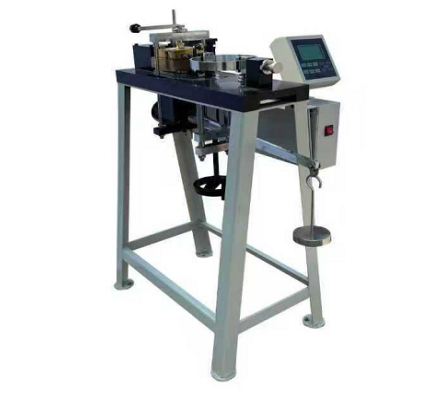


The Electric Direct Shear Tester is a laboratory instrument designed to determine the shear strength of soils. It features high-resolution color display, microcomputer control, and a high-performance servo motor to provide precise, automated, and repeatable testing. The system can perform shear tests on up to four samples simultaneously and includes an automatic stop mechanism for safety.
Application
The Direct Shear Tester is suitable for:
Determining soil shear strength parameters for geotechnical design.
Evaluating slope stability, soil bearing capacity, and foundation performance.
Research and teaching in soil mechanics laboratories.
Quality control and assessment of soil improvement and stabilization projects.
Standards
ASTM D3080 – Standard Test Method for Direct Shear Test of Soils
Parameters
| Item | Technical Parameter |
|---|---|
| Shear Box Size | 60 × 60 mm / 100 × 100 mm (optional) |
| Sample Thickness | 20 – 25 mm |
| Normal Load Capacity | ≥ 5 kN |
| Shear Load Capacity | ≥ 5 kN |
| Load Resolution | ≤ 0.1% |
| Shear Rate | 0.0001 – 1.0 mm/min (adjustable) |
| Load Cell Accuracy | ±1% |
| Displacement Measurement | Resolution ≥ 0.002 mm |
| Loading System | Manual / Motorized |
| Drainage Condition | Drained / Undrained |
| Data Output | Analog / Digital / PC Interface / CSV |
| Power Supply | AC 220 V, 50 Hz |
Features
High-performance servo motor drive reduces vibration and ensures smooth operation.
Color touchscreen display with intuitive microcomputer control.
Adjustable shear rate and load settings for flexible testing.
Capable of testing multiple samples simultaneously (up to four).
Automatic stop mechanism for safe operation.
Supports both drained and undrained test conditions.
Data logging with PC interface and CSV export for analysis.
Accessories
Shear box assembly (upper & lower)
Normal loading system
Shear loading system
Load cell / proving ring
Dial gauge / LVDT (horizontal & vertical)
Drive unit (manual / motorized)
Control & data logger
Maintenance Information
Regularly clean shear boxes and loading components to prevent soil residue buildup.
Inspect LVDT sensors, load cells, and proving rings for calibration accuracy.
Lubricate mechanical parts as needed for smooth operation.
Verify software calibration and interface connectivity periodically.
FAQ
(1)What soil properties can be obtained from a direct shear test?
The test mainly determines shear strength parameters such as cohesion and internal friction angle. These values are important references for evaluating slope stability, foundation design, and soil bearing performance in geotechnical engineering projects.
(2)What is the difference between drained and undrained testing?
Drained tests allow pore water pressure to dissipate during shearing, while undrained conditions restrict drainage. The selection depends on soil type, engineering conditions, and the requirements of the applicable testing method.
(3)What sample sizes are commonly used for direct shear testing?
The equipment supports standard shear boxes such as 60×60 mm and 100×100 mm. The appropriate size depends on soil particle size, specimen preparation method, and laboratory testing requirements.
(4)How does shear rate affect test results?
Shear rate influences soil deformation behavior and measured strength values. ASTM D3080 recommends selecting a suitable rate to allow required drainage conditions, ensuring test results represent actual soil behavior.
(5)How should a direct shear tester be selected for a laboratory?
Selection should consider required standards, soil types, load capacity, automation level, and data management requirements. QINSUN engineers can provide suitable configuration recommendations according to your testing needs.
Leave Message Get Price