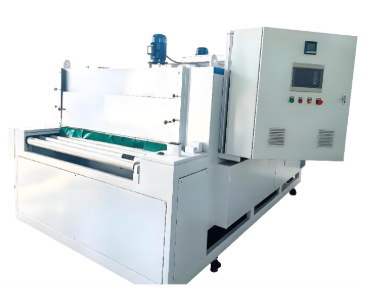
Fabric Hydrostatic Pressure Tester
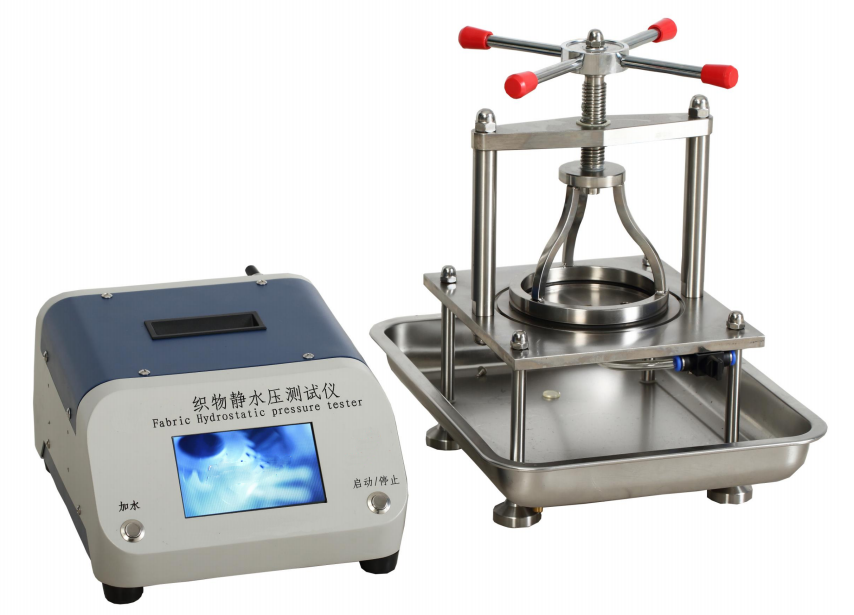


The Fabric Hydrostatic Pressure Tester is a laboratory instrument used to determine the resistance of textile fabrics to water penetration under increasing hydrostatic pressure. The instrument applies water pressure uniformly from below the specimen and detects the pressure at which water penetration occurs, providing reliable data for evaluating fabric water resistance.
Application
The Fabric Hydrostatic Pressure Tester is suitable for hydrostatic water resistance testing of the following materials:
Canvas and tightly woven fabrics
Oilcloth and coated fabrics
Tent fabrics and rainproof textiles
Clothing textiles requiring water resistance evaluation
The instrument is widely used in textile quality control laboratories, inspection institutions, and research facilities.
Standards
GB/T 4744 Textile Fabrics — Test Method for Water Resistance — Hydrostatic Pressure Method
ISO 811 Textiles — Determination of Resistance to Water Penetration — Hydrostatic Pressure Test
JIS L 1092 Testing Methods for Water Resistance of Textiles
Parameters
| Parameter | Specification |
|---|---|
| Sample placement | Horizontal, pressure applied from below |
| Test area | 100 cm² (diameter 11.28 cm) |
| Hydrostatic pressure height options | 5 m, 10 m, 20 m (standard); 30 m (custom) |
| Pressure increase rate | 0–100,000 Pa/min |
| Pressure resolution | 1 Pa |
| Display units | Pa, kPa, mmH₂O, cmH₂O, mBar |
| Power supply | AC 220 V, 40 W |
| Electromagnetic pump voltage | AC 220 V, 0.4 A |
| Instrument weight | 15 kg |
Features
Microcomputer-controlled system with digital display for stable pressure regulation
High-precision pressure sensor ensures repeatable and accurate measurements
Stainless steel specimen clamping assembly for corrosion resistance and durability
Multiple pressure units selectable to meet different standard requirements
Simple operation suitable for routine laboratory testing
Accessories
Main unit × 1
Control box × 1
Power cord × 1
Solid calibration plate × 1
O-ring × 2
Filter × 2
PU air tubing (φ8, 2 m) × 3
Water tray × 1
Drain soft ball with hose × 1
Operation manual × 1
Packing list × 1
Quality feedback form × 1
Warranty card × 1
Certificate of conformity × 1
Test Procedures
Secure the fabric specimen in the clamping device with the test surface facing upward.
Select the required pressure increase rate and pressure unit according to the test standard.
Start the test; water pressure is applied uniformly from below the specimen.
Observe the specimen surface and record the pressure at which water droplets penetrate.
Stop the test automatically or manually after penetration is detected.
Maintenance Information
Clean the specimen clamping area and water circuit after each test.
Periodically inspect seals, O-rings, and tubing for wear or leakage.
Calibrate the pressure sensor regularly using the calibration plate.
Drain residual water from the system when the instrument is not in use for extended periods.
FAQ
1. What is a fabric hydrostatic pressure tester used for?
It is used to measure how well a fabric resists water penetration under pressure. This helps determine whether materials are suitable for waterproof or water-resistant applications such as outdoor gear, rainwear, and tents.
2. How does hydrostatic pressure testing work?
The test applies water pressure to one side of the fabric while monitoring for leakage. The pressure increases gradually until water droplets appear on the surface, indicating the fabric’s resistance level.
3. What types of fabrics can be tested?
A wide range of textiles can be evaluated, including coated fabrics, canvas, oilcloth, tent materials, and tightly woven garments designed for water resistance.
4. Which standards does this tester comply with?
This instrument is designed to meet internationally recognized testing standards such as GB/T 4744, ISO 811, and JIS L 1092, ensuring reliable and comparable results across laboratories.
5. Why is hydrostatic pressure important for textiles?
Hydrostatic pressure resistance is a key indicator of waterproof performance. Higher values generally mean better protection against rain and moisture, which is critical for outdoor and protective clothing.
Leave Message Get Price