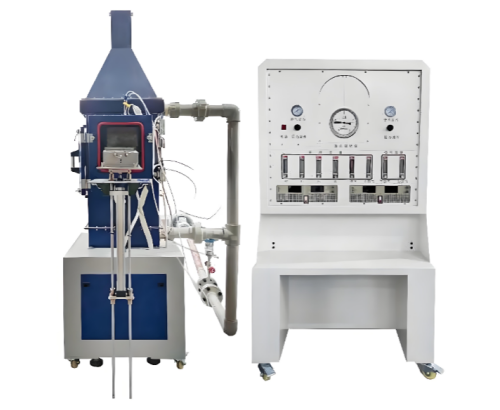
Color Fastness to Washing Tester
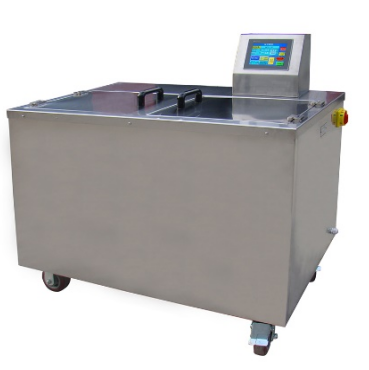


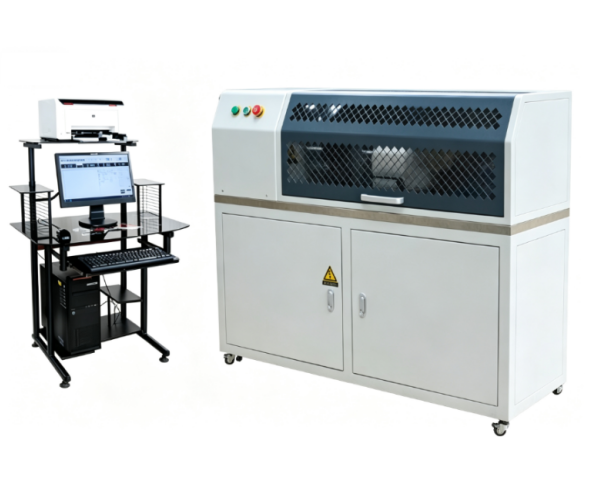
The Color Fastness to Washing Tester is a laboratory testing instrument used to evaluate the resistance of dyed and printed textiles to color change and staining during washing. You use this tester to simulate domestic or commercial washing conditions under controlled temperature, time, and mechanical action, ensuring reliable and repeatable assessment of wash fastness performance in accordance with international standards.
Application
You use this instrument for wash fastness testing of a wide range of textile materials, including:
Cotton, wool, silk, and linen fabrics
Chemical fibers and blended textiles
Dyed and printed fabrics
Garments and textile components
It is also suitable for evaluating the washing fastness performance of dyes. The tester is widely used in textile dyeing and finishing plants, dye manufacturers, quality inspection laboratories, and research institutions.
Standards
(1) GB/T 3921.1–5 Textiles — Tests for color fastness — Color fastness to washing
(2) GB/T 5711 Textiles — Tests for color fastness — Color fastness to dry cleaning
(3) ISO 105 Textiles — Tests for color fastness
(4) AATCC 61 Colorfastness to Laundering, Home and Commercial: Accelerated
(5) JIS L 0844 Testing methods for color fastness to washing and laundering
Parameters
| Item | Specification |
|---|---|
| Sample Cup Capacity | 12 × 1200 mL ±50 mL or 12 × 550 mL |
| Rotating Frame Speed | 40 r/min ±2 r/min |
| Drive Motor Power | 180 W |
| Drain Pump Power | 30 W |
| Chamber Heating Power | 6000 W × 2 |
| Preset Time Range | 0.1–9999 min |
| Power Supply | AC 380 V ±10%, 50 Hz, three-phase |
Features
Touchscreen control with clear interface for fast parameter setting
Built-in test programs with editable user-defined test modes
Real-time temperature–time curve display during testing
Audible alarm when the preset test time is reached
Dry-heating protection prevents heating without water
Motor thermal protection ensures safe continuous operation
Temperature calibration function allows accurate control under different altitudes and media conditions
Low-noise, stable transmission system for smooth operation
Stainless steel construction provides corrosion resistance and long service life
Accessories
(1) Stainless steel test cups
(2) Rotating test cup rack
(3) Built-in drainage pump
(4) Power cable
(5) Operation manual
Maintenance Information
You should regularly clean the test cups and chamber to prevent residue buildup. Ensure sufficient water is present before heating to avoid dry operation. Periodically inspect the bearings, transmission components, and electrical connections. When not in use for extended periods, disconnect the power supply and keep the instrument in a dry environment.
FAQ
(1) What is this product?
It is a laboratory instrument designed to test the color fastness of textiles to washing.
(2) What is this product used for?
You use it to assess color change and staining behavior of textiles after simulated washing.
(3) What is the working principle of this product?
Textile specimens are washed under controlled temperature, time, and mechanical action, and the resulting color change is evaluated.
(4) Why is this product important?
It ensures textile products meet wash fastness requirements and helps prevent color fading and staining issues in actual use.
(5) What industries is this product suitable for?
Textile dyeing and finishing, dye manufacturing, garment production, quality inspection laboratories, and research institutions.
Leave Message Get Price