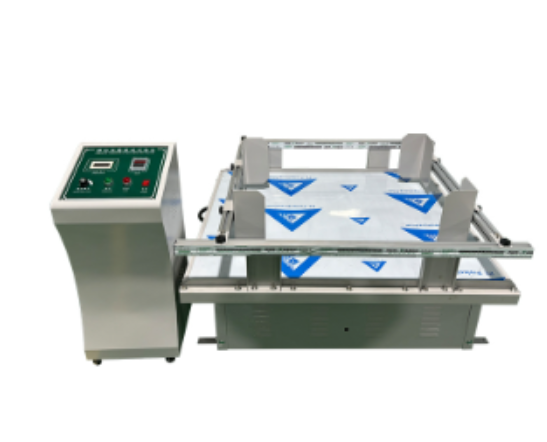
Textile Formaldehyde Content Tester DIN EN ISO 14184
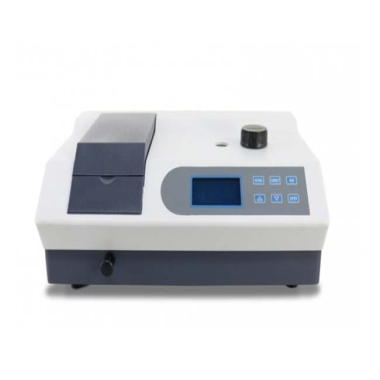


The Textile Formaldehyde Content Tester is a precision instrument designed to determine formaldehyde levels in textiles, including fabrics, garments, and finished textile products. Using chemical extraction and colorimetric methods (e.g., Nessler reagent reaction), it accurately quantifies free and hydrolyzed formaldehyde content. The tester ensures compliance with national and international textile safety standards and supports high-throughput testing, data storage, and automated wavelength calibration for reliable and repeatable results.
Application Scenarios
(1) Textile manufacturing and processing: testing raw fabrics, dyed and finished fabrics, and functional textiles for formaldehyde content
(2) Garment production lines: ensuring finished apparel, uniforms, bedding, and home textiles meet formaldehyde safety standards
(3) Textile laboratories: R&D of safe, low-formaldehyde fabrics, functional fabrics, and smart textiles
(4) Inspection and testing agencies: verifying compliance of cotton, polyester, wool, silk, blended fabrics, and technical textiles
(5) Educational institutions: teaching textile chemistry, fabric safety, and quality control procedures
(6) Comparative evaluation: assessing fabrics and garments from different suppliers or production batches for formaldehyde levels
(7) QC in specialized textiles: testing waterproof/breathable laminates, coated fabrics, and flame-retardant materials
Compliance Standards
(1) GB/T 2912 — Textiles: Determination of formaldehyde — Part 1: Free and hydrolyzed formaldehyde
(2) AATCC 112 — Textiles: Determination of formaldehyde — Vapor absorption method
(3) BS 6806 — Textile formaldehyde testing
(4) DIN EN ISO 14184-2 — Textiles: Determination of formaldehyde — Part 2: Released formaldehyde (vapor absorption method)
(5) GB 18401-2003 — National textile product safety standard (China)
(6) GB/T 23328-2009 — Determination of formaldehyde content in textiles
(7) GB/T 2664-2009, GB/T 2665-2009, GB/T 2666-2009 — Textile formaldehyde determination and safety standards
(8) GB/T 23314-2009 — Test method for free and hydrolyzed formaldehyde in textiles
Key Features
(1) Large 128×64 dot-matrix LCD display for clear and accurate readings
(2) Continuous testing with storage of up to 200 data sets; each screen displays 5 sets
(3) Supports C mode (multi-point standard curve method) and F mode (coefficient method) for flexible analysis
(4) Power-off memory preserves stored data and standard curves
(5) Automatic wavelength calibration, deviation self-repair, and automated settings
(6) Dual light sources: deuterium lamp and long-life tungsten lamp for UV and visible spectrum
(7) Standard USB data output interface and parallel print output for easy reporting
(8) Quantitative analysis software included for direct photometric analysis and data processing
Technical Parameters
| Parameter | Specification |
|---|---|
| Wavelength Range | 190–1000 nm |
| Spectral Bandwidth | 4 nm or 2 nm optional |
| Wavelength Accuracy | ±1 nm |
| Wavelength Repeatability | ≤0.3 nm |
| Wavelength Setting | Automatic |
| Wavelength Resolution | 0.1 nm |
| Luminosity Accuracy | ±0.5% T |
| Photometric Repeatability | ≤0.2% T |
| Stray Light | ≤0.05% T |
| Data Output | USB interface |
| Stability | ±0.001 A/h (at 500 nm after preheating) |
| Luminosity Range | 0–200% T, -0.3–3A, 0–9999C |
| Print Output | Parallel port |
| Display System | 128×64 bit LCD |
| Light Source | Imported long-life tungsten lamp & deuterium lamp |
| Detector | Imported silicon photodiode |
Product Advantages
Accurate and repeatable formaldehyde measurement for fabrics and garments
Supports high-throughput testing and batch comparisons
Dual-mode analysis for flexibility in standard curve or coefficient calculations
Automated wavelength calibration ensures measurement reliability
USB and parallel output for data logging and report generation
Suitable for raw fabrics, finished garments, functional textiles, laminates, and coated materials
FAQ
(1) What is the Textile Formaldehyde Content Tester?
It is an instrument for determining free and hydrolyzed formaldehyde content in fabrics, garments, and finished textile products.
(2) What is this equipment used for?
It is used for textile quality control, regulatory compliance testing, laboratory R&D, and educational training on fabric safety.
(3) What types are available?
Standard formaldehyde content tester with dual light sources; optional high-throughput or multi-sample configurations available.
(4) What industry problems can it solve?
Ensures fabrics and garments meet formaldehyde safety standards, supports QC in textile production, and provides accurate testing for low-formaldehyde R&D fabrics.
(5) How is it operated?
Prepare the textile sample, perform chemical extraction, run colorimetric test via automated system, and read formaldehyde content on LCD or export results via USB/print output.
Leave Message Get Price