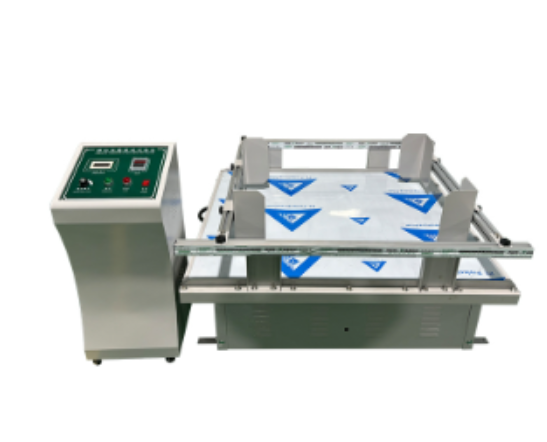
5-Station Seatbelt Webbing Abrasion Tester
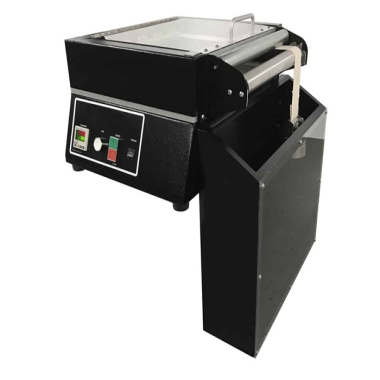


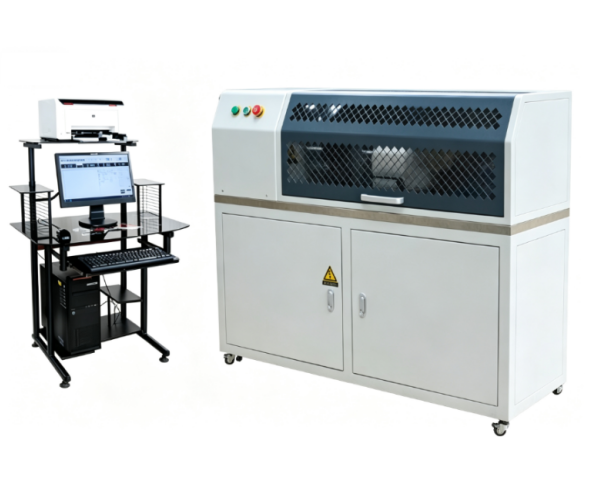
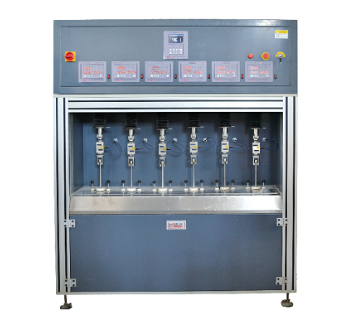
The 5-Station Seatbelt Webbing Abrasion Tester is designed to evaluate the abrasion resistance of webbing materials used in seat belts, lap belts, and shoulder straps. It simulates real-world wear caused by repeated contact and friction between the webbing and the belt hardware.
This bench-top style tester allows the operator to load test specimens, thread seatbelt material over them, and run controlled abrasion cycles. The test automatically stops once the preset number of cycles is reached, after which samples are visually inspected for wear or damage.
Application
The 5-Station Seatbelt Webbing Abrasion Tester is mainly used for abrasion resistance testing of automotive and industrial webbing materials.
Typical applications include:
(1)Automotive Seatbelt Testing
Used to evaluate wear resistance of seatbelt webbing materials used in passenger vehicles, commercial vehicles, and transportation systems.
(2)Safety Strap Testing
Suitable for testing shoulder straps, lap belts, and other safety restraint webbing products.
(3)Material Quality Control
Used by manufacturers and laboratories to verify webbing durability and ensure consistent product quality.
(4)Research and Development
Helps engineers compare different webbing materials, coatings, and manufacturing processes.
Test Standards
ASTM D6770
FED STD 191
FLTM BN 163-01
FMVSS 209
MIL-232223B
MIL-T8363B
S5 1(d)
SAE J339
Technical Specifications
| Feature | Specification |
|---|---|
| Test Stations | 5 independent test positions |
| Test Type | Seatbelt / Webbing abrasion resistance |
| Tester Style | Bench-top configuration |
| Operation | Manual sample setup and automatic cycle stop upon completion |
| Cycle Control | Programmable digital counter for cycle count input |
| Sample Evaluation | Visual inspection after testing |
| Construction | Rigid frame with precision alignment for repeatable results |
| Drive System | Durable, low-vibration motor ensuring smooth abrasion cycles |
| Safety | Protective housing and emergency stop function |
| Power Supply | To be specified at time of order |
Features
Multi-Station Design: Test up to five samples simultaneously for high efficiency.
Accurate and Repeatable: Consistent abrasion motion ensures reliable results.
Automatic Operation: Machine stops automatically after reaching the preset number of cycles.
User-Friendly: Simple setup and intuitive controls for efficient testing.
Durable Construction: Built from robust materials suitable for continuous use.
Standards-Compliant: Meets major international automotive and military testing standards.
FAQ
(1)What is this tester used for?
This tester is used to evaluate the abrasion resistance of seatbelt webbing and similar woven strap materials. It simulates repeated friction that occurs during actual vehicle operation, helping manufacturers and laboratories determine whether materials can maintain sufficient durability and structural performance after long-term use.
(2)What types of materials can be tested?
The equipment is mainly used for automotive seatbelt webbing, lap belts, shoulder straps, and other safety restraint materials. It can also be applied to similar textile webbing products where resistance to repeated friction and mechanical wear needs to be evaluated.
(3)How does the abrasion test work?
The specimen is installed on the test station and subjected to controlled repeated friction cycles against specified contact components. After the preset number of cycles is completed, the sample is removed and visually inspected to determine the degree of wear or damage.
(4)What is the advantage of having five test stations?
The five independent stations allow users to test multiple specimens under the same conditions, improving efficiency and reducing testing time. This design is especially useful for laboratories that need to compare different materials or perform batch quality inspections.
(5)Which industries commonly use this equipment?
This equipment is commonly used in automotive manufacturing, seatbelt production, textile testing laboratories, and quality inspection organizations. It helps verify the durability of safety-related webbing materials and supports compliance testing according to automotive and military standards.
Leave Message Get Price