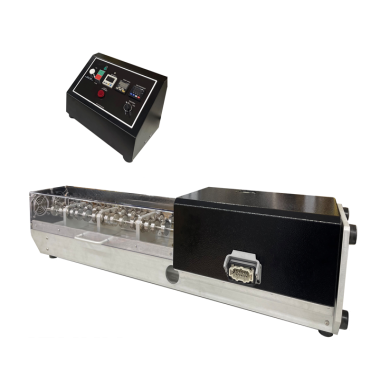
Cold Capable “W” Flex / Flex-O-Meter


Application
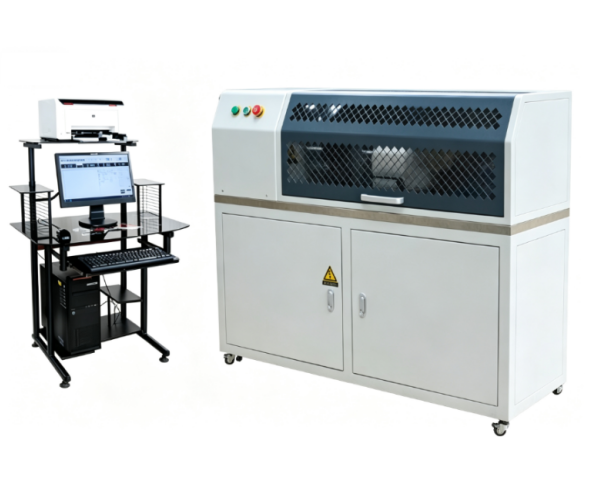
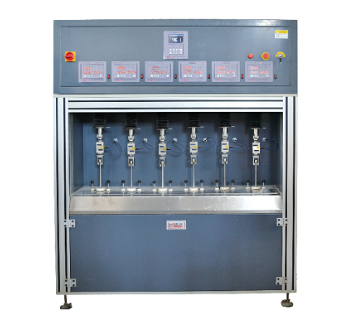
The Cold Capable“W” Flex / Flex-O-Meter is designed to evaluate the flexural fatigue resistance of leather, composites, vinyl, surface finishes, and other materials. Specimens are repeatedly flexed by clamping between fixed lower clamps and oscillating upper clamps, simulating creases that form in applications such as shoe uppers or other folding materials. The tester is suitable for both ambient and cold temperature (-30°C) conditions, providing a realistic simulation of material performance under low temperature environments.
Standards
ASTM D2097
GM 9216P, GM 9226P (withdrawn 2011)
ISO 7854 Section B
Jaguar JLR 52.413
TPJLR.52.413
TSL 5101G section 3.14.2 B
Technical Specifications
| Feature | Specification |
|---|---|
| Stations | 6 or 14 |
| Temperature Range | Ambient to -30°C |
| Motor | Brushless electric motor |
| Control Unit | Integrated or modular, programmable count-up controller with automatic stop |
| Speed | H- Config: 450 RPM; N-Config: 500 RPM |
| Stroke | H- Config: 1.270 cm; N-Config: 3.175 cm |
| Drum Diameter | H- Config: 2.540 cm; N-Config: 3.810 cm |
| Construction | Non-corrosive aluminum and stainless steel; powder coat and anodized finishes |
| Bearings | Precision ball and needle bearings |
| Protective Features | Vented protective cover for operator safety |
| Power Requirements | Supply voltages vary; must be specified at time of purchase |
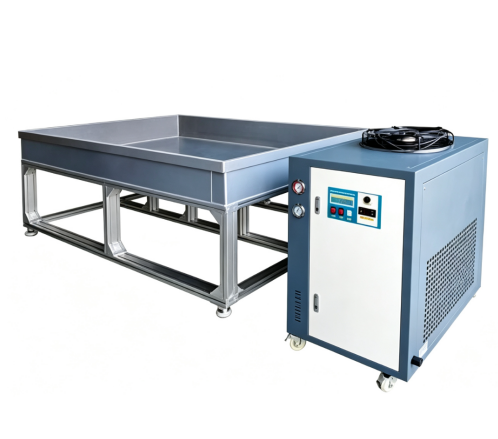
| Additional Features | Optional integrated freezer with scissor lift and control panel; external push button pendant for lift operation |
Features
Cold Temperature Capability: Evaluate materials at temperatures down to -30°C.
Integrated Freezer Option: Maintains precise temperature control with automatic testing start after soak period.
Programmable Count-Up Controller: Ensures accurate cycle counting and repeatable results.
Adjustable Test Parameters: Jog speed, test speed, stroke, and drum configuration adjustable for multiple specifications.
Durable Construction: Aluminum and stainless steel components resist corrosion and wear.
Precision Bearings: Smooth operation ensures accurate flexing and minimal mechanical interference.
User-Friendly Operation: Lift and test start handled via pendant; flashing indicators notify test completion.
Flexible Configurations: Supports multiple standards including Hyundai, GM, Ford, and ISO.
FAQ
(1)What materials can be evaluated using this flex fatigue tester?
This tester is suitable for leather, synthetic materials, vinyl, composites, coated surfaces, and other flexible materials. It helps evaluate how these materials withstand repeated folding and bending during actual product use.
(2)Why is low-temperature flex testing important for material evaluation?
Some flexible materials become harder or more brittle in cold environments. Testing at temperatures down to -30°C helps determine whether materials maintain durability and resist cracking under winter or cold climate conditions.
(3)How does the instrument simulate real product usage?
The specimen is clamped between fixed and oscillating fixtures that repeatedly create bending and creasing movements. This simulates conditions such as shoe upper folding during walking or repeated deformation of flexible components.
(4)Which standards are commonly used for flex fatigue testing?
Common standards include ASTM D2097 for leather, ISO 7854 Section B for coated fabrics, and various automotive material procedures such as Jaguar JLR 52.413 and related technical specifications.
(5)What factors should be considered when selecting a flex testing instrument?
Users should consider material type, required temperature range, number of test stations, flexing speed, stroke distance, and applicable standards. These factors ensure the equipment matches the intended durability evaluation requirements.
Leave Message Get Price