Fatigue Resistance Testing Machine for Leather Edge Oil
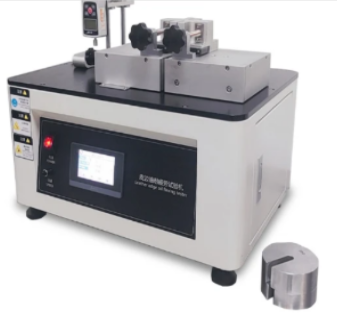


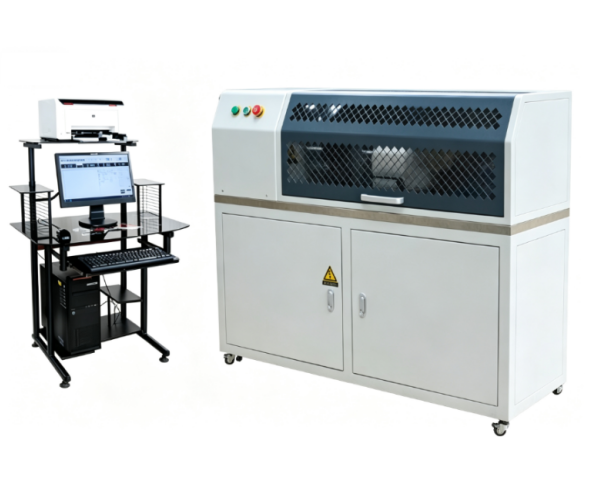
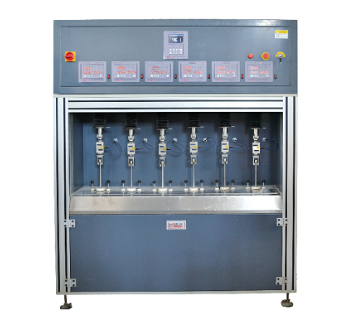
The leather edge oil fatigue tester evaluates the bending resistance of samples under specified load, speed, and cycle conditions. By observing surface cracks, coating detachment, or delamination during reciprocating folding, it determines the durability of waistbands, backpack straps, luggage handles, and other belt-type products.
Application
This instrument is used to assess the fatigue performance of edge-coated flexible materials under repeated folding stress.
Typical application scenarios include:
Durability testing of leather edge coatings in daily use
Quality evaluation of flexible coated materials
Product development and material comparison
Applicable test objects:
Waistbands and belts
Backpack straps
Luggage handles
Leather straps and edge-coated components
Standards
(1) QB/T 1333-2018 — Leather products test method
(2) QB/T 1618-2018 — Leather belt testing requirements
(3) QB/T 5246-2018 — Leather goods performance testing
Technical Specifications
| Vertical Loading | 500-4000g weight stackable structure |
| Horizontal Stroke | |
| Clamp Height | 45mm |
| Testing Speed | 0-50±1 cycles/minute |
| Controller | 40×80mm LCD displays 8-digit counter, timer, cumulative time, speed control modes |
| Dynamometer | Max range 20N, precision 0.1N |
| Power | AC220V |
Random Accessories
1 power cord
1 set of weights
1 bending force clamp
Features
(1) Adjustable load system to simulate different usage conditions
(2) Stable reciprocating motion for repeatable fatigue testing
(3) LCD controller with clear display of cycles, time, and speed
(4) Wide speed adjustment range for flexible test setup
(5) Compact structure suitable for laboratory environments
(6) Simple operation with reliable performance
FAQ
(1) What is the main evaluation criterion in this test?
The test focuses on coating durability under cyclic bending. Key observations include surface cracking, edge oil peeling, and delamination. Evaluation is typically based on the number of cycles to failure and visible damage severity as defined in QB/T standards.
(2) How to select the appropriate test load?
The load should reflect actual usage conditions. For example, straps or handles under higher stress require larger weights. QB/T standards provide reference ranges, but users can adjust based on product type and expected mechanical stress.
(3) What is a typical test duration?
Test duration depends on the required number of cycles and speed setting. For example, at 30 cycles/min, a 3000-cycle test takes about 100 minutes. The duration should align with product specifications or internal quality standards.
(4) Can this machine test different material thicknesses?
Yes, within the clamp height limit of 45 mm. Samples should be properly secured to ensure consistent bending. For very thin or soft materials, additional support may be needed to maintain test accuracy.
(5) What factors influence test repeatability?
Repeatability depends on consistent load, speed, sample preparation, and environmental conditions. Proper calibration and standardized procedures are essential. For reliable setup and selection advice, contact QINSUN engineers.
Leave Message Get Price