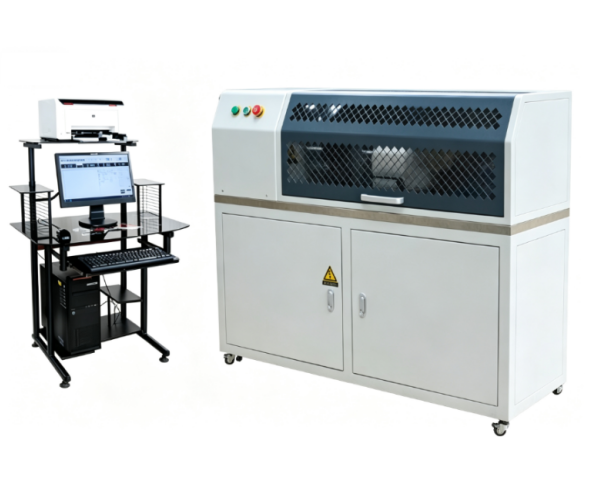
Surface Roughness / Friction Tester
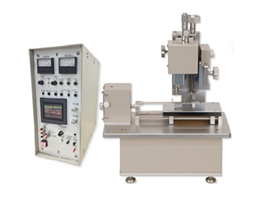


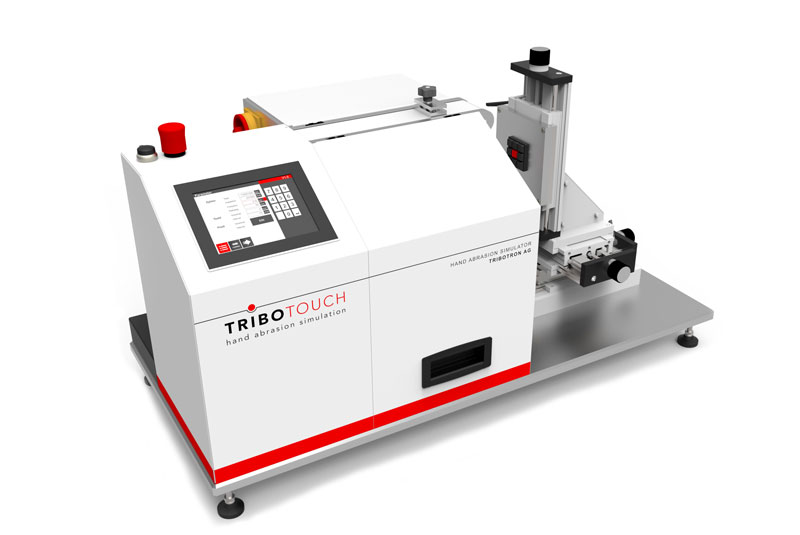
This tester analyses and mechanizes the "stroking" hand movements taken by craftsmen and professionals when evaluating the style and feel of fabrics, and can replace the results with objective numerical data, which can obtain the data of friction coefficient, friction coefficient change, surface roughness. Based on these readiness values, objective data can be used to evaluate and quantify the "smoothness", "smoothness" and "roughness" of touch with the hand. Also suitable for soft touch conditions or hair measurement.

Applications
Suitable for analyzing tactile performance of:
Textiles and garments
Nonwoven fabrics
Leather and synthetic materials
Soft-touch coatings
Hair and fiber surfaces
Technical Parameters
General Specifications
| Item | Parameter |
|---|---|
| Main Unit Size | 320 × 200 × 390 mm |
| Amplifier Size | 180 × 400 × 400 mm |
| Weight | 10 kg (main) / 12 kg (amplifier) |
| Power Supply | AC 100V |
| Power Consumption | 30 W |
| Environment | 20–30°C / 50–70% RH |
| Standard Condition | 20°C / 65% RH |
| Installation | Low vibration, no airflow interference |
Friction Measurement (Separate Mode)
| Item | Parameter |
|---|---|
| Detector | Differential transformer (ring dynamometer) |
| Load Range | 200 gf (standard), 1000 gf (low sensitivity) |
| Accuracy | ±0.5% FS |
Friction Measurement (Simultaneous Mode)
| Item | Parameter |
|---|---|
| Detector | Resistance strain gauge |
| Load Range | 200 gf |
| Accuracy | ±0.5% FS |
Surface Roughness Measurement
| Item | Parameter |
|---|---|
| Detector | Differential transformer |
| Displacement Range | 0.4 mm |
| Accuracy | ≤ ±1.0% FS |
Features:
Quickly test the sense of friction, simulating the frequency band signal felt by hand contact
Correctly analyze and express how the task feels when touching objects
The smoothness of contact is calculated by changes in the coefficient of friction
The relationship between the feeling of friction (smoothness) felt by the touch of the human finger
MIU correlates with how easily a person's fingers slide when touching a surface.
The higher the value of MIU, the less smooth it is.
MMD correlates with how smooth or rough a person feels when they touch a surface with their fingers.
The larger the value of MMD, the rougher the surface of the object.
FAQ
1. How does this tester differ from traditional roughness testers?
Conventional roughness testers focus on geometric surface profiles, while this device evaluates tactile perception, combining friction behavior and micro-roughness to reflect how a material actually feels to the human touch.
2. What is the practical meaning of MIU and MMD in production?
MIU helps control slipperiness, which is critical for comfort and handling
MMD reflects surface uniformity, influencing perceived quality and consistency
Manufacturers use these values to standardize product feel across batches.
3. Can the results replace human panel evaluation?
It does not completely replace human perception, but it provides objective, repeatable baseline data that significantly reduces dependence on subjective judgment and improves quality control consistency.
4. What materials may give unstable results?
Highly elastic, very fluffy, or uneven materials may introduce variability due to:
Surface deformation during testing
Inconsistent contact area
In such cases, controlled sample preparation is essential.
5. How to choose between separate and simultaneous measurement modes?
Separate mode: higher flexibility and wider load range
Simultaneous mode: faster testing with combined data acquisition
Selection depends on whether priority is precision control or efficiency.
Leave Message Get Price