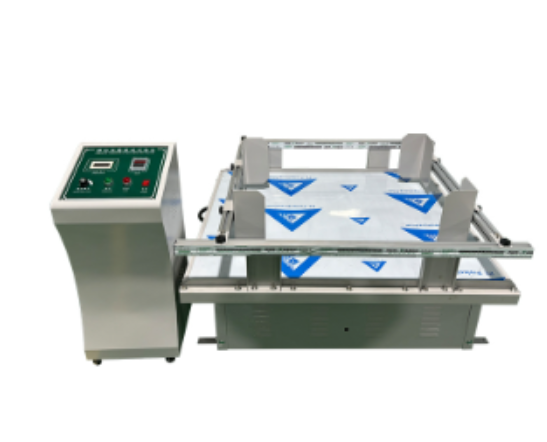
Intervertebral Fusion Cage Compression Fatigue Tester
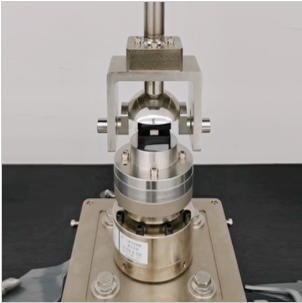


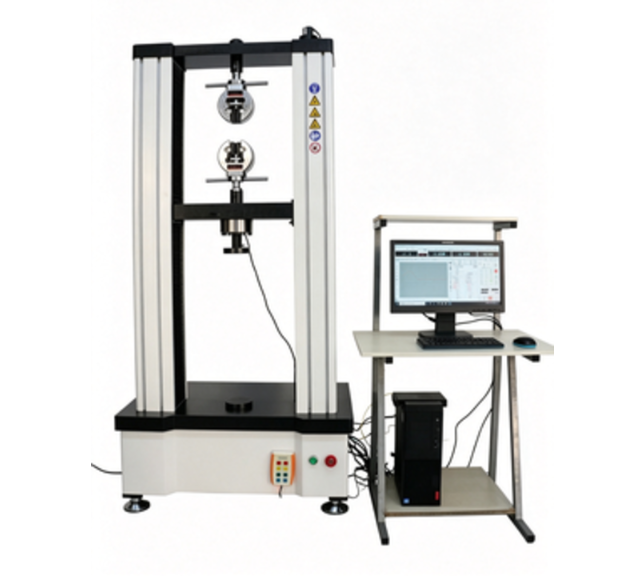
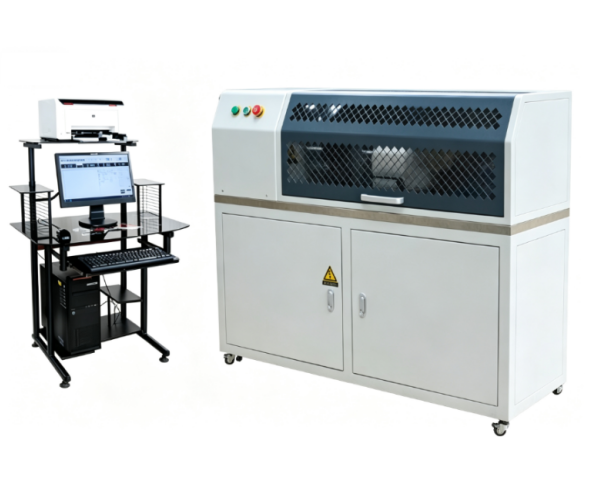
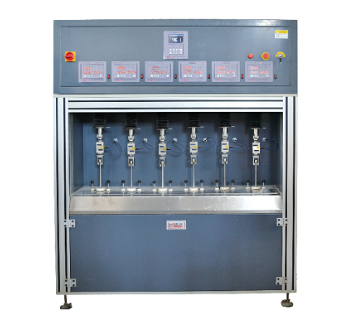
The Intervertebral Fusion Cage Compression Fatigue Tester is a dynamic testing system designed to evaluate the compressive fatigue performance of spinal fusion cages. It applies controlled cyclic axial loads to simulate physiological spinal loading conditions, enabling accurate assessment of fatigue life, stiffness degradation, and deformation behavior under long-term use.
Applications
Performance evaluation: Test the fatigue strength, stiffness, deformation, and other mechanical properties of intervertebral fusion cages under compression loads to assess their overall performance and ability to withstand the cumulative effects of cyclic compressive stress over time. This helps determine if the cage can maintain its structural integrity and height under repeated loading without catastrophic failure or significant plastic deformation (subsidence).
Quality control: During the production process, use the compression fatigue testing machine to conduct quality inspections on intervertebral fusion cages. By subjecting samples from each manufacturing batch to compression fatigue testing according to established criteria, manufacturers can ensure that the products consistently meet the predetermined performance standards for fatigue resistance, thereby reducing the defective rate and ensuring product reliability.
R & D support: Provide experimental data support for the research and development of intervertebral fusion cages. Testing different cage designs (e.g., variations in geometry, pore size, endplate design), materials (e.g., PEEK, titanium alloys, novel porous materials), and manufacturing processes under compression fatigue assists R&D personnel in optimizing these factors to improve the cage's durability, load-bearing capacity, and long-term stability within the spinal segment.
Standards
ASTM F2077
ASTM F2267
Parameters
| Parameter | Specification |
|---|---|
| Loading Type | Axial compression (cyclic) |
| Frequency Range | Up to 5 Hz (typical per ASTM F2077) |
| Load Control Accuracy | ±1% |
| Displacement Control Accuracy | ±1% |
| Maximum Cycles | Up to 5–10 million |
| Actuator Stroke | Configurable based on test requirement |
| Temperature Range | Ambient to 40°C |
| Temperature Accuracy | ±1°C |
| Environment | Air or simulated body fluid |
| Sample Capacity | Suitable for various cage sizes |
| Power Supply | AC 220V / 380V, 50/60 Hz |
Features
An Intervertebral Fusion Cage Compression Fatigue Tester is typically a dynamic testing system specifically configured for applying controlled cyclic compressive loads to fusion cages. Key features include:
A dynamic testing frame (e.g., servo-hydraulic or electrodynamic) with a high stiffness and capacity suitable for applying physiological compressive loads encountered in the spine.
A specialized fixture designed to hold the intervertebral fusion cage and apply cyclic compressive loads. This fixture typically utilizes simulated vertebral body blocks (often made from a rigid polymer or bone substitute material, or sometimes using actual bone) with geometries matching the cage endplates, between which the cage is placed and compressed.
A dynamic load cell for accurate measurement of the applied cyclic compressive force.
A displacement sensor or the testing machine's measurement system to record the axial deformation (subsidence) of the cage assembly under cyclic loading.
A control system capable of applying cyclic compressive loading profiles (e.g., sinusoidal, haversine, mimicking physiological loading) at specified frequencies and load or displacement amplitudes.
A cycle counter to accurately record the total number of load cycles applied.
A data acquisition system to capture load, displacement, and cycle count data throughout the fatigue test.
Sophisticated software for setting up fatigue test parameters, real-time monitoring of test progress, detecting sample failure (e.g., fracture, excessive subsidence), and analyzing fatigue data (e.g., generating S-N curves, evaluating stiffness and subsidence over cycles).
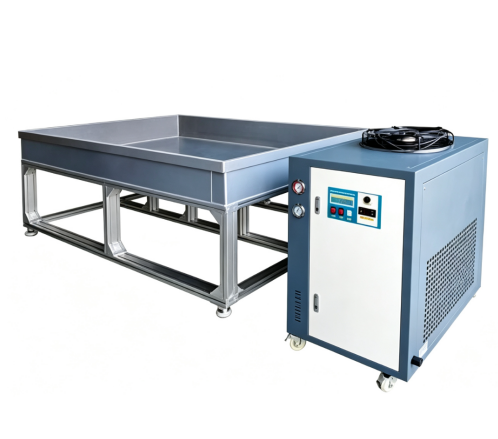
An environmental chamber or fluid bath designed to enclose the test setup, capable of maintaining physiological temperature (e.g., 37°C) and holding a simulated body fluid (e.g., saline solution) to replicate the in vivo environment.
Safety features such as overload protection and automatic shutdown upon specimen failure.
FAQ
(1) What is the main purpose of compression fatigue testing for fusion cages?
It evaluates how the implant performs under repeated axial loads over time. According to ASTM F2077, fatigue testing determines the number of cycles a cage can withstand before failure or excessive deformation occurs.
(2) How is subsidence evaluated during testing?
Subsidence is assessed by measuring axial displacement under cyclic loading. ASTM F2267 focuses on how the implant sinks into simulated vertebral bodies, providing data on structural stability and load distribution.
(3) What materials can be tested using this system?
Common materials include PEEK, titanium alloys, and porous metal structures. The system is designed to accommodate different cage geometries and material properties under the same loading conditions.
(4) Why is testing performed at body temperature?
Testing at approximately 37°C helps simulate in vivo conditions. Material behavior, especially polymers and porous structures, can change with temperature, affecting fatigue life and deformation characteristics.
(5) How to select the appropriate testing configuration?
Selection depends on load range, test frequency, and environmental requirements. It is recommended to define test objectives based on ASTM standards and consult QINSUN engineers for proper configuration.
Leave Message Get Price