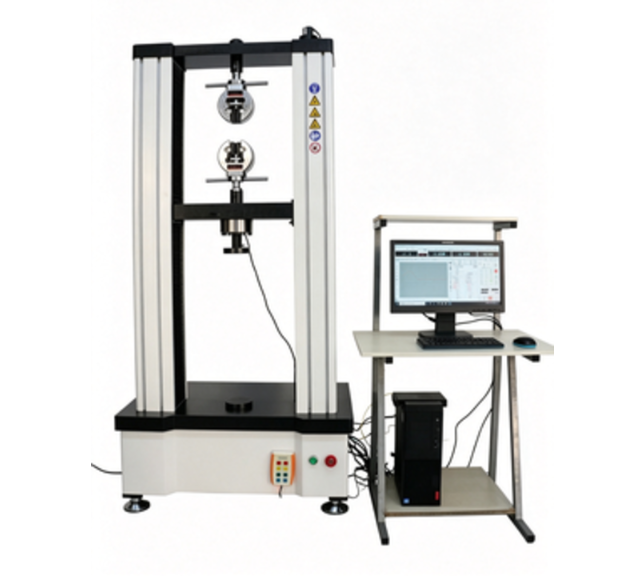
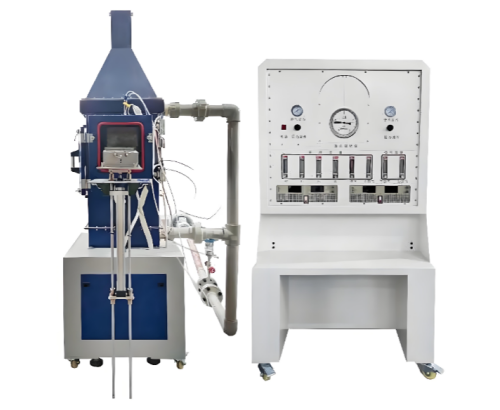
Dust Cloud Minimum Ignition Temperature Tester
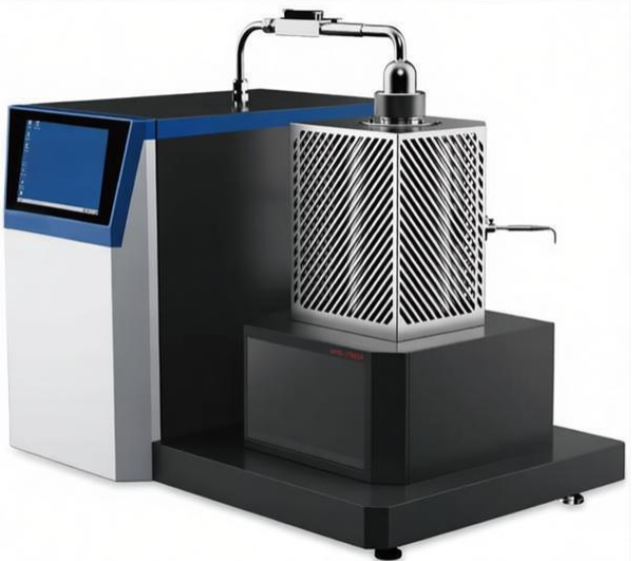


The Dust Cloud Minimum Ignition Temperature Tester is a specialized laboratory instrument designed to determine the minimum ignition temperature of combustible dust clouds under controlled test conditions. By heating a dust cloud inside a Godbert-Greenwald furnace and observing ignition behavior, the instrument evaluates the ignition characteristics of dust materials and provides important safety data for explosion prevention and process safety management. It is widely used in industries involving combustible powders and dust handling.
Application
Chemical manufacturing
Pharmaceutical production
Food processing (e.g., flour, sugar, starch)
Wood processing
Metal powder production and handling
Plastics and rubber manufacturing
Agriculture (e.g., grains, feed)
Standards
(1) ASTM E1491-06 — Standard Test Method for Minimum Autoignition Temperature of Dust Clouds
(2) EN 50281-2-1 — Electrical Apparatus for Use in the Presence of Combustible Dust — Test Methods
(3) GB/T 16429 — Determination of Minimum Ignition Temperature of Dust Clouds
(4) IEC 61241-2 — Electrical Apparatus for Use in the Presence of Combustible Dust
(5) ISO/IEC 80079-20-2 — Explosive Atmospheres — Material Characteristics — Combustible Dusts
Technical Parameters
| Operating Environment | 5°C – 45°C, <85% RH |
| Standard Mode Spark Energy | 1 mJ, 3 mJ, 10 mJ, 30 mJ, 100 mJ, 300 mJ, 1000 mJ, 3000 mJ |
| Custom Mode Spark Energy | 1–3000 mJ, adjustable in 1 mJ increments |
| Charging Voltage | 0–15 kV |
| Discharge Load | No load, 1 mH inductive load |
| Experimental Container | 1.2 L Hartmann tube |
| Electrodes | Diameter 2 mm tungsten electrodes |
| Electrode Distance | 2–10 mm, adjustable |
| Electrode Triggering Method | High voltage relay trigger, moving electrode trigger |
| Ignition Delay Time | 20–180 ms, adjustable |
| Powder Pressure | 0.4–0.7 MPa, adjustable |
| Interface | USB*2 |
| Power Supply | (90~260)VAC/(47~63)Hz |
| Power | 300 W |
| Dimensions | 840 mm × 500 mm × 850 mm (with exhaust hood), 840 mm × 500 mm × 460 mm (without exhaust hood) |
Features
(1) Built-in international standard test programs allow testing according to standard requirements or customized parameters.
(2) Fuzzy PID temperature control technology provides accurate and stable furnace temperature regulation.
(3) Temperature sensor calibration interface simplifies calibration and measurement correction.
(4) Godbert-Greenwald furnace with quartz tube design ensures reliable heating performance.
(5) Vacuum ceramic fiber insulation structure reduces heat loss and improves temperature stability.
(6) International brand thermocouple provides long-term stable temperature measurement.
(7) Automatically records ambient temperature and humidity during testing for complete experimental records.
(8) Remote control operation improves operator safety during testing.
(9) Multi-level user management supports controlled operation and data security.
(10) USB interfaces provide convenient data storage and transfer.
(11) Professional industrial design with compact structure and simple operation.
(12) 7-inch color touchscreen dynamically displays test progress and operating information.
FAQ
(1) What does the Dust Cloud Minimum Ignition Temperature Tester measure?
The instrument determines the lowest temperature at which a combustible dust cloud can ignite under specified conditions. The test results help evaluate fire and explosion risks during powder processing and handling.
(2) Which materials can be tested with this instrument?
It is suitable for combustible dust samples from industries such as chemicals, pharmaceuticals, food processing, wood, plastics, rubber, and metal powder production.
(3) Why is minimum ignition temperature testing important?
The test data helps engineers select suitable explosion protection measures, improve equipment safety design, and reduce risks associated with dust accumulation in industrial environments.
(4) Which standards are commonly used for dust ignition testing?
Common standards include ASTM E1491, GB/T 16429, EN 50281-2-1, IEC 61241-2, and ISO/IEC 80079-20-2. The applicable standard depends on the material and industry requirements.
(5) How to choose the right model for dust testing?
Selection depends on tested materials, applicable standards, safety requirements, and data management needs. QINSUN engineers can recommend a suitable solution based on your application. Contact us for professional support.
Leave Message Get Price