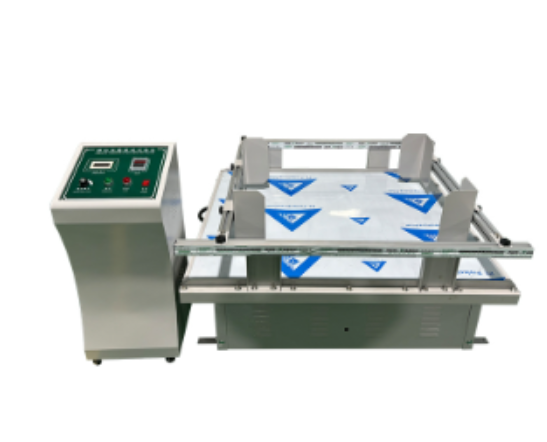
Adiabatic Calorimeter for Batteries
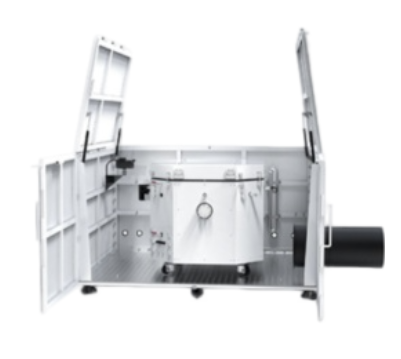


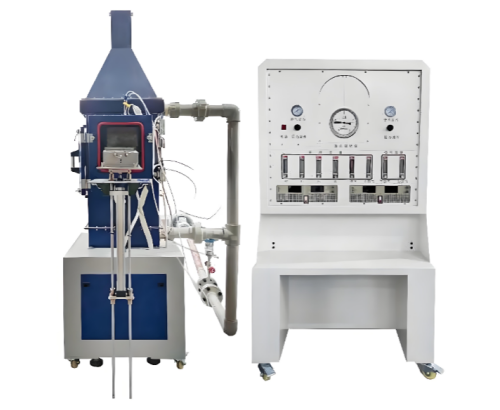
The Adiabatic Calorimeter for Batteries is a specialized thermal analysis system designed to evaluate the thermal stability and thermal runaway behavior of lithium-ion batteries under controlled adiabatic conditions. By minimizing heat exchange between the battery sample and the external environment, the system accurately measures self-heating behavior, temperature rise characteristics, pressure changes, and gas generation during thermal events.
It is widely used for battery safety research, thermal runaway mechanism analysis, and validation testing for energy storage systems, electric vehicle batteries, and related safety evaluations.
Application
The Adiabatic Calorimeter for Batteries is suitable for battery thermal safety evaluation and research applications:
(1) Lithium-ion battery safety testing — Evaluating thermal stability, self-heating behavior, and thermal runaway characteristics of battery cells and modules.
(2) Energy storage system development — Supporting safety analysis of lithium-ion batteries used in stationary energy storage applications.
(3) Electric vehicle battery research — Testing thermal response and safety performance of power batteries under abnormal heating conditions.
(4) Battery material research — Analyzing the influence of electrode materials, electrolytes, and battery structures on thermal stability.
(5) Thermal runaway mechanism study — Obtaining temperature, pressure, and gas generation data during battery failure processes.
(6) Safety verification laboratories — Providing experimental data for battery design improvement and safety assessment.
Standards
GB/T 36276 - 2023 *Lithium - ion Batteries for Electric Power Energy Storage
UL 9540A ASTM E1981 - 98(2012) SN/T 3078.1 - 2012 *Guidelines for the Evaluation of Thermal Stability of Chemicals - Part 1: Accelerated Calorimetry Method
USABC SAND99 - 0497, July 1999: 3.2 Thermal Stability Tests SAE J2464 - R2009: 4.4.2 Thermal Stability Tests Freedom CAR SAND 2005 - 3123: 4.1 Thermal stability UL 1973 GB 38031 - 2020 *Safety Requirements for Power Batteries of Electric Vehicles
Features
Precision: The self - heating detection sensitivity is far better than the standard detection threshold of 0.02°C/min.
It has high thermal insulation performance and a small temperature difference between the wall and the sample. Efficiency: With an innovative heating wire assisted heating solution, the experimental efficiency can be increased by up to 5 times. Safety: It is equipped with safety protection measures such as burst discs, pressure relief valves, and explosion - proof boxes. The professional alarm system design comprehensively ensures the safety of personnel and equipment. Innovation: It has the innovative function of adiabatic thermal runaway - gas production combined analysis, enabling a comprehensive acquisition of the characteristic parameters of battery thermal runaway.
The Adiabatic Calorimeter for Batteries provides a reliable solution for analyzing lithium-ion battery thermal stability and thermal runaway behavior. Through accurate self-heating detection, controlled adiabatic conditions, and comprehensive safety monitoring, it supports battery manufacturers, research institutions, and safety laboratories in improving battery reliability and safety performance.
FAQ
(1) What information can be obtained from an adiabatic calorimeter test?
The system can provide important thermal behavior data, including self-heating characteristics, temperature rise during thermal events, pressure changes, and gas generation information, helping researchers understand battery failure mechanisms.
(2) Why is adiabatic testing important for battery safety research?
Adiabatic conditions reduce heat loss between the battery and the environment, allowing more accurate observation of thermal runaway development and helping evaluate battery safety risks under severe conditions.
(3) What types of batteries can be tested?
The system is mainly used for lithium-ion battery safety evaluation, including battery cells and modules used in electric vehicles, energy storage systems, and related applications.
(4) How should a laboratory select a suitable battery calorimeter?
Selection should consider the battery size, required standards, measurement parameters, safety protection design, and data analysis requirements. QINSUN engineers can provide suitable configuration recommendations.
(5) Why are thermal runaway gas measurements valuable?
Gas generation data helps researchers understand battery decomposition behavior and failure processes. Combined with temperature and pressure measurements, it provides a more complete assessment of battery safety performance.
Leave Message Get Price